Origami Shark
The origami shark is a dramatic and rewarding model that produces a recognizable, three-dimensional fish shape with an open mouth and pointed fins. At 55 steps it is more challenging than most beginner models, but the process is methodical and the finished result is impressive enough to display.
Video Tutorial
Step-by-Step Instructions
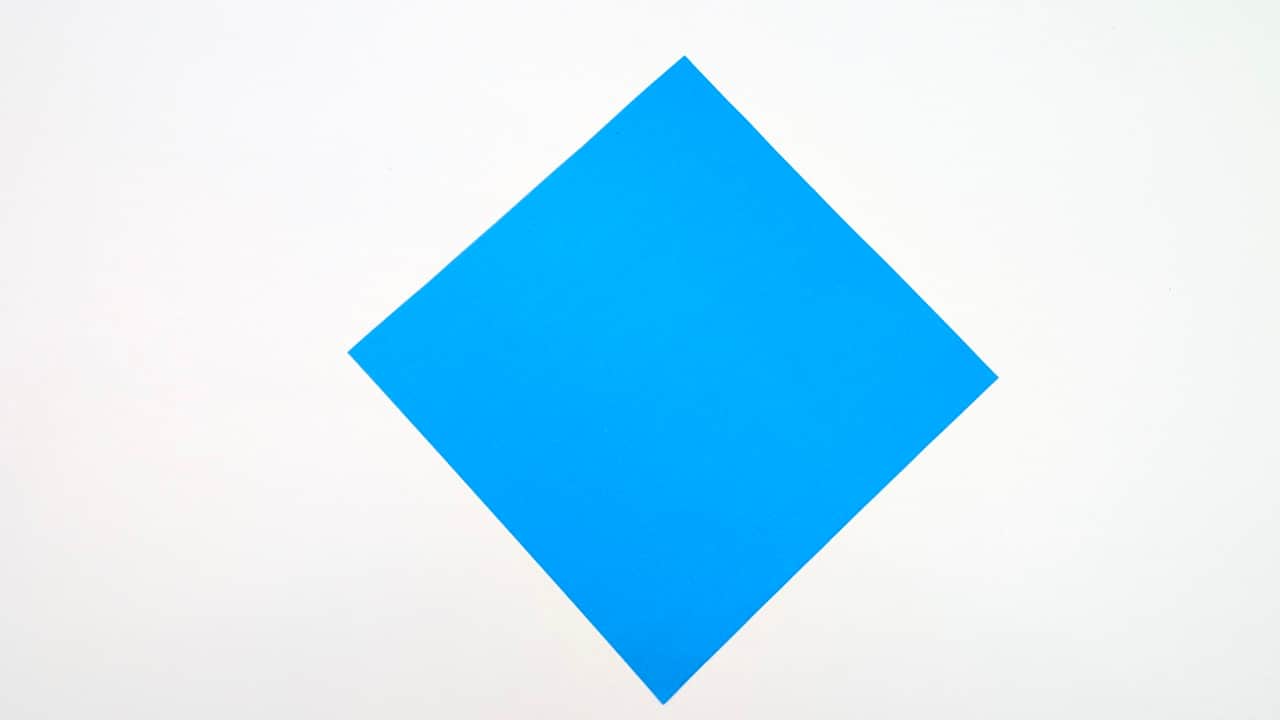 1
1Start with a square sheet of paper, blue or grey side up. Place it as a diamond.
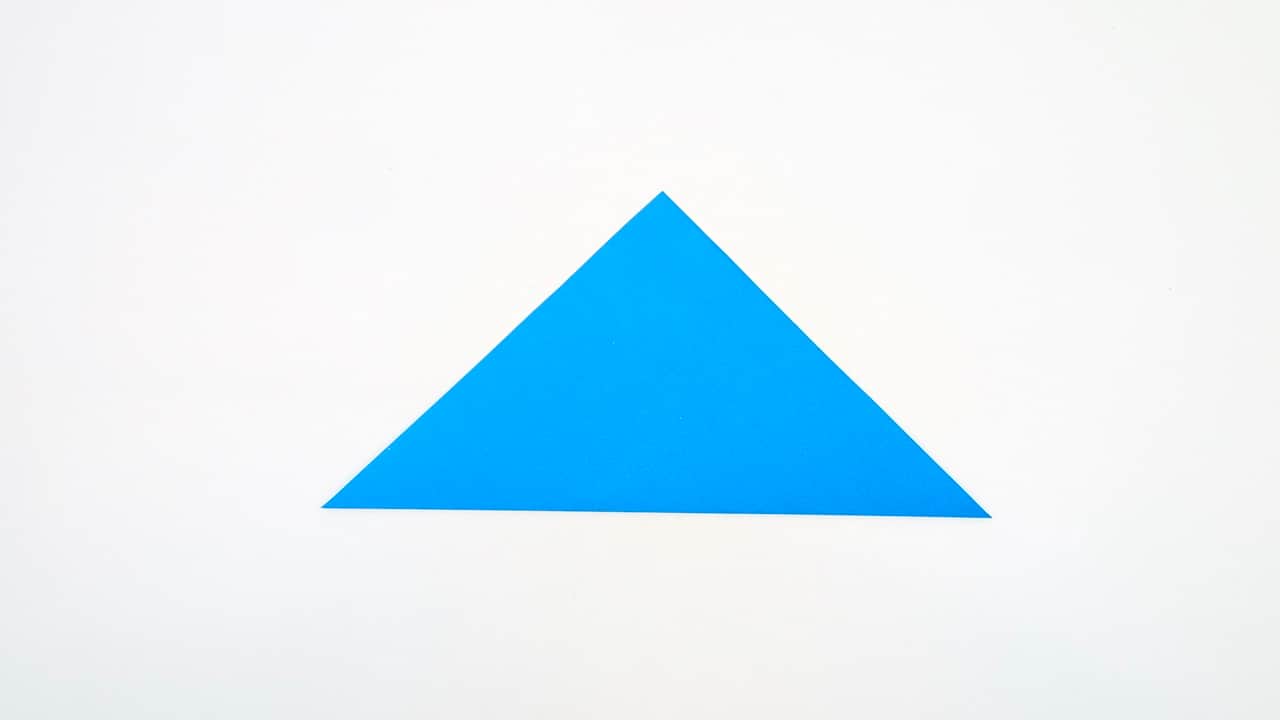 2
2Fold the paper in half diagonally from bottom to top. Crease and unfold.
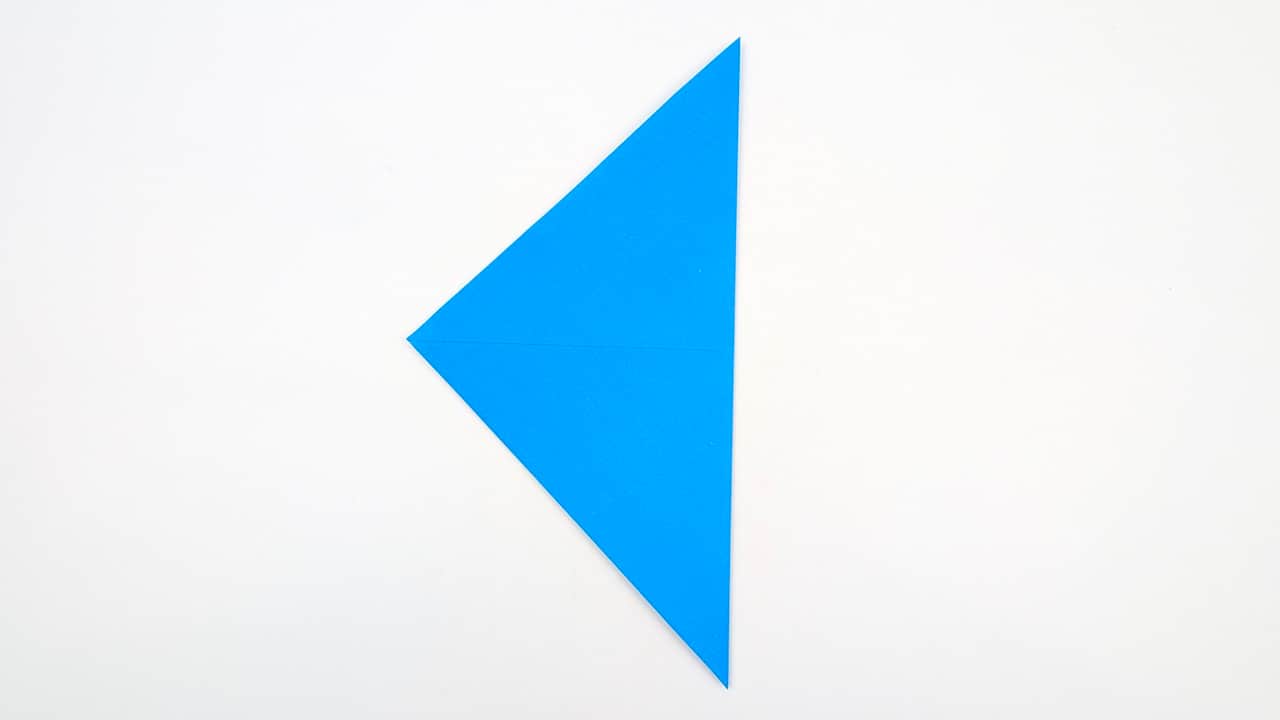 3
3Fold the paper in half diagonally in the other direction. Crease and unfold.
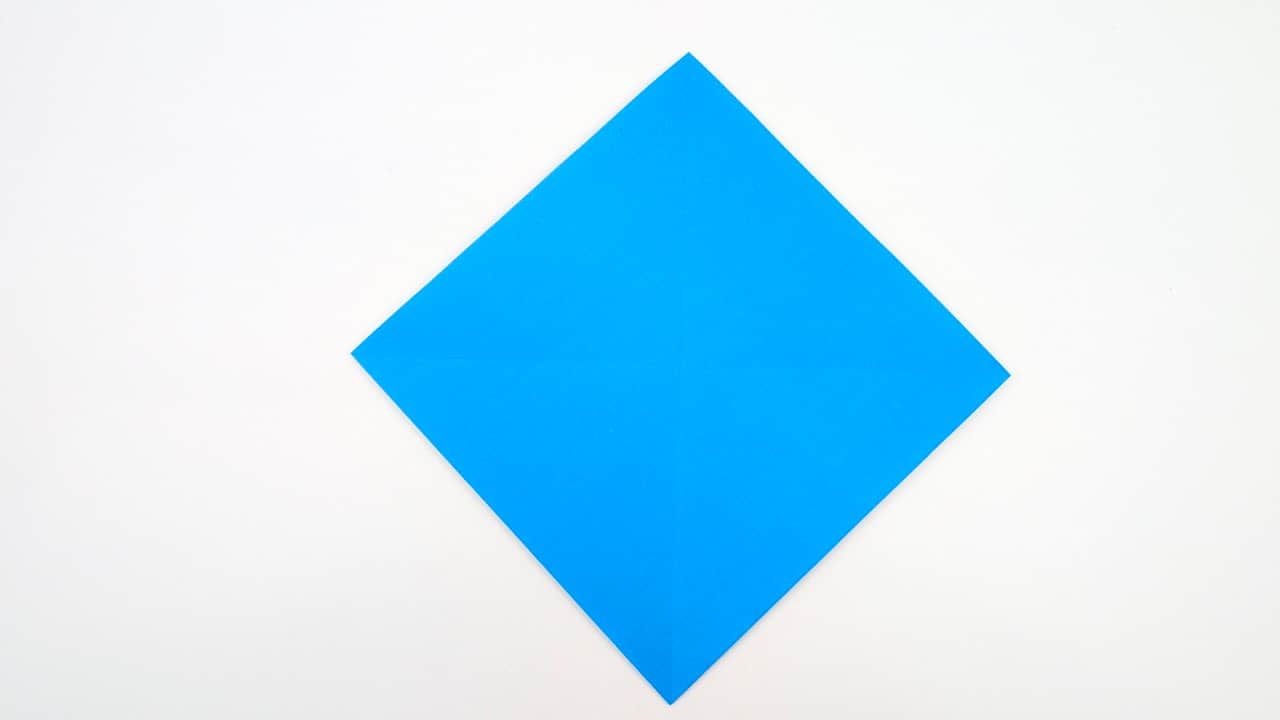 4
4Fold the paper in half horizontally. Crease and unfold.
 5
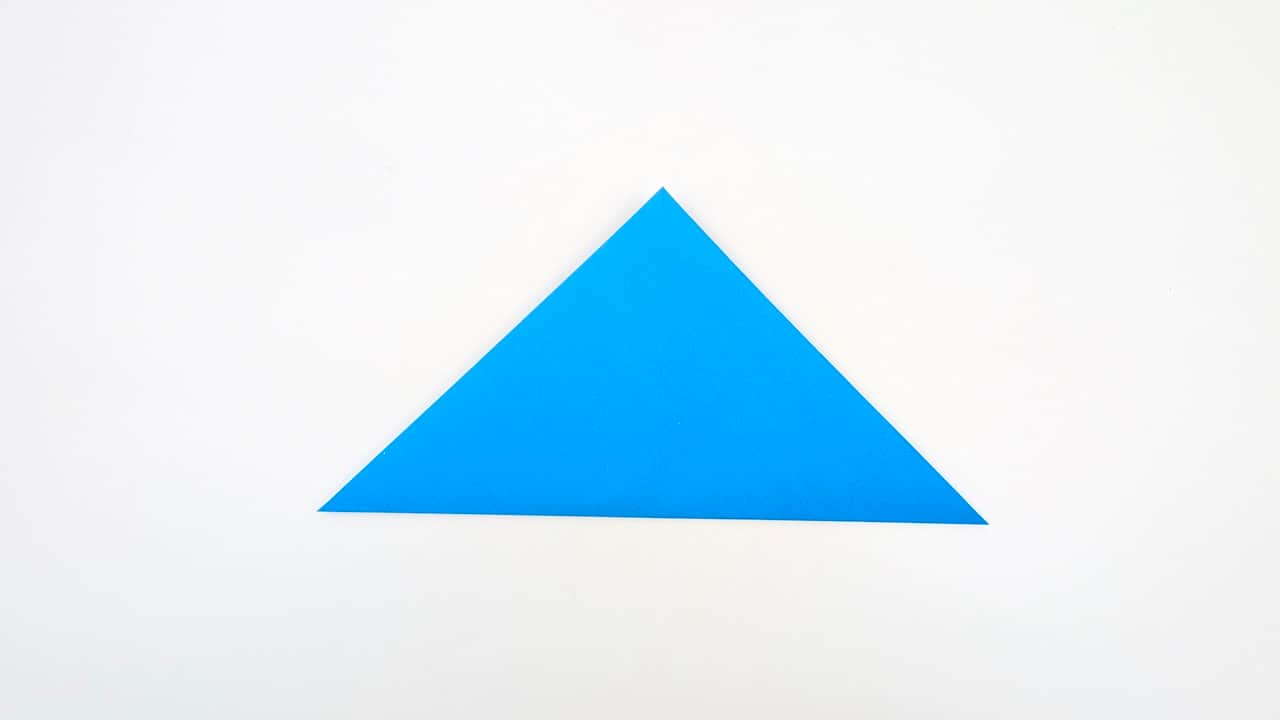
5Fold the paper in half vertically. Crease and unfold. You now have a grid of reference creases.
 6
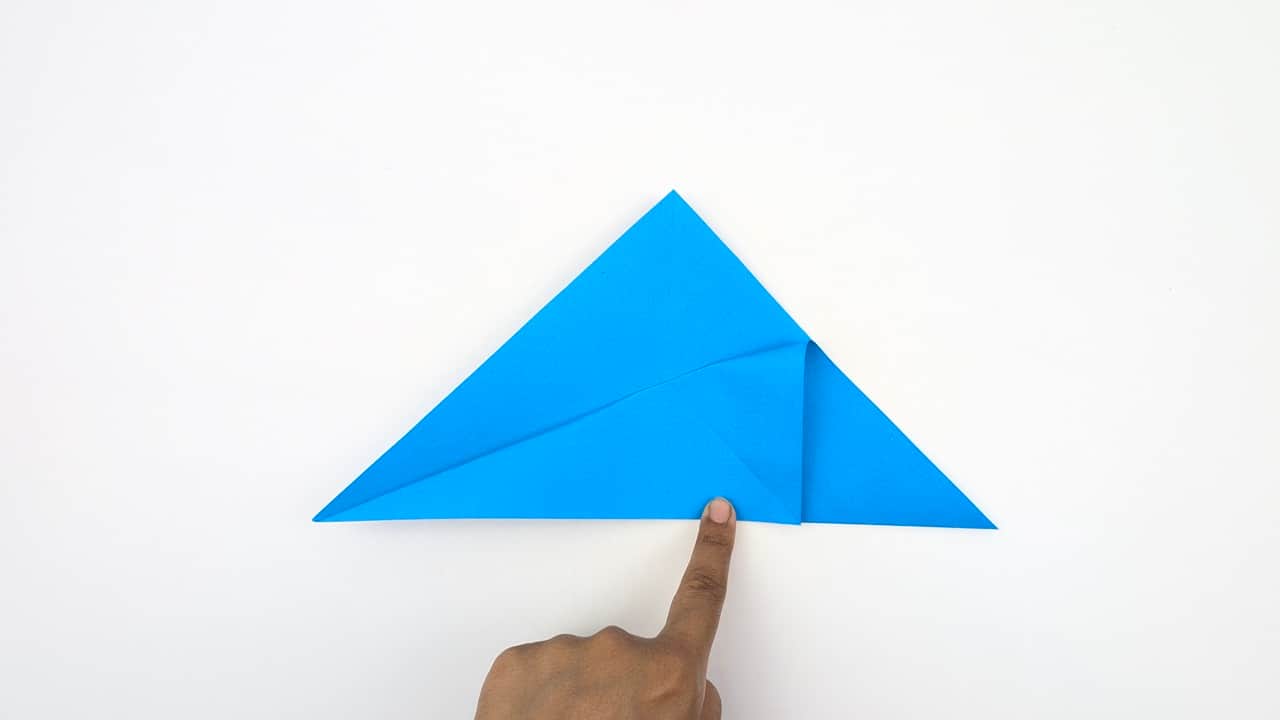
6Bring the top point down to the bottom point while pushing the sides inward to collapse into a preliminary base (square base).
 7
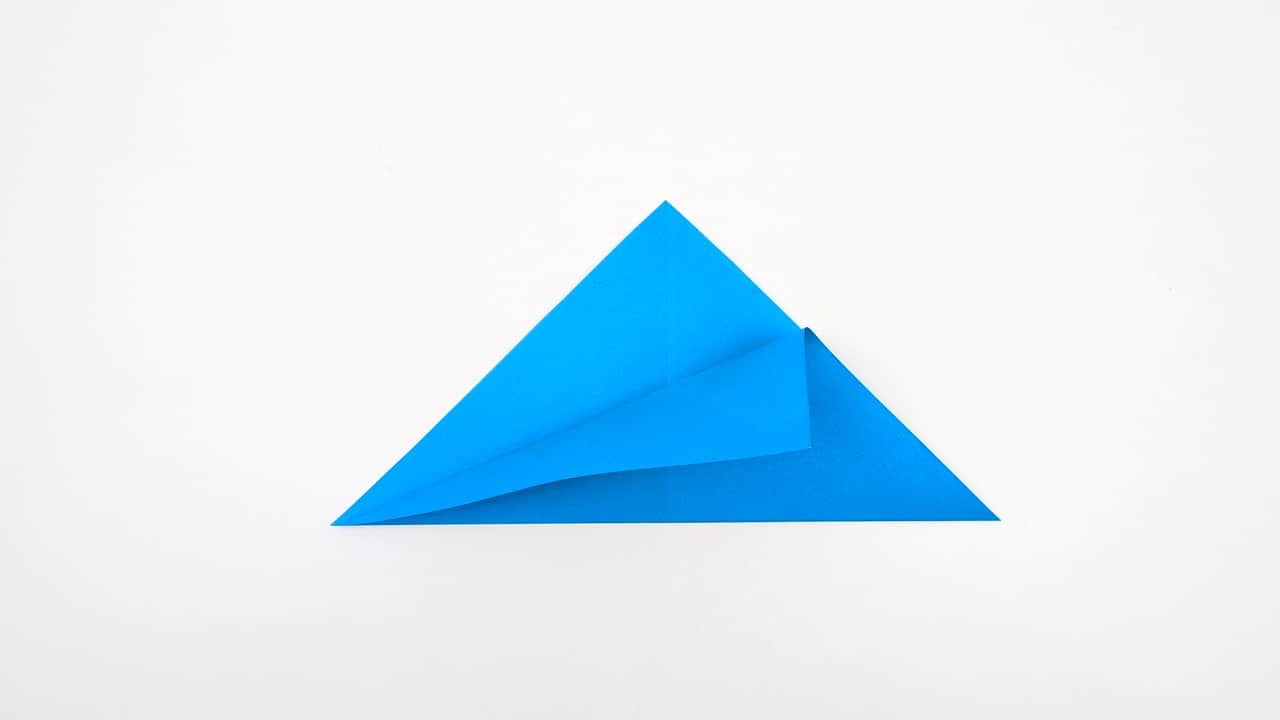
7The preliminary base should be a flat square with open flaps at the bottom.
 8
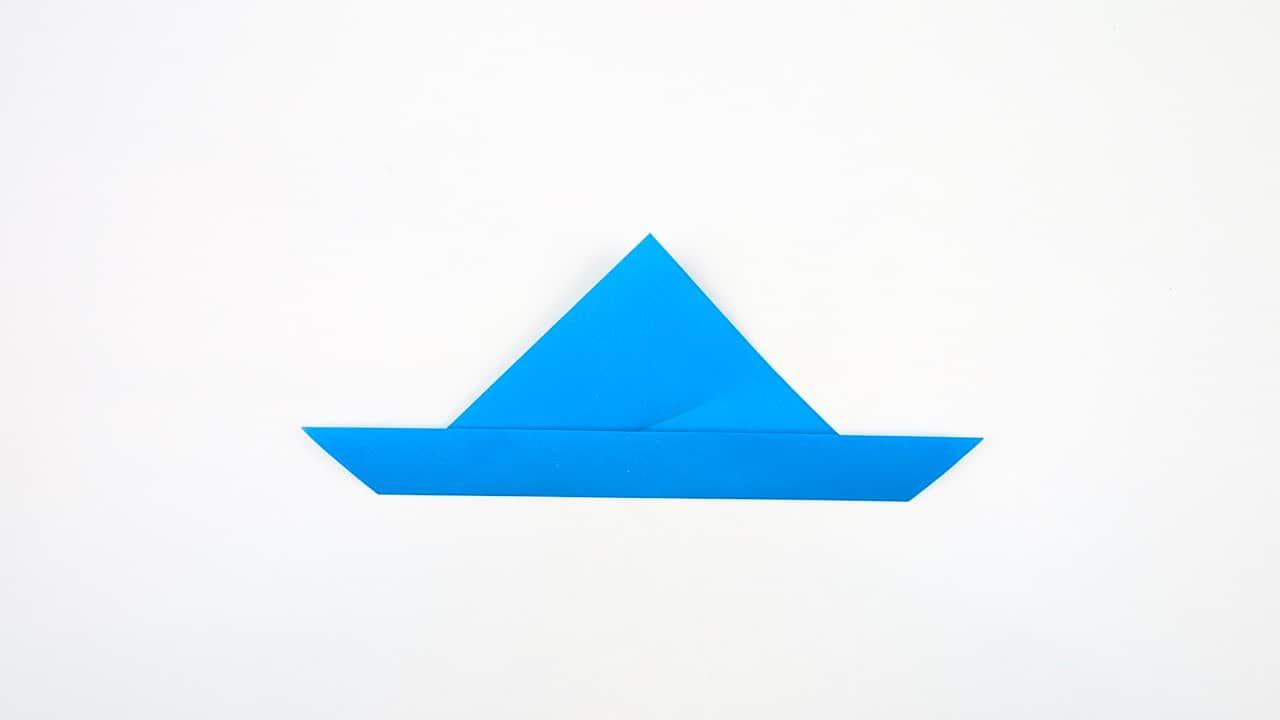
8Fold the right front flap to the left along the center crease.
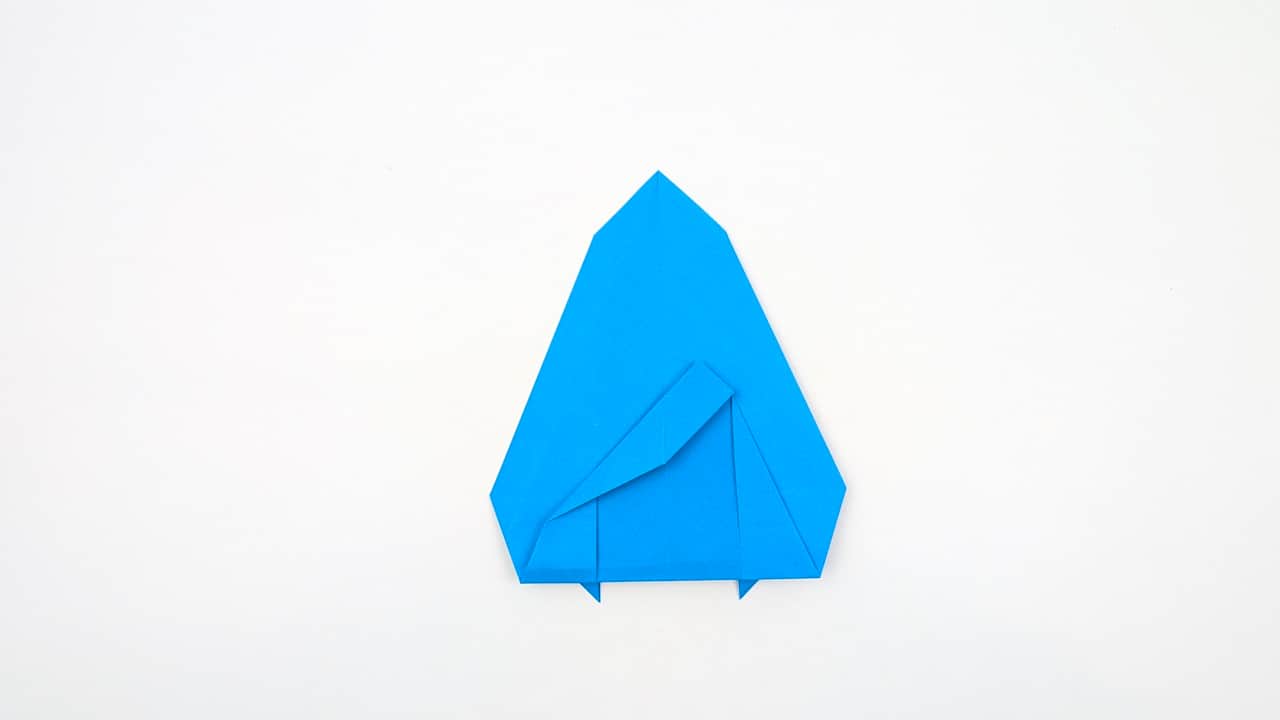
 9
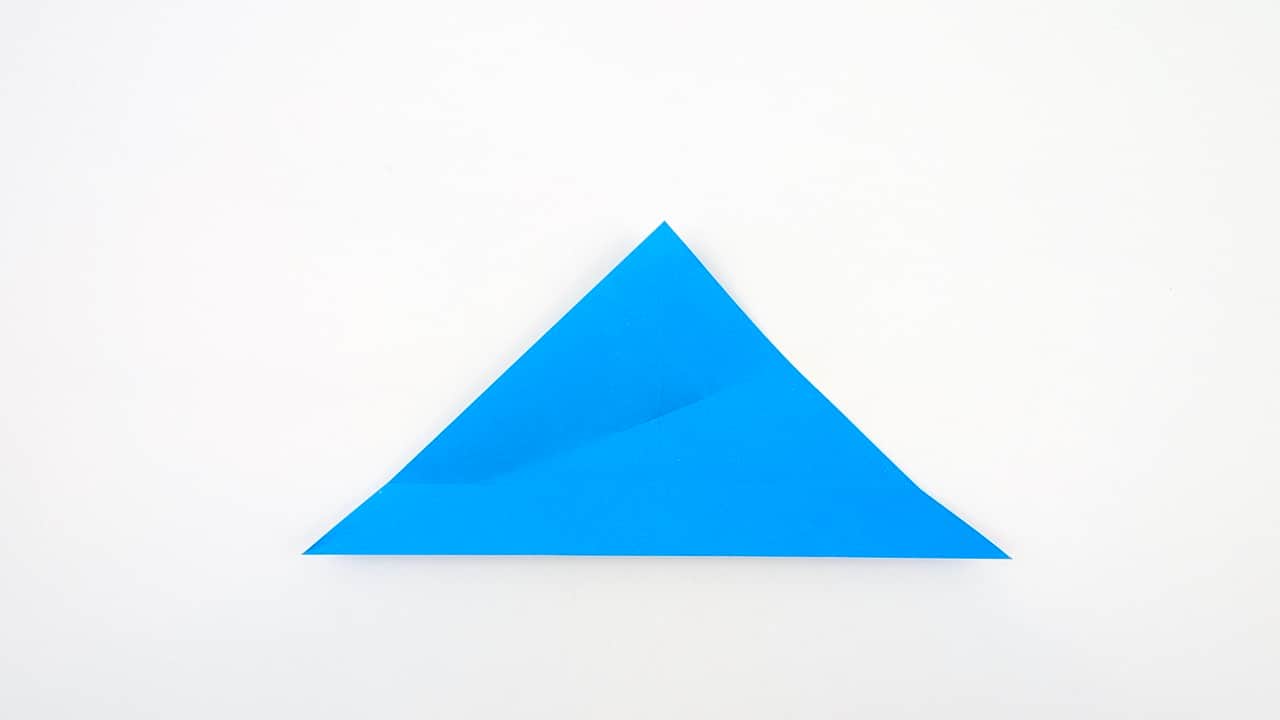
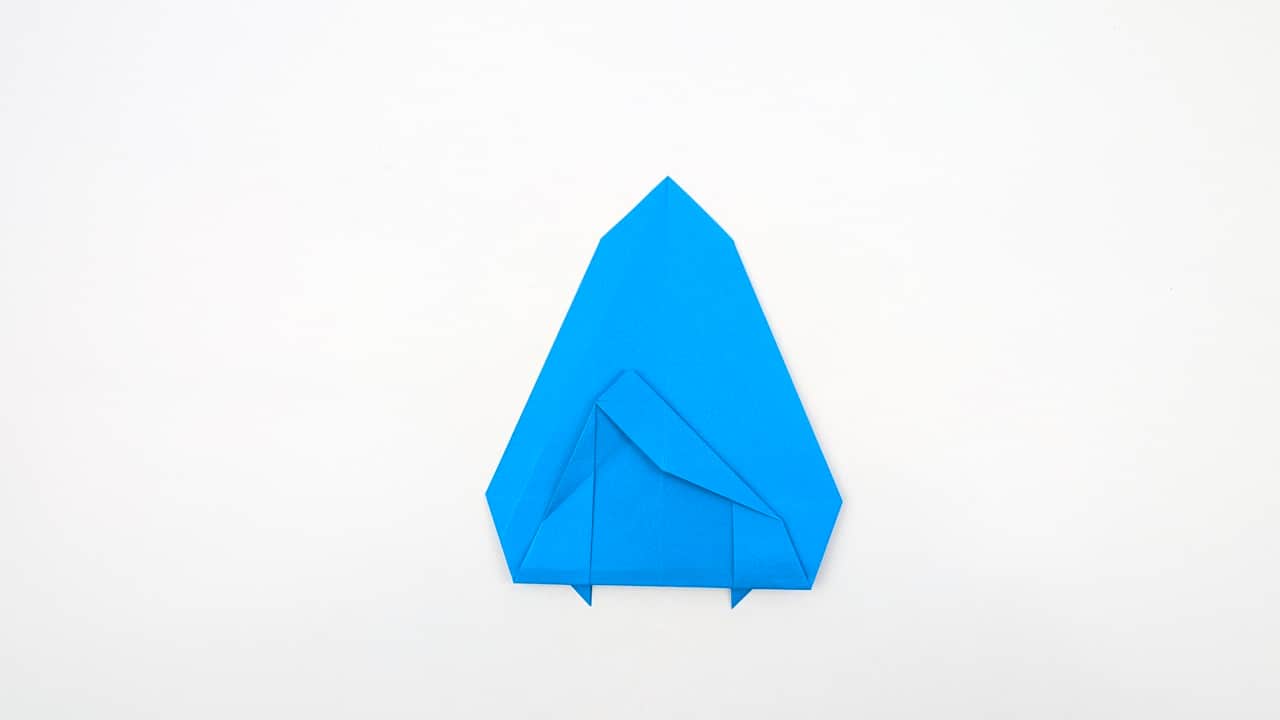
9Fold the top right edge of the front layer down to the center crease.
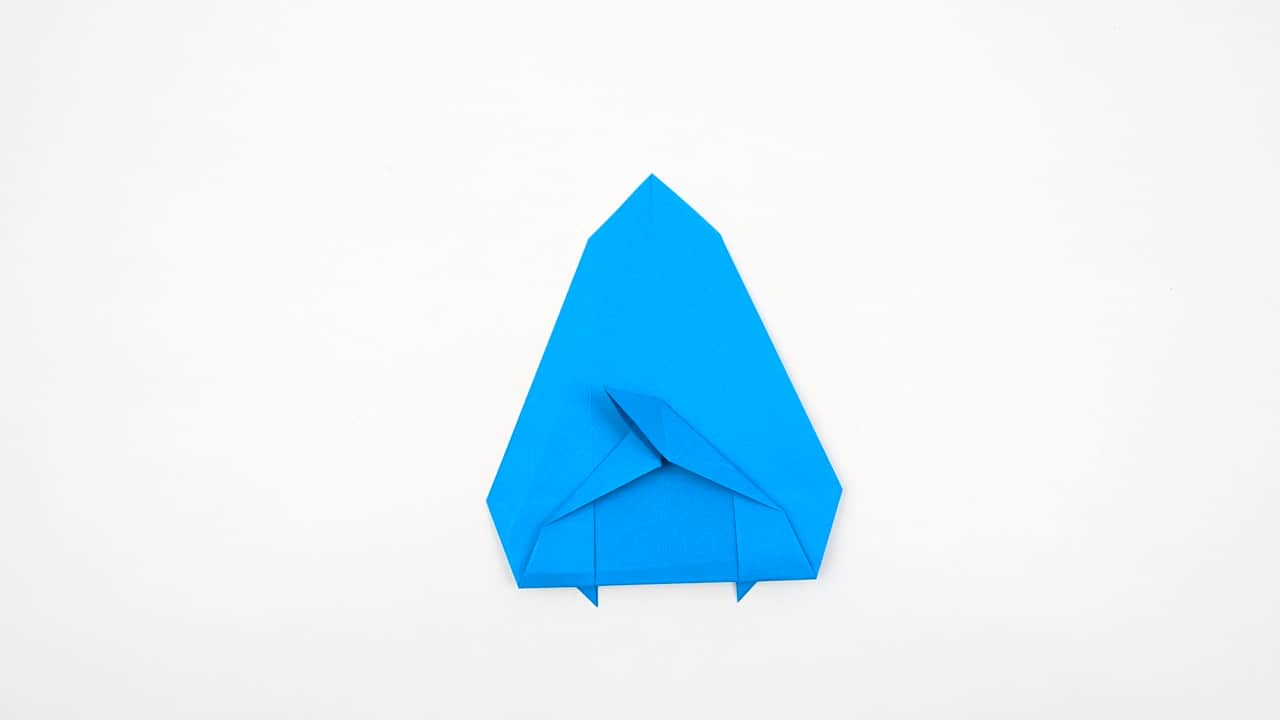
 10
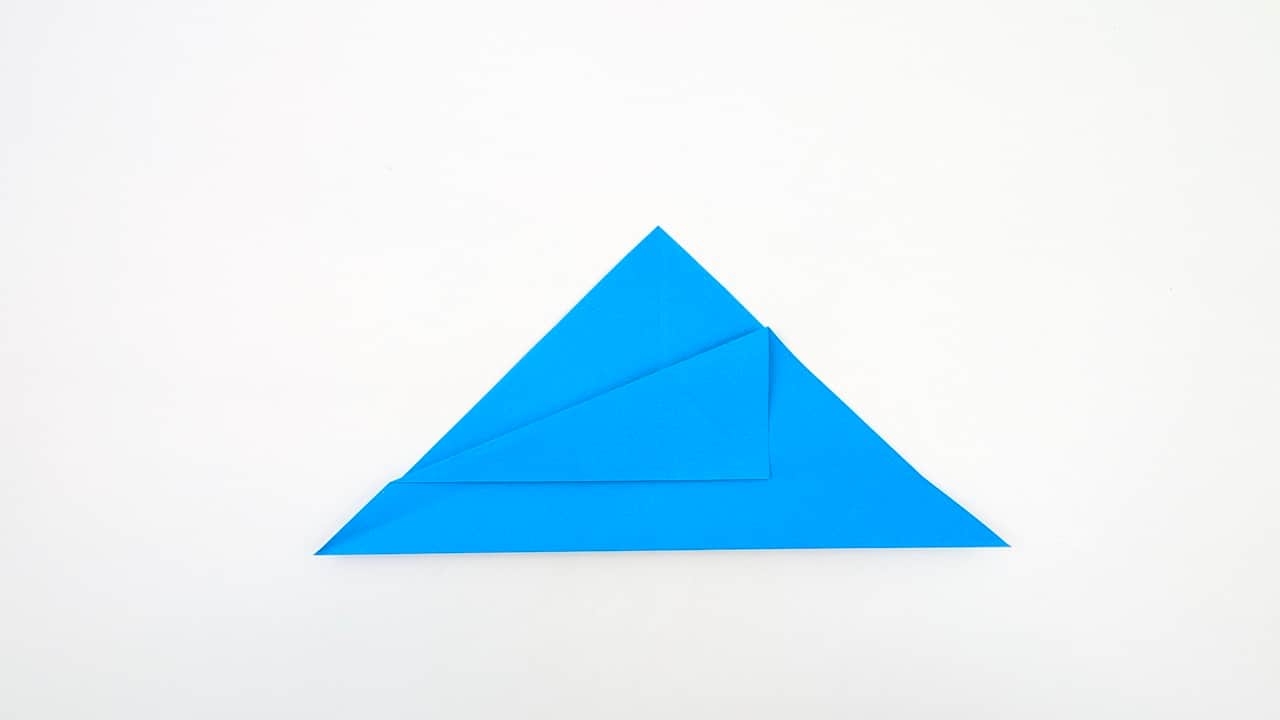
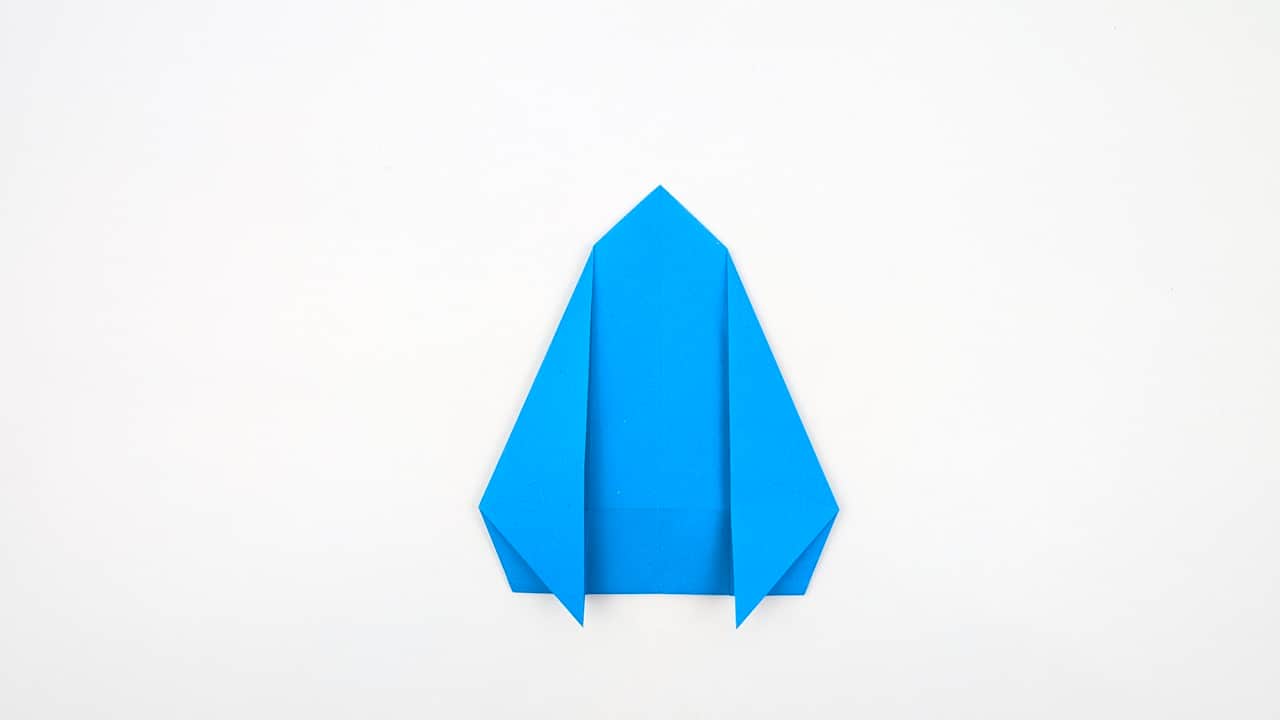
10Fold the top left edge of the front layer down to the center crease.
 11
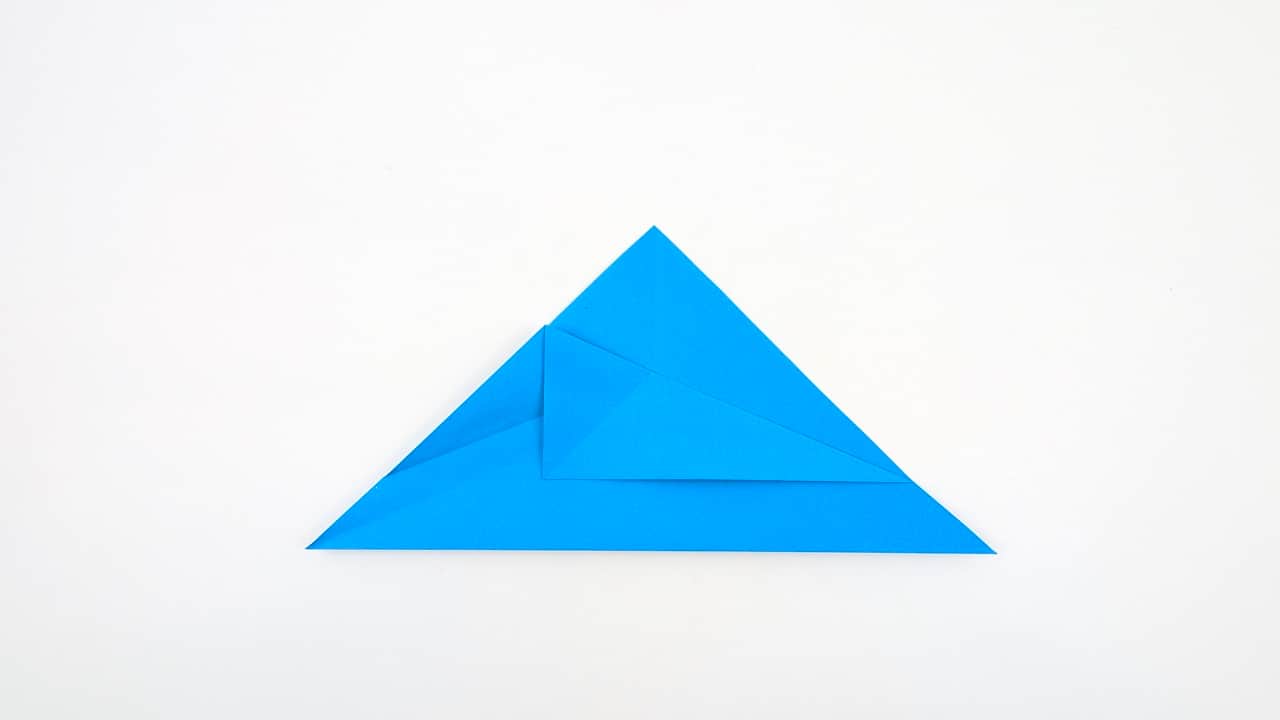
11Lift the bottom point of the front layer up while opening the two flaps — squash into a petal fold.
 12
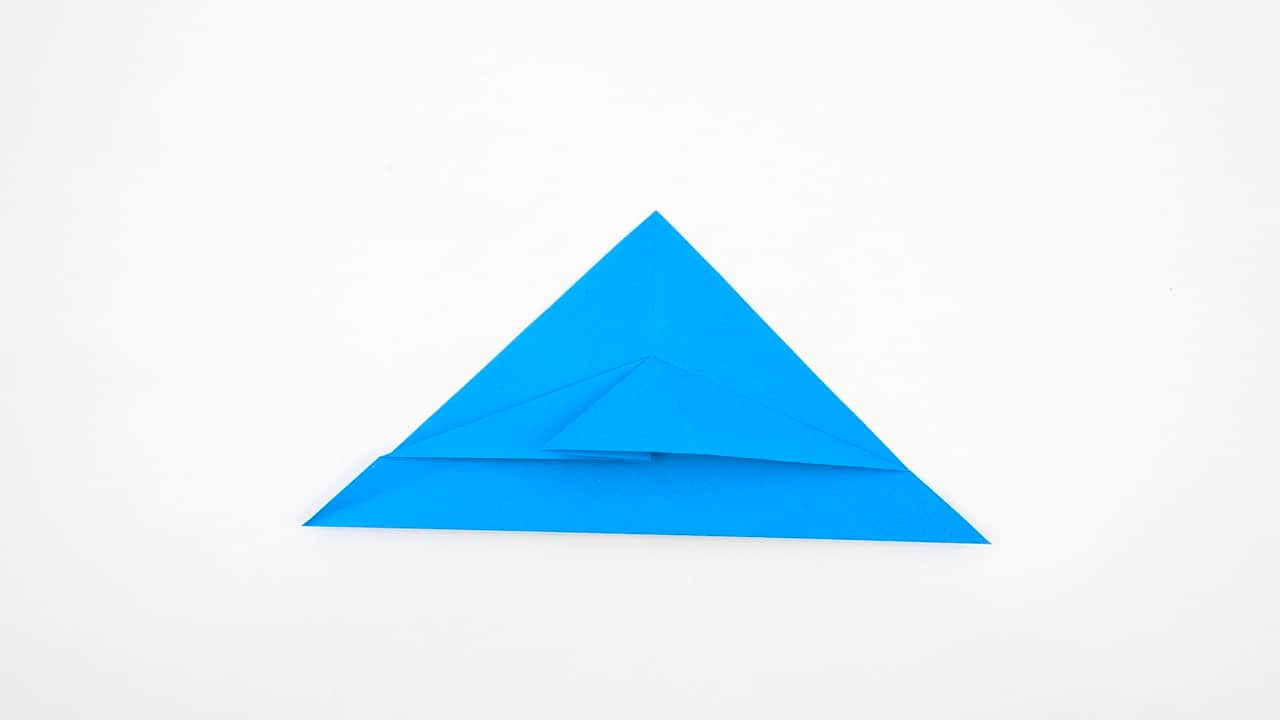
12Crease the petal fold flat, pressing down firmly on all edges.
 13
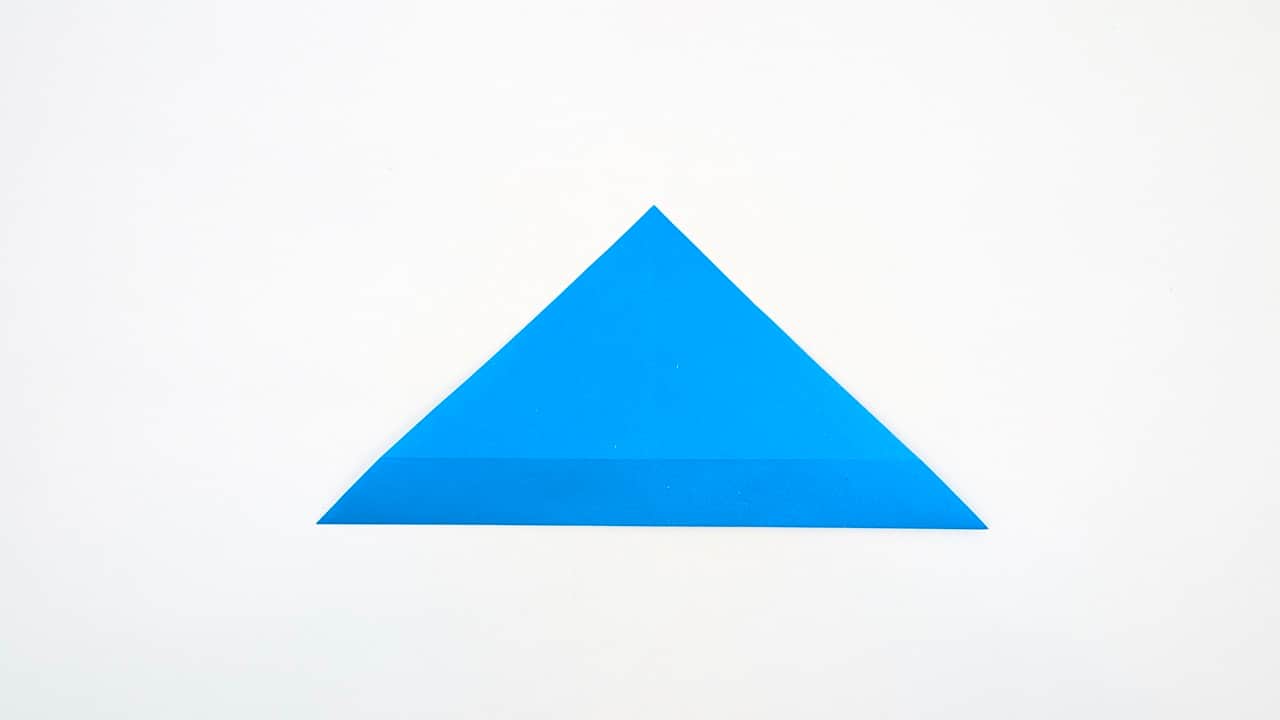
13Flip the model over. Repeat the petal fold on the back layer.
 14
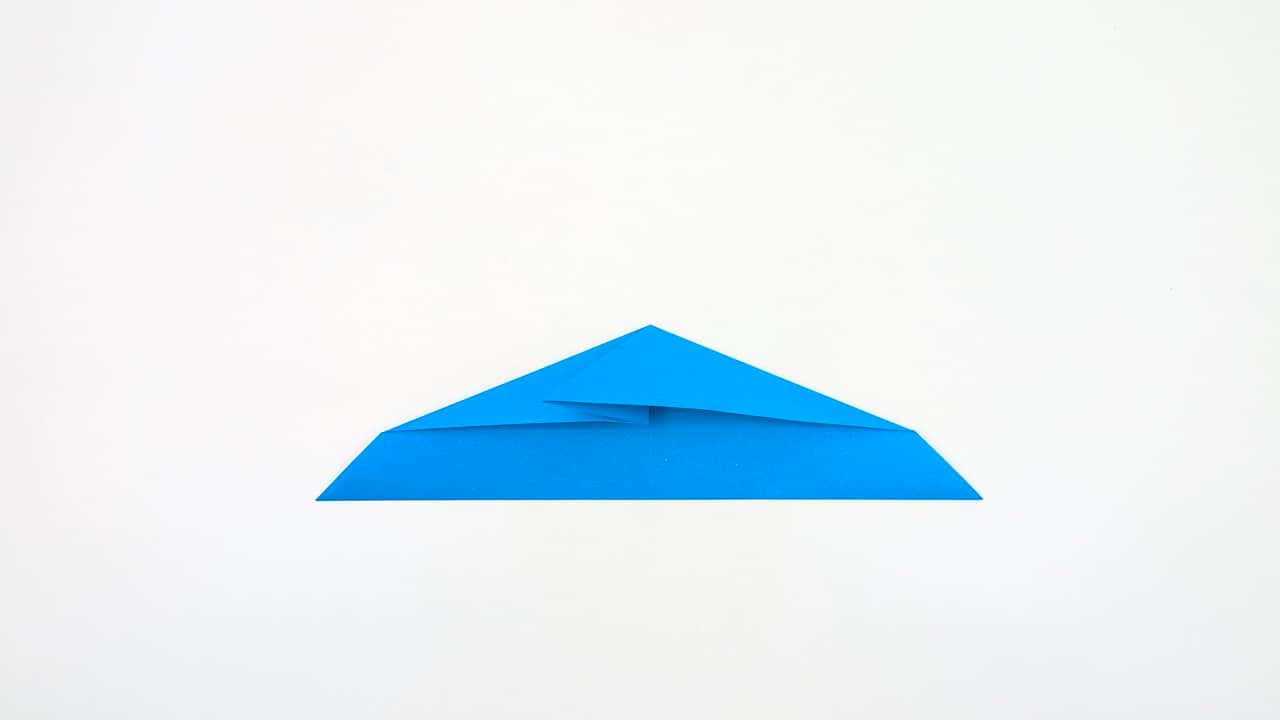
14You now have a bird base with four long points extending from the center.
 15
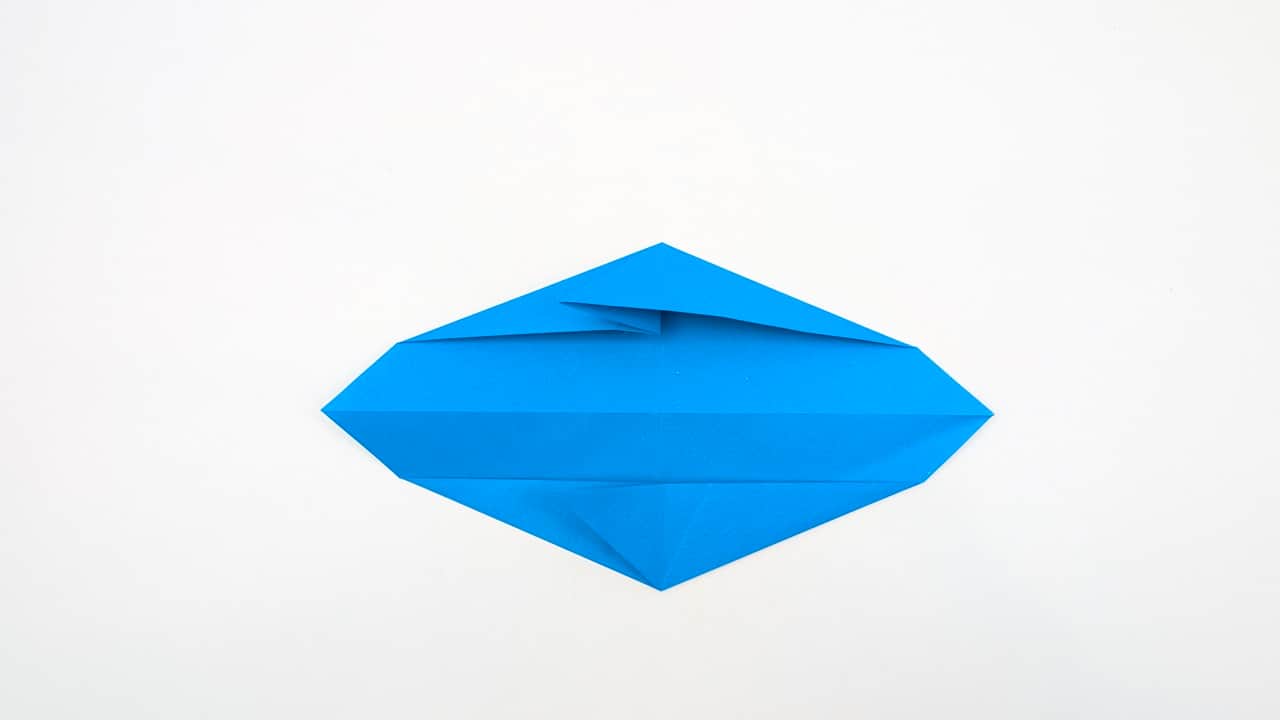
15Fold the bottom left point up to the top, aligning it with the center crease.
 16
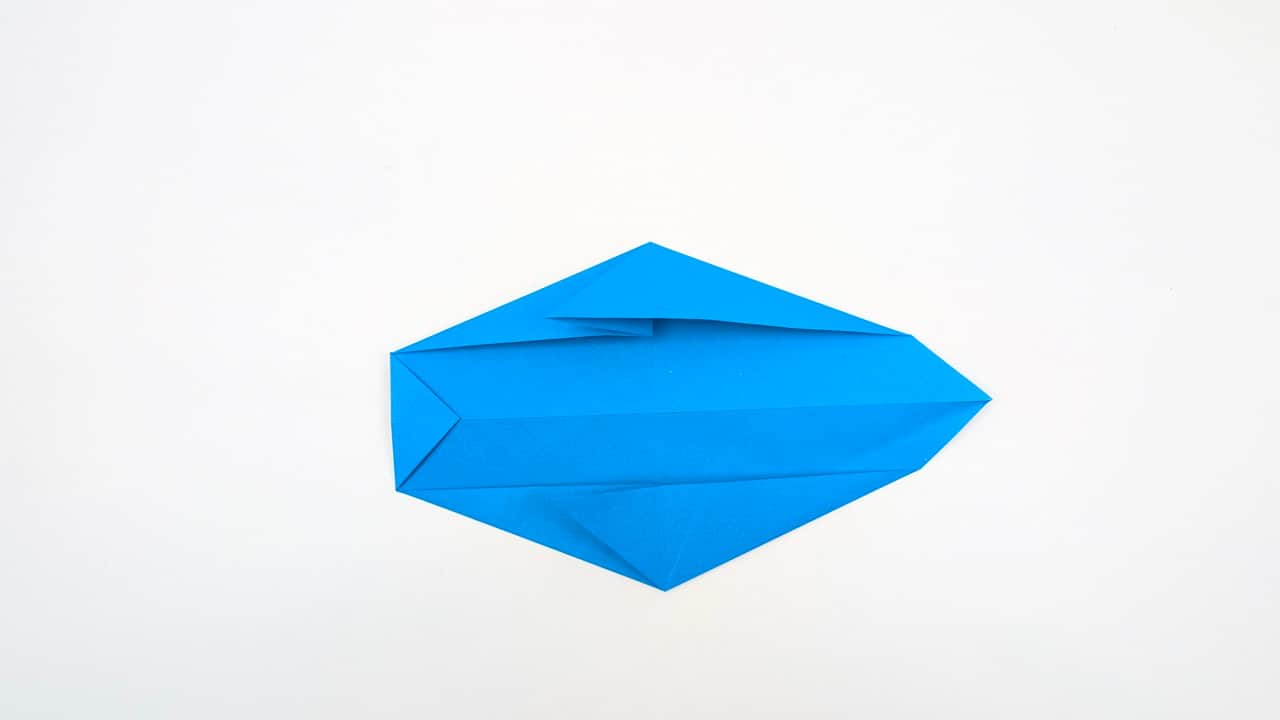
16Fold the bottom right point up to the top in the same way.
 17
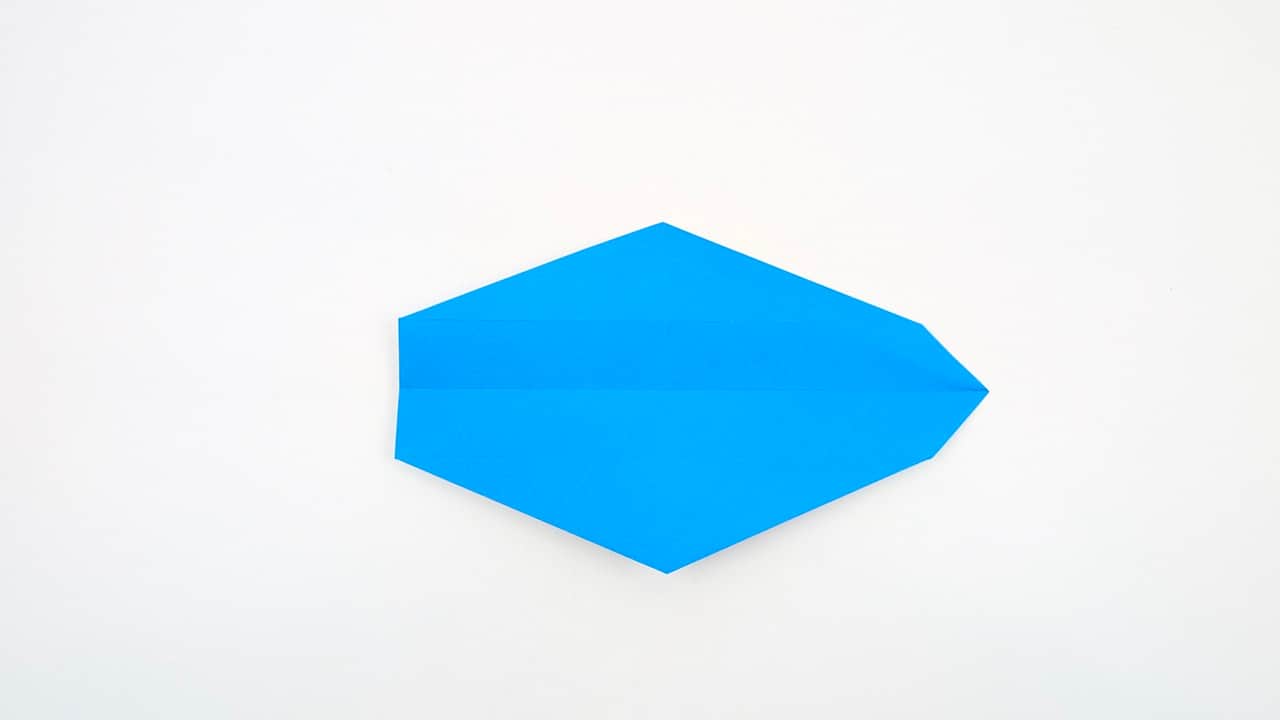
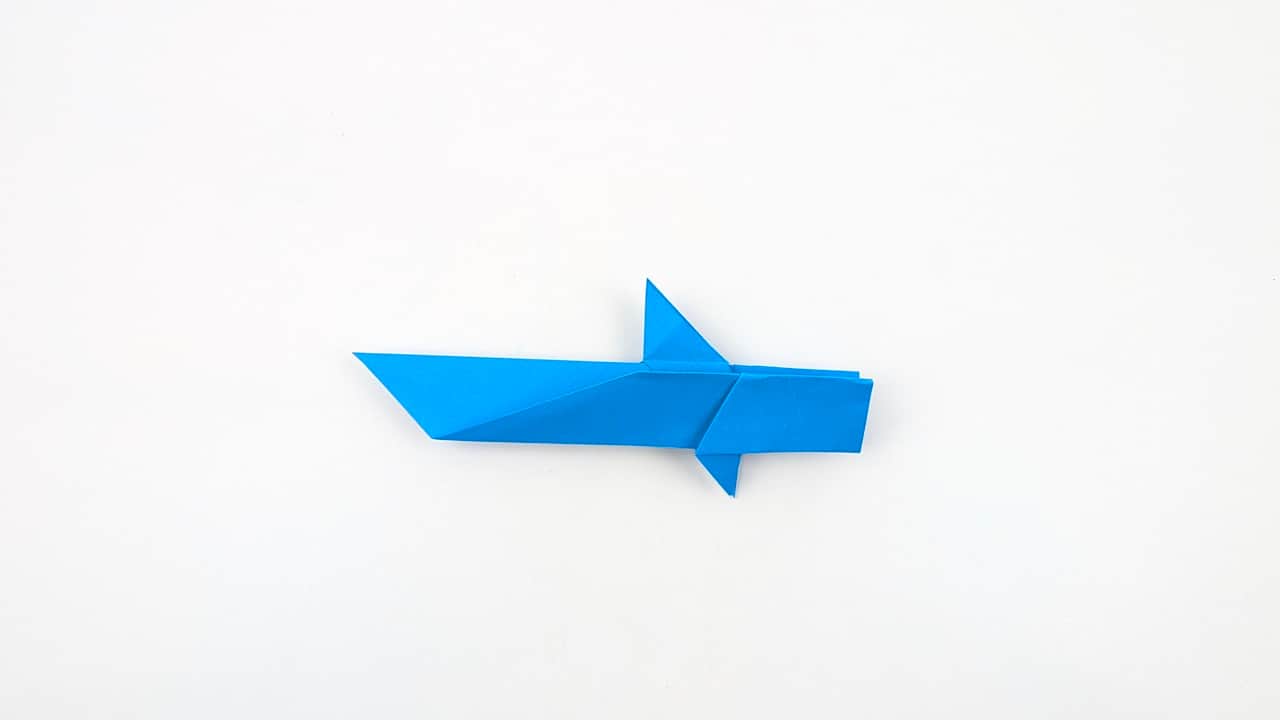
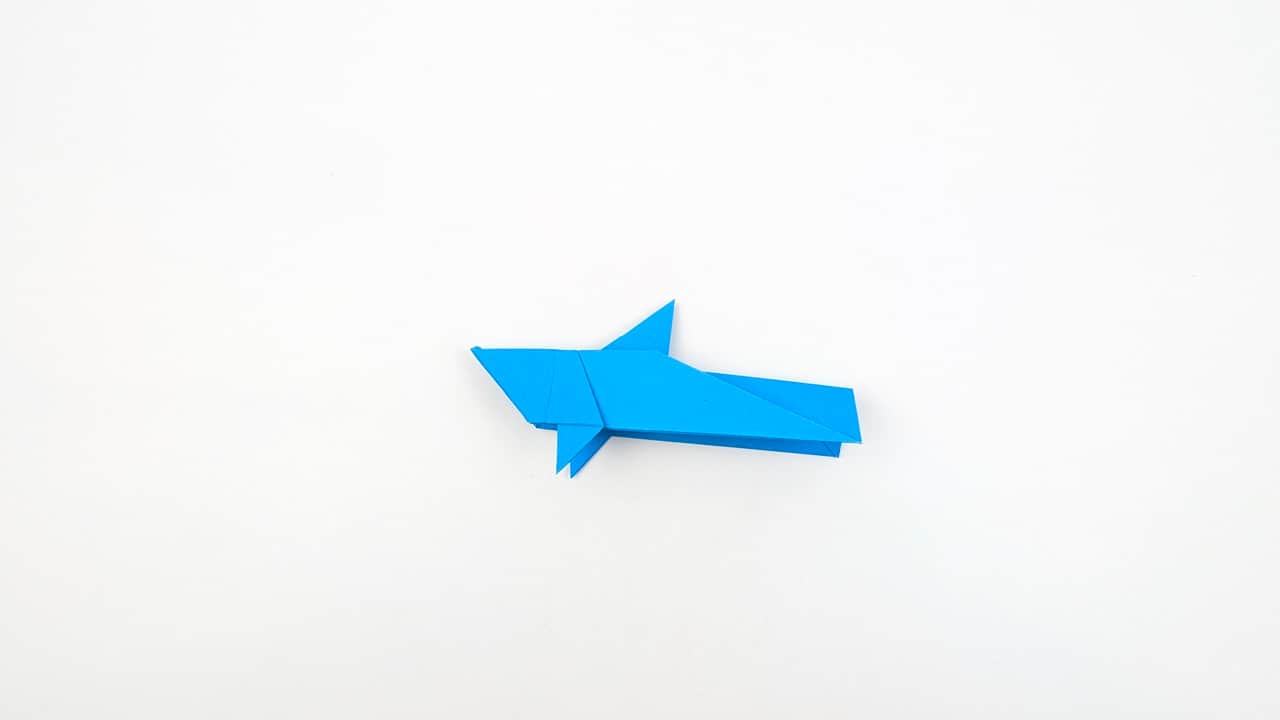
17Open the two bottom flaps out to form the tail section of the shark.
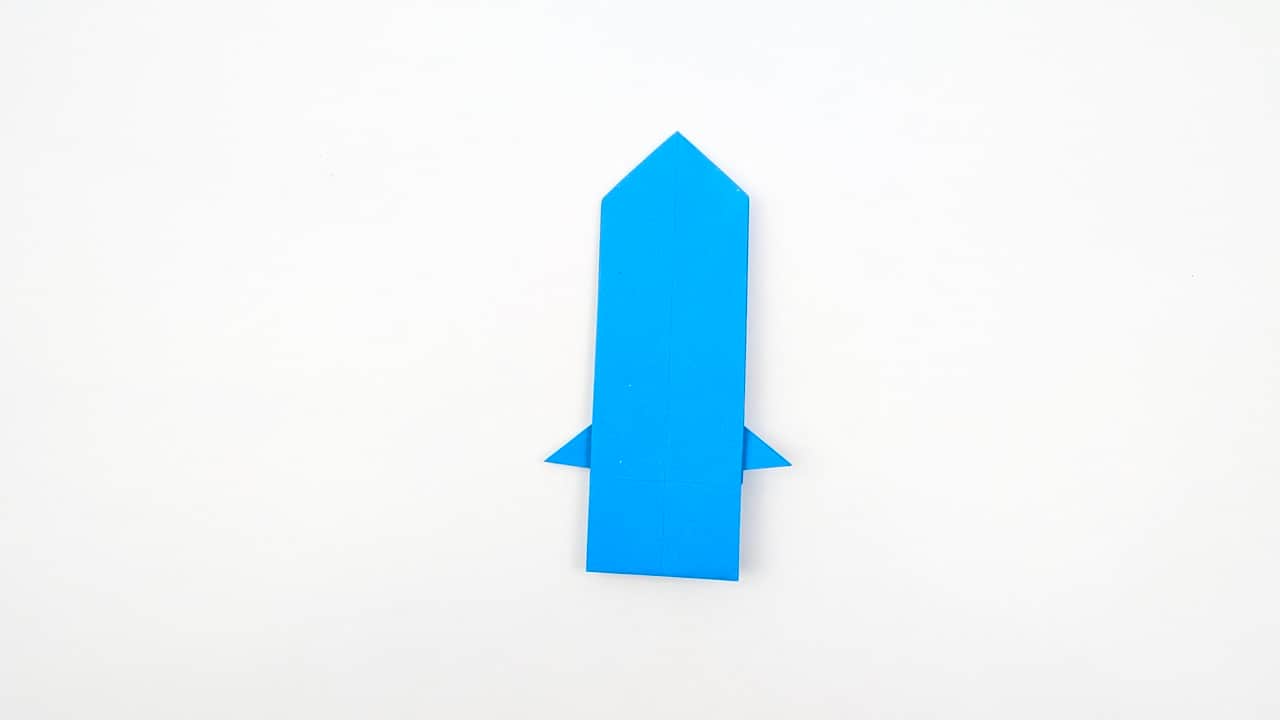
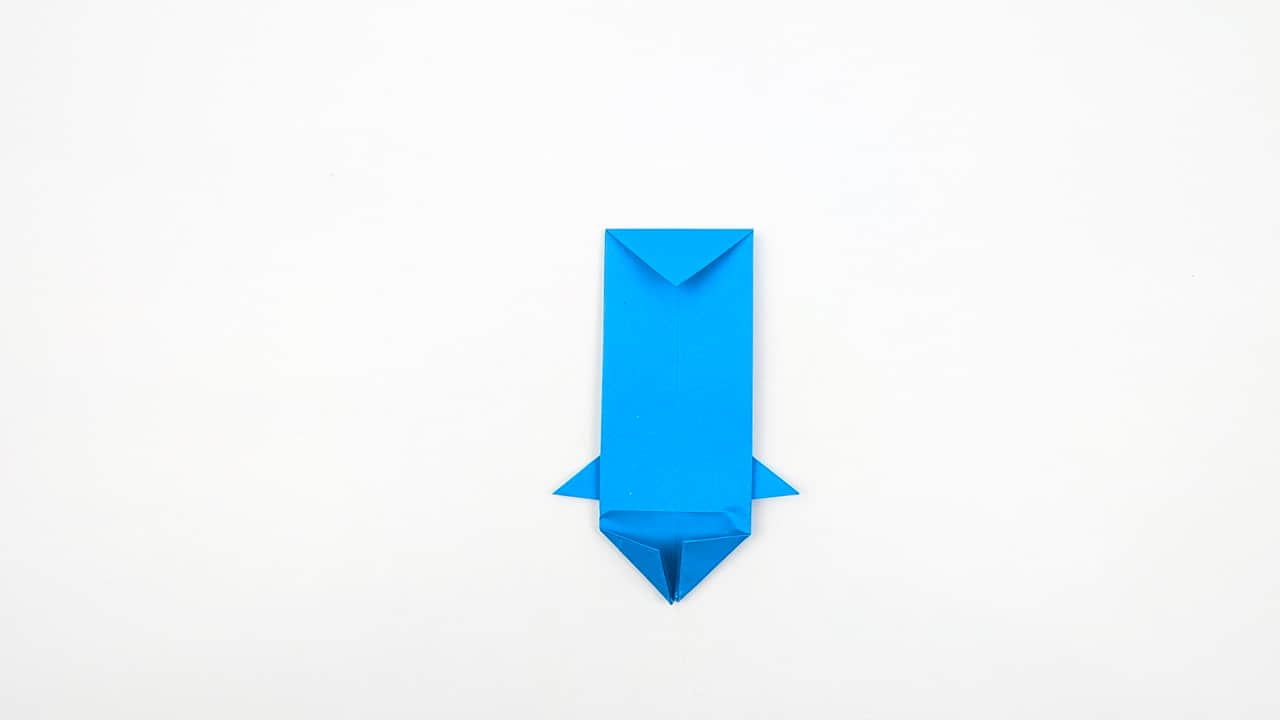
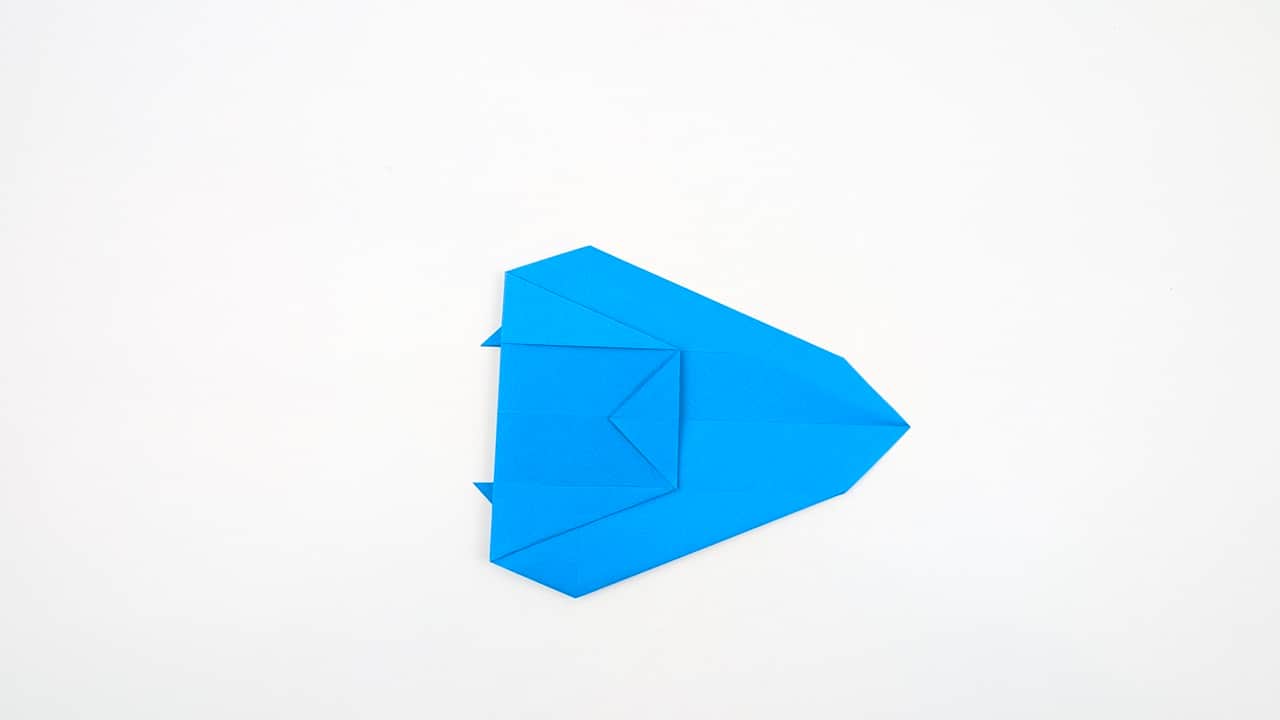 18
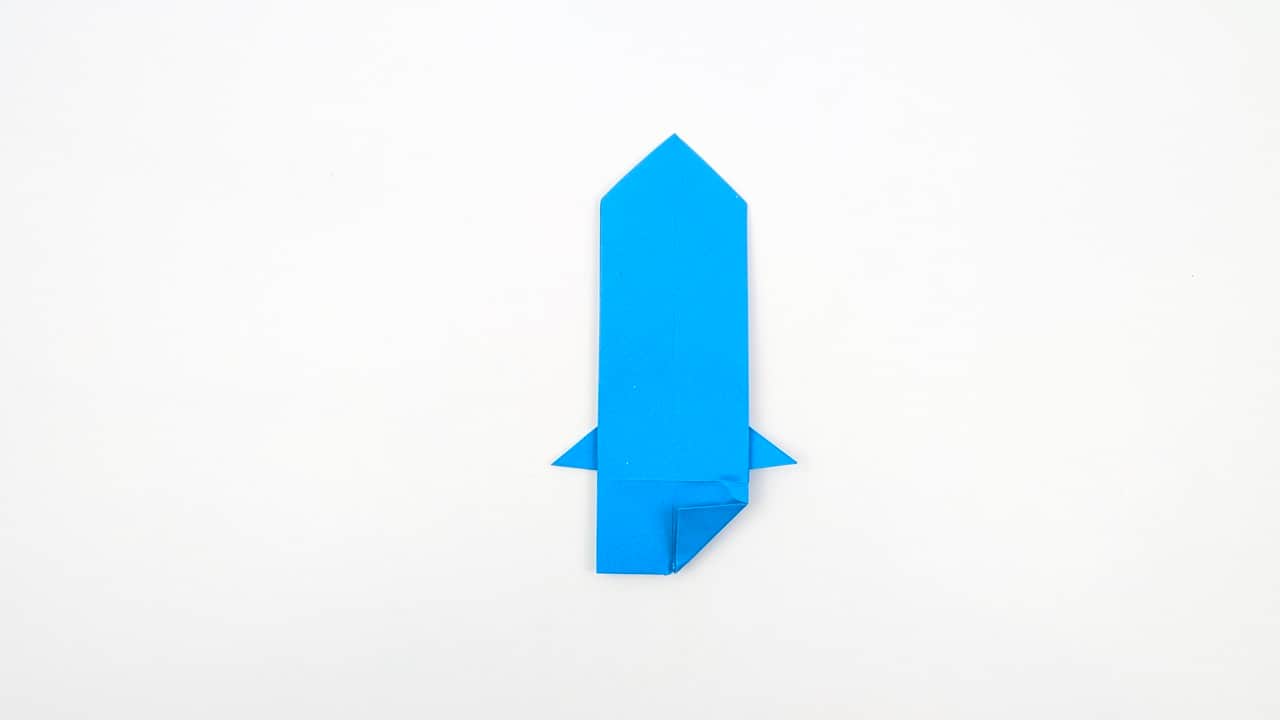
18Fold the top point of the front layer downward to begin forming the head.
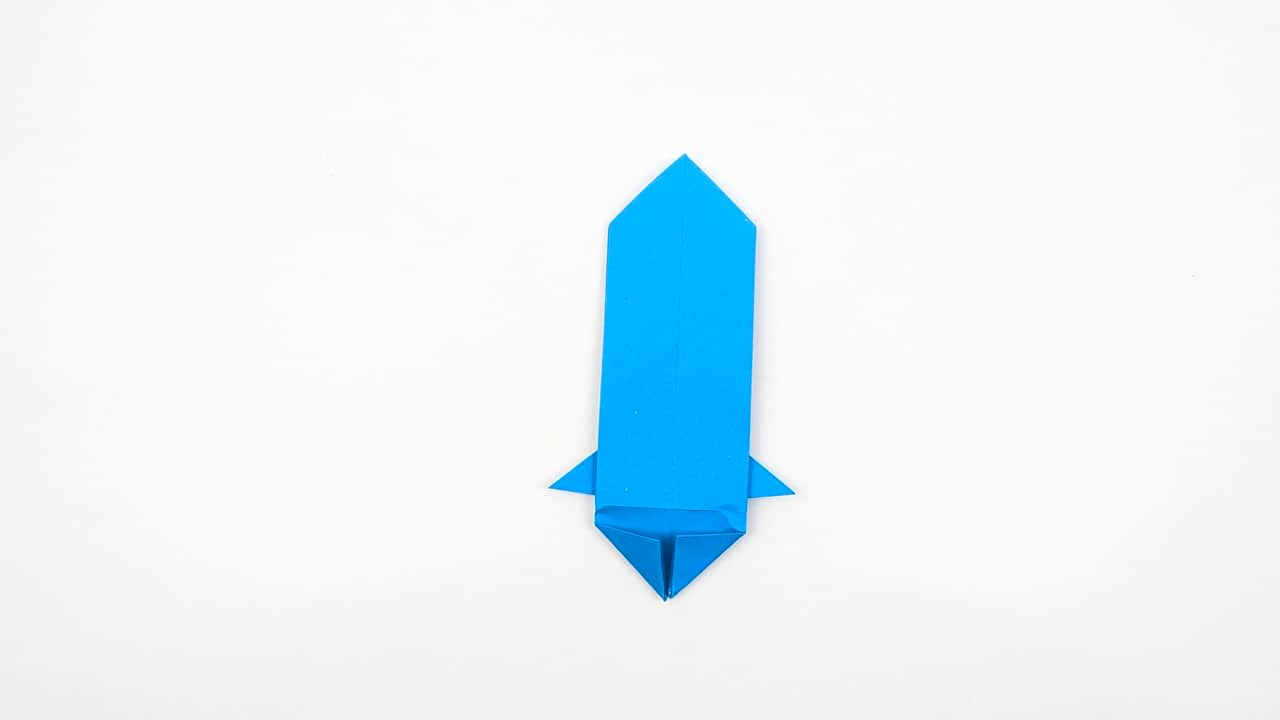
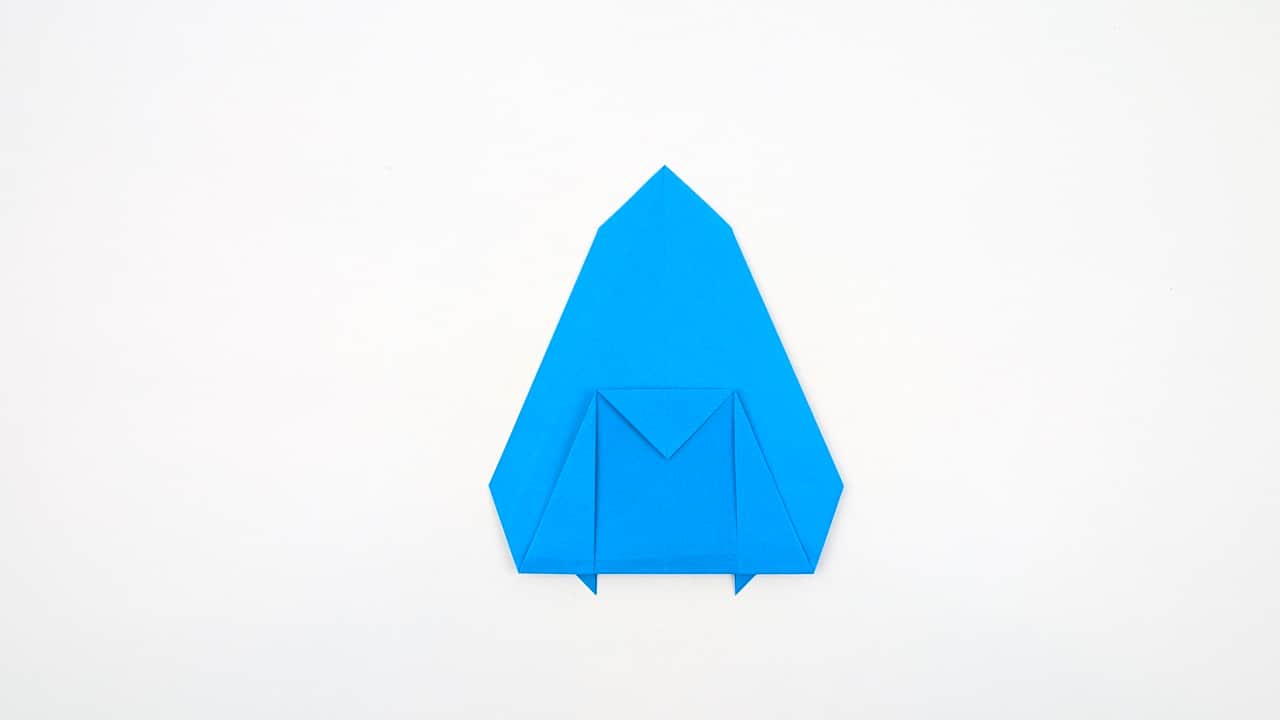 19
19Fold the top point back upward at a shorter distance to create the nose profile.
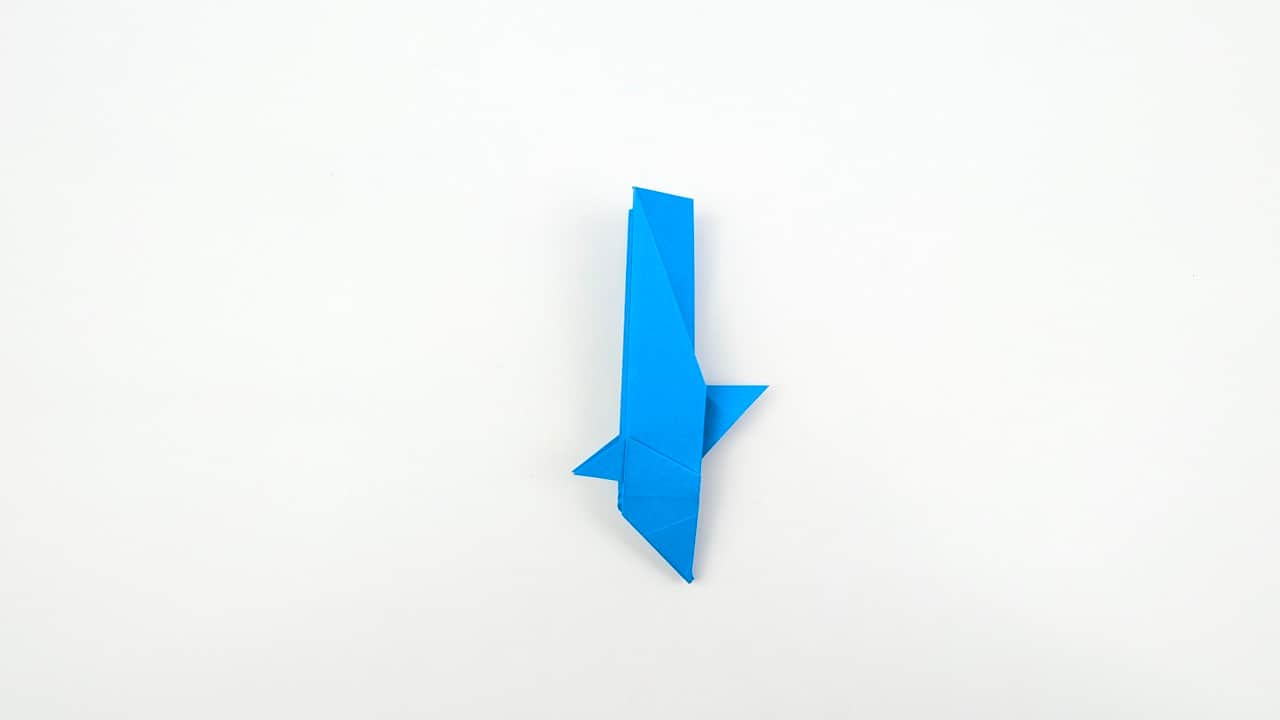
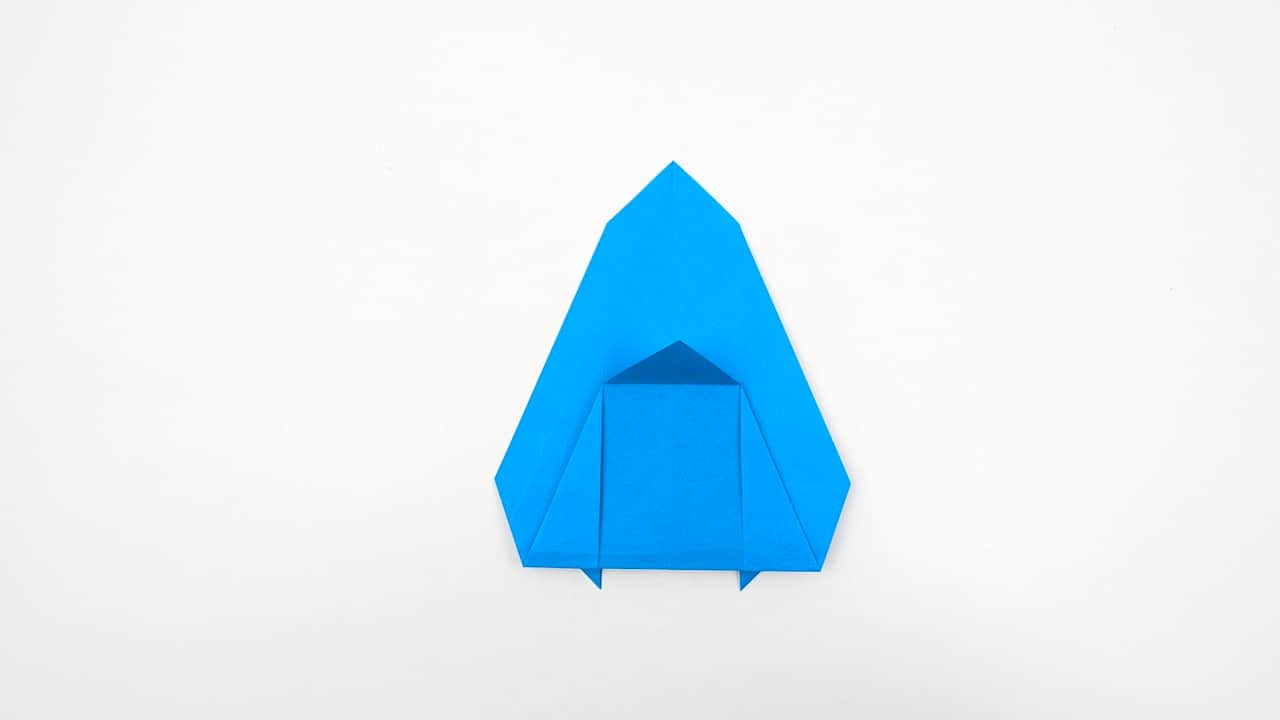 20
20Fold the right side of the head section diagonally inward to narrow the nose.
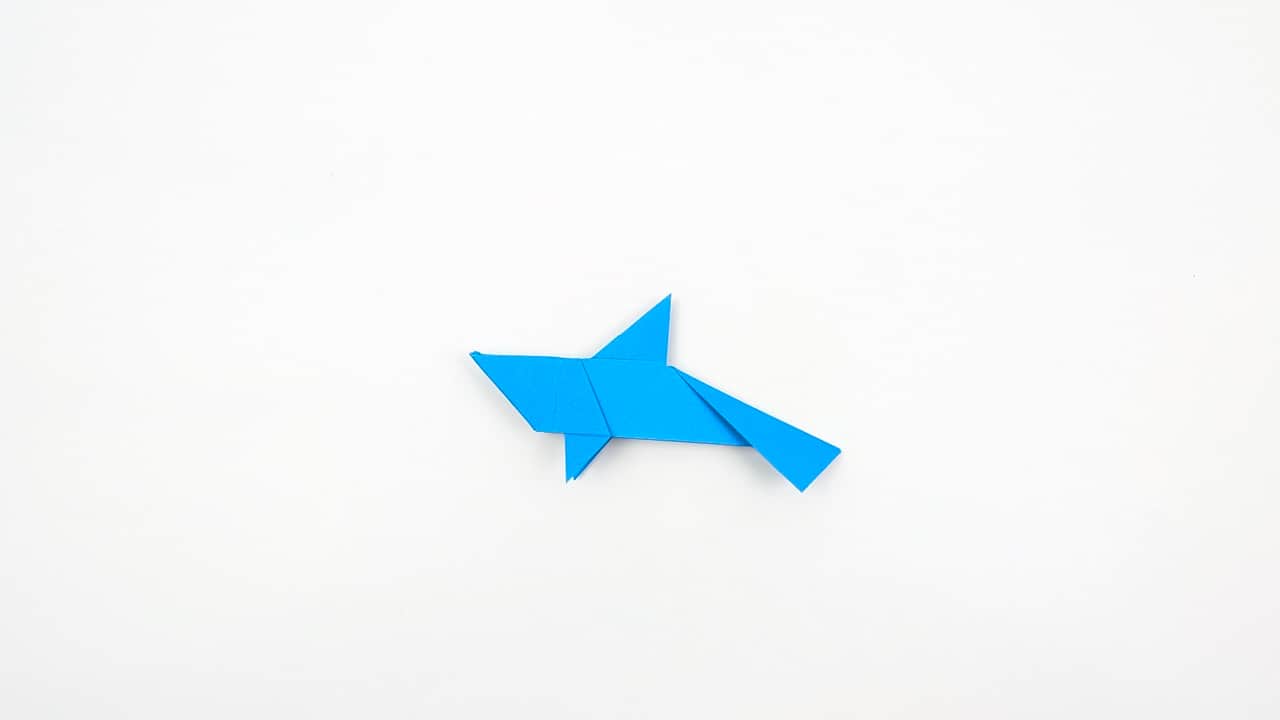
 21
21Fold the left side of the head section diagonally inward to match the right.
 22
22Squash the nose section flat and crease all edges firmly.
 23
23Fold the right flap of the tail section upward at an angle to form the right tail fin.
 24
24Fold the left flap of the tail section upward in the mirror image to form the left tail fin.
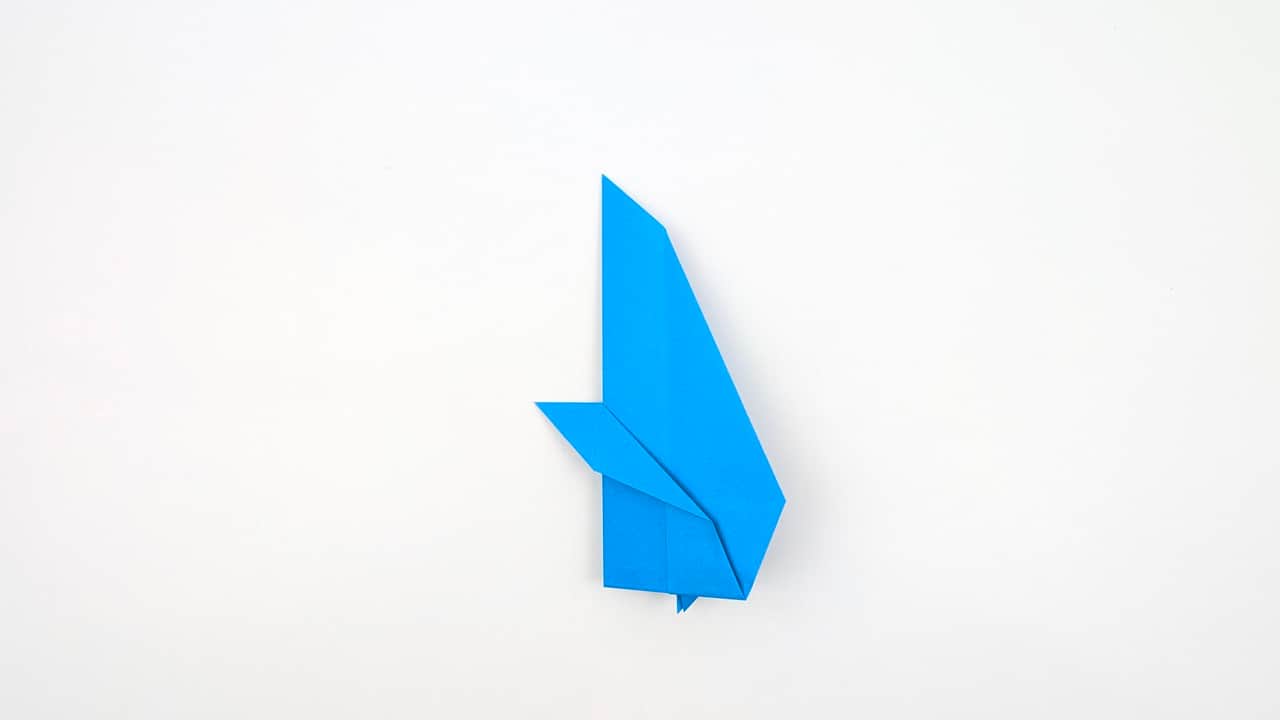 25
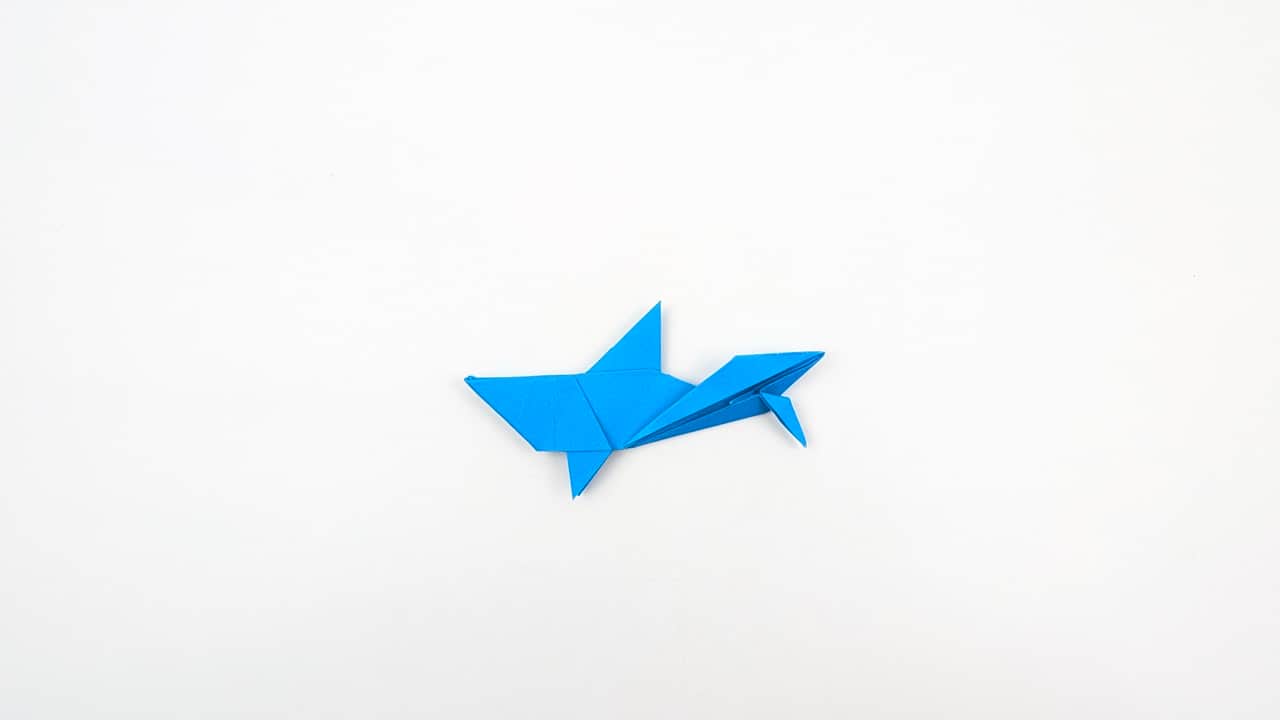
25Adjust both tail fins so they are symmetrical.
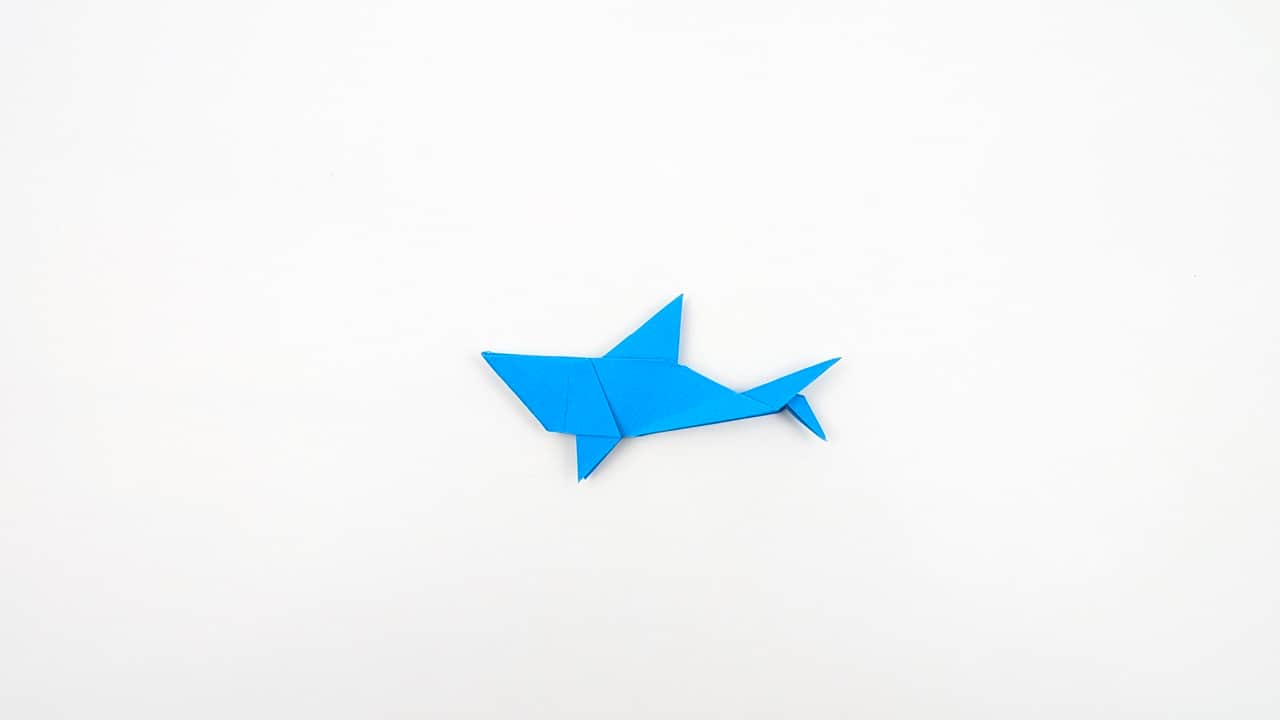
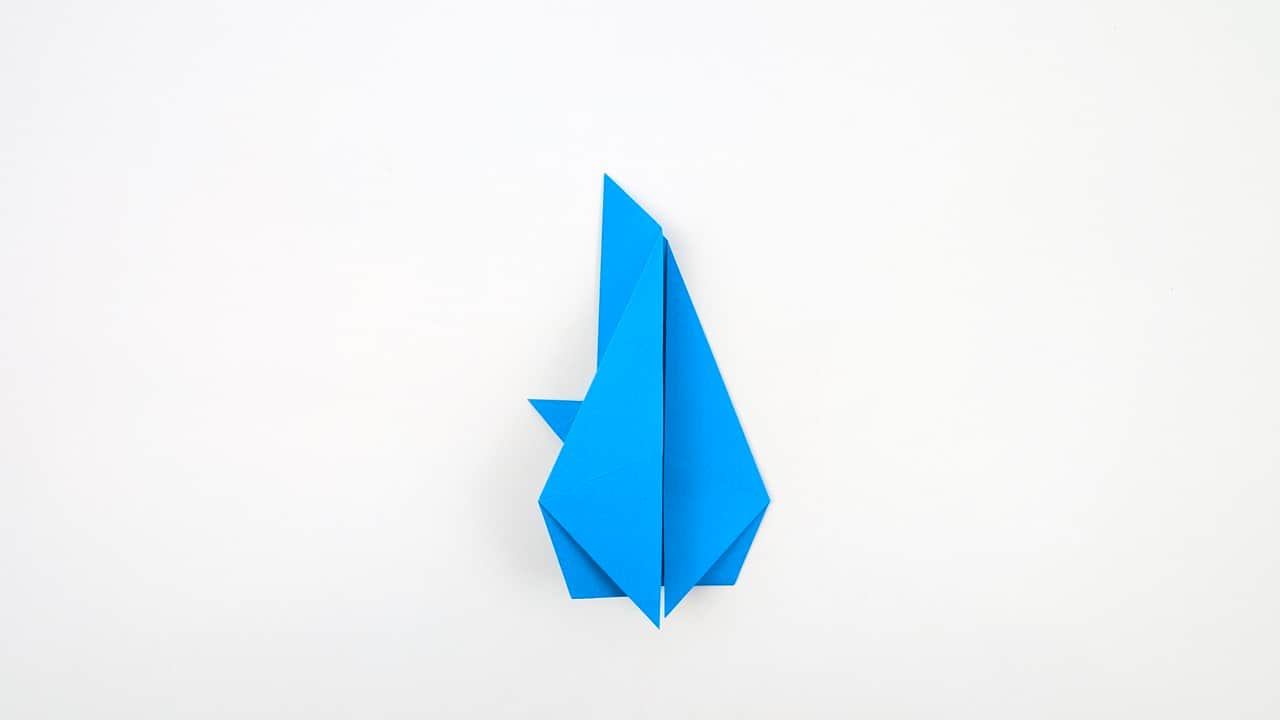 26
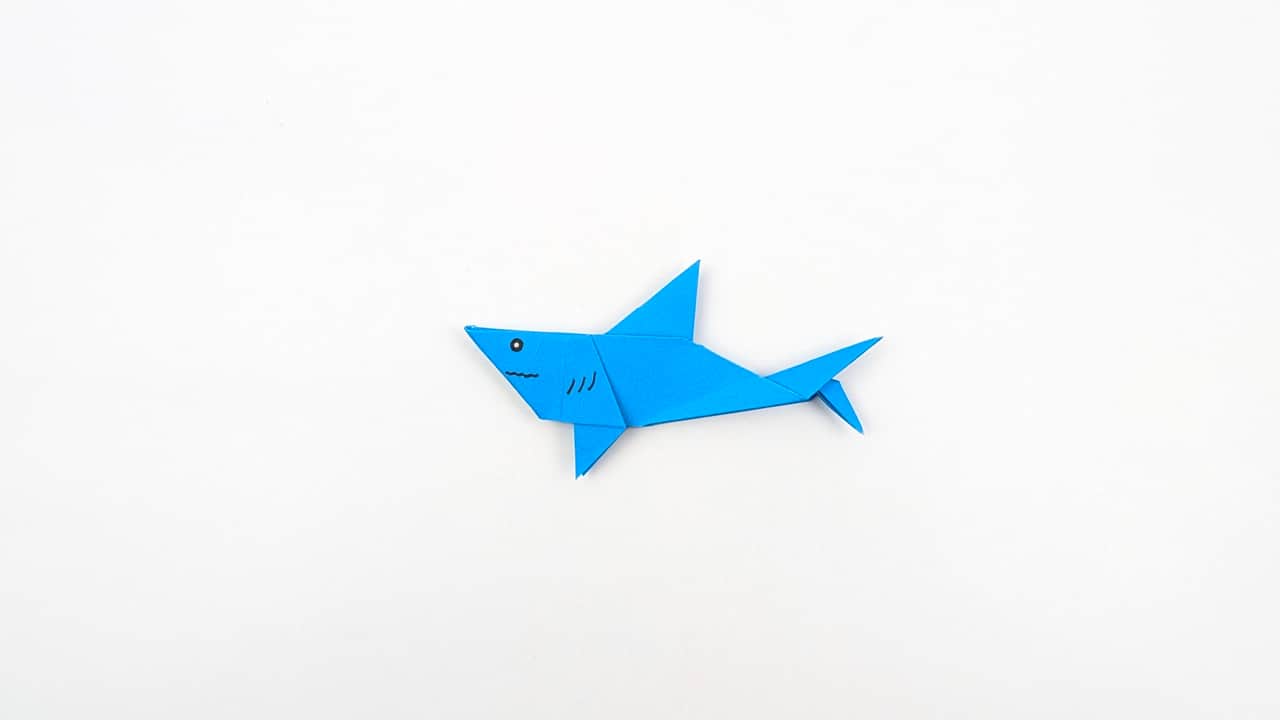
26Fold the top right edge of the body inward to begin shaping the dorsal fin.
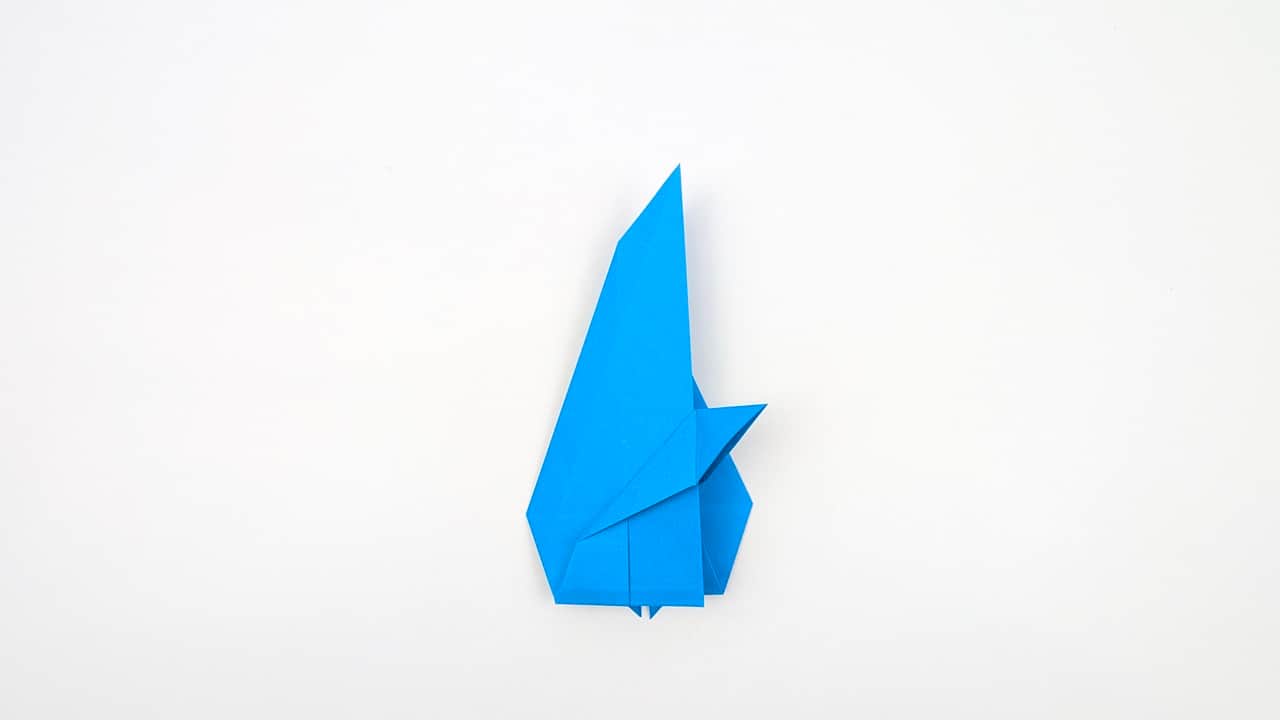 27
27Reverse-fold the dorsal fin upward so it stands above the body.
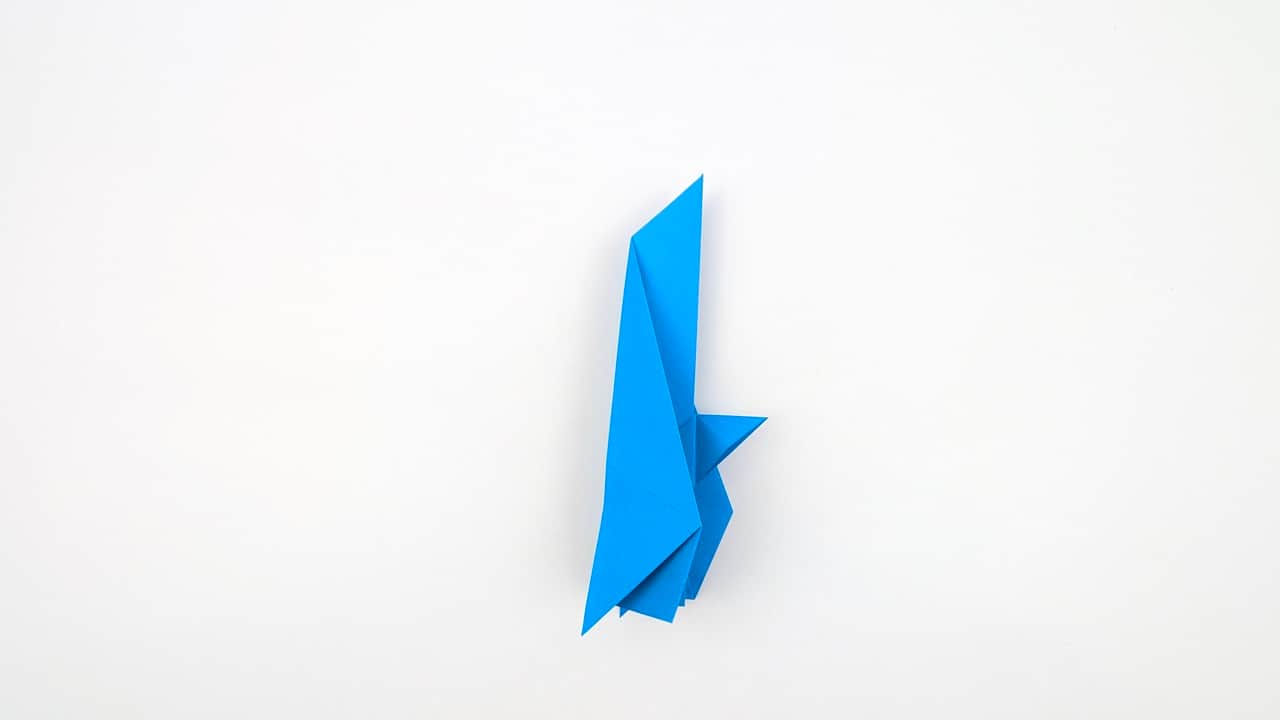 28
28Crease the base of the dorsal fin firmly so it holds its upright position.
 29
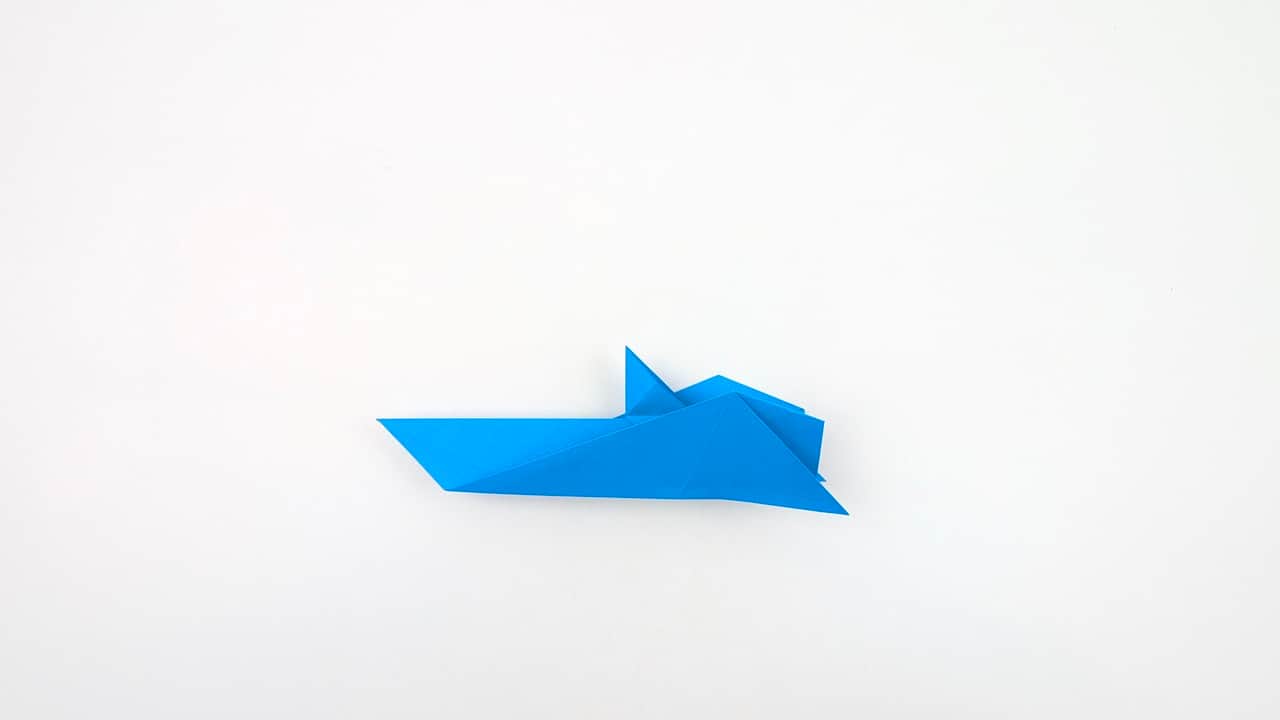
29Fold the right pectoral fin point outward and downward.
 30
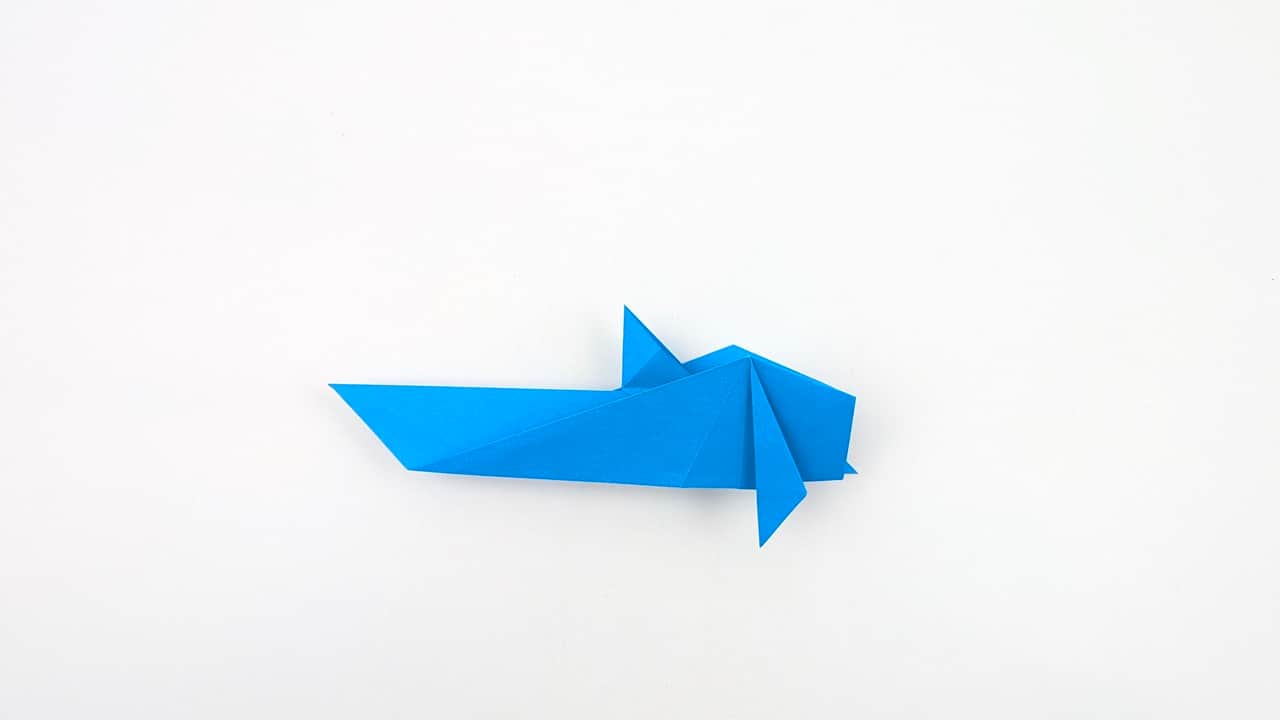
30Fold the left pectoral fin point outward and downward to match.
 31
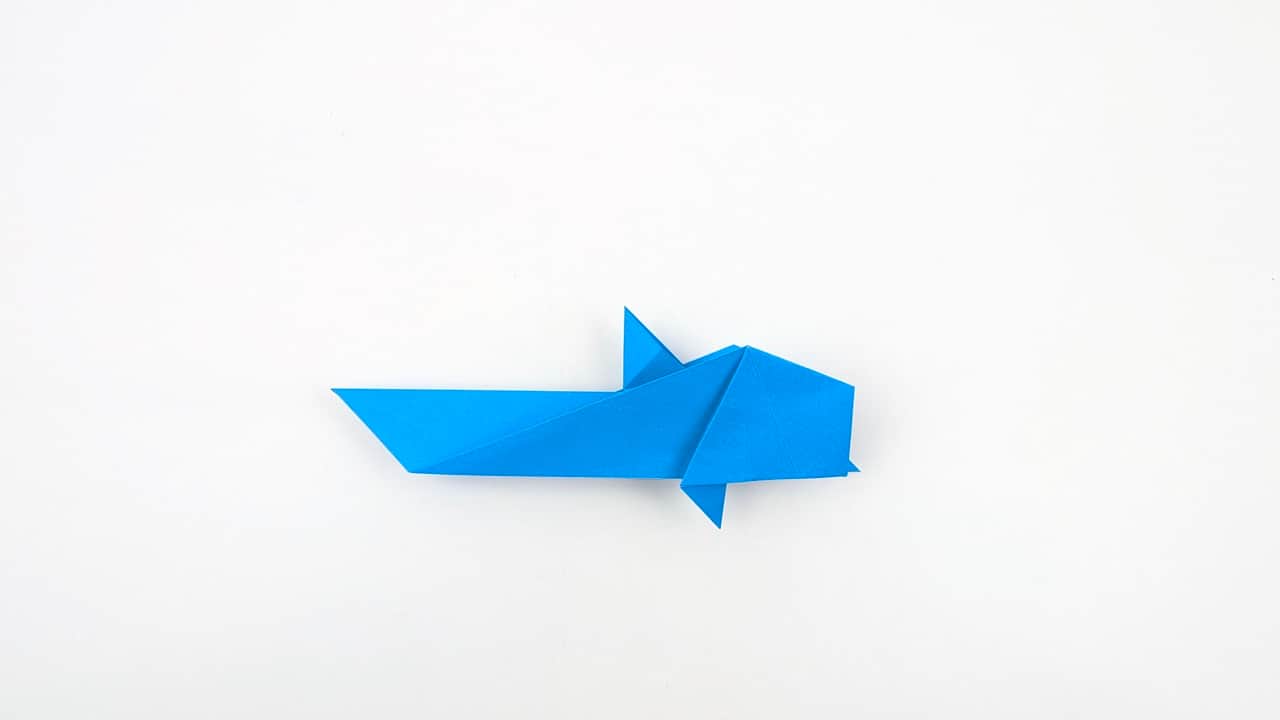
31Crease both pectoral fins at the same angle so the shark looks balanced.
 32
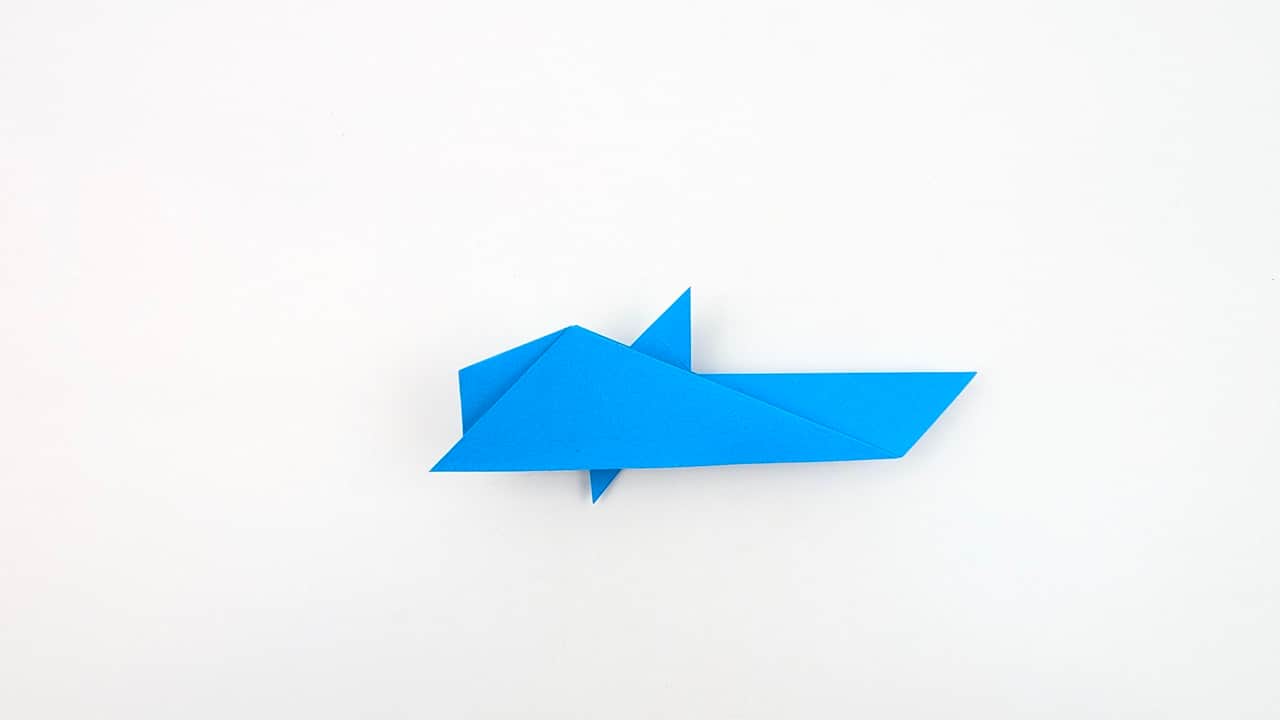
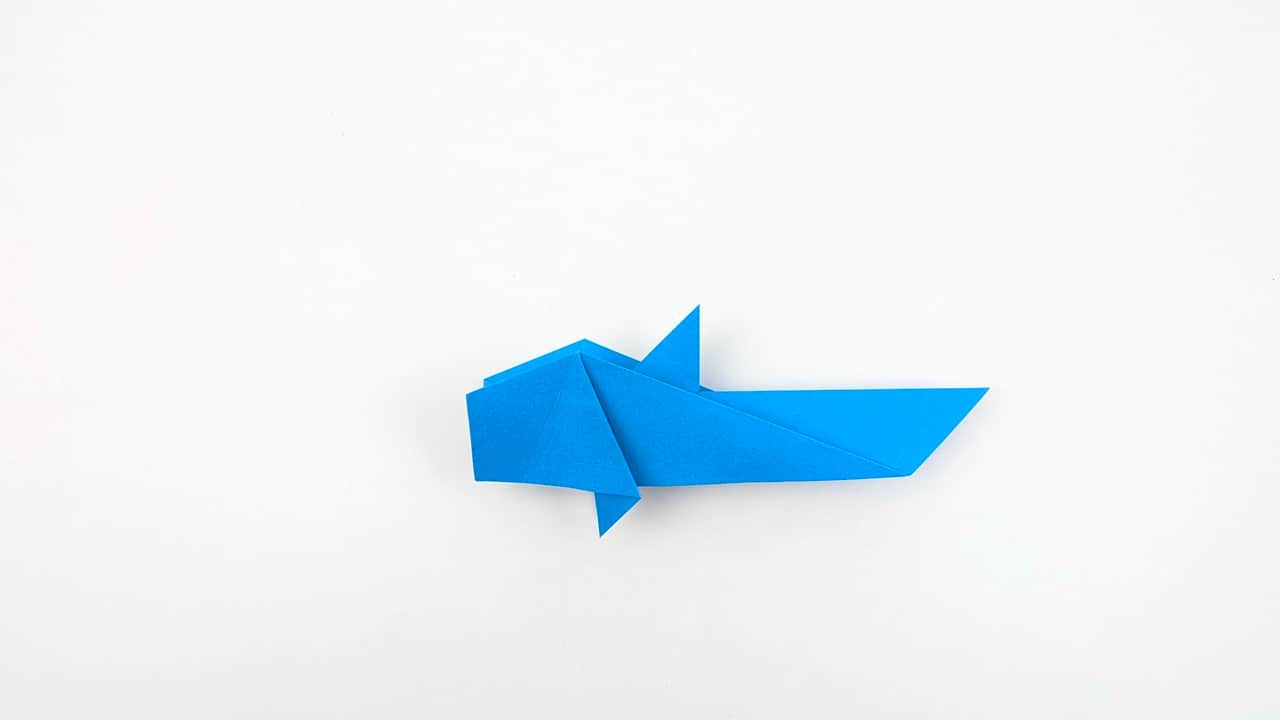
32Turn the model sideways. Fold the top layer of the body in half lengthwise to give it dimension.
 33
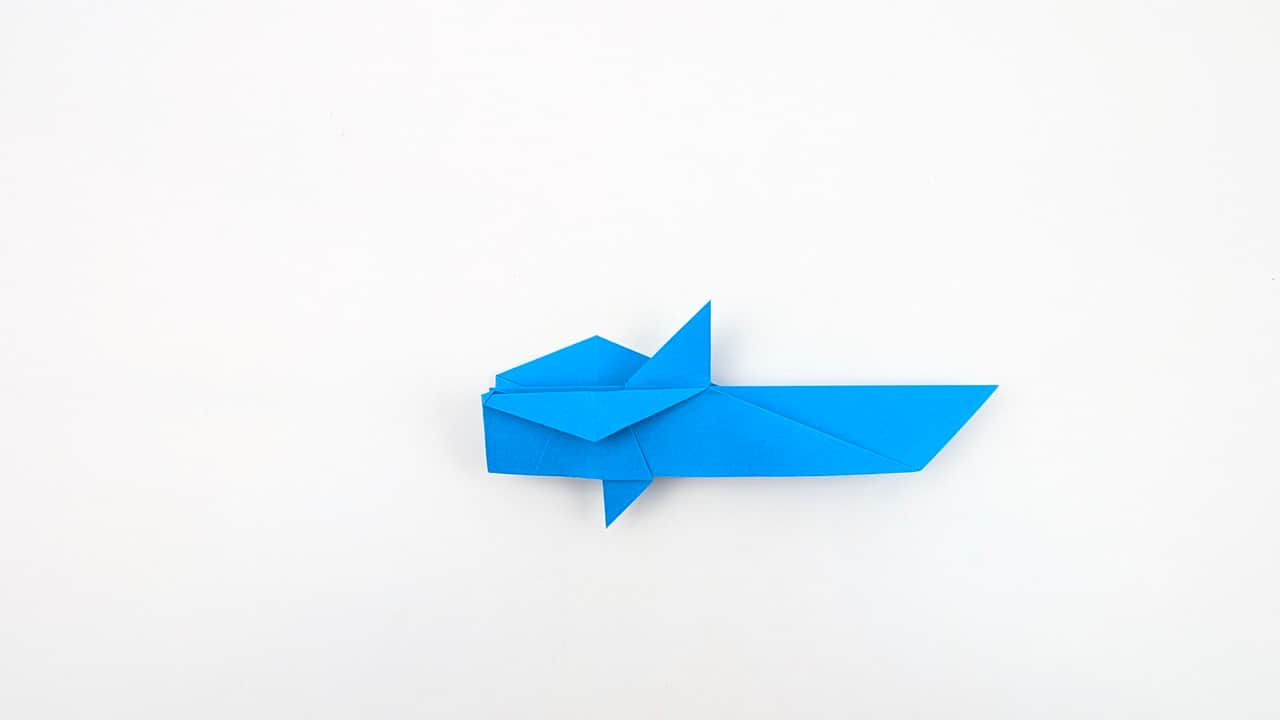
33Open the body slightly from the underside to give it a rounded three-dimensional profile.
 34
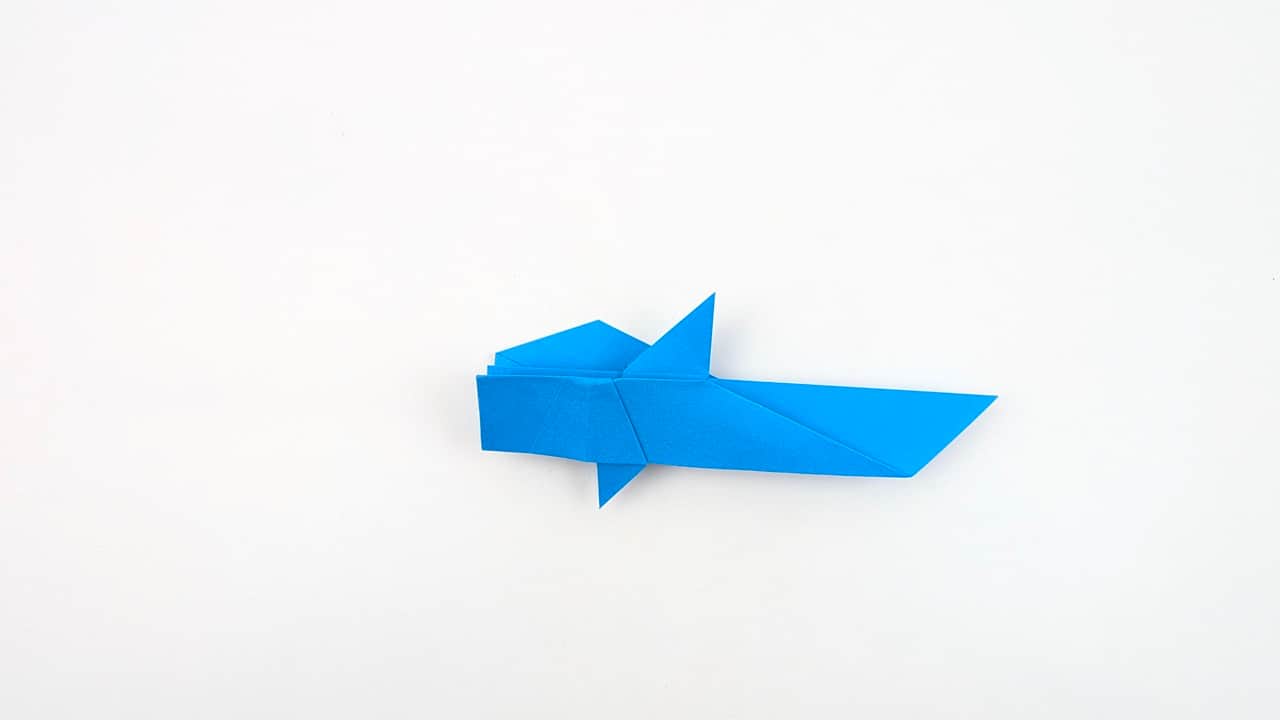
34Pinch the snout to sharpen and narrow the nose point.
 35
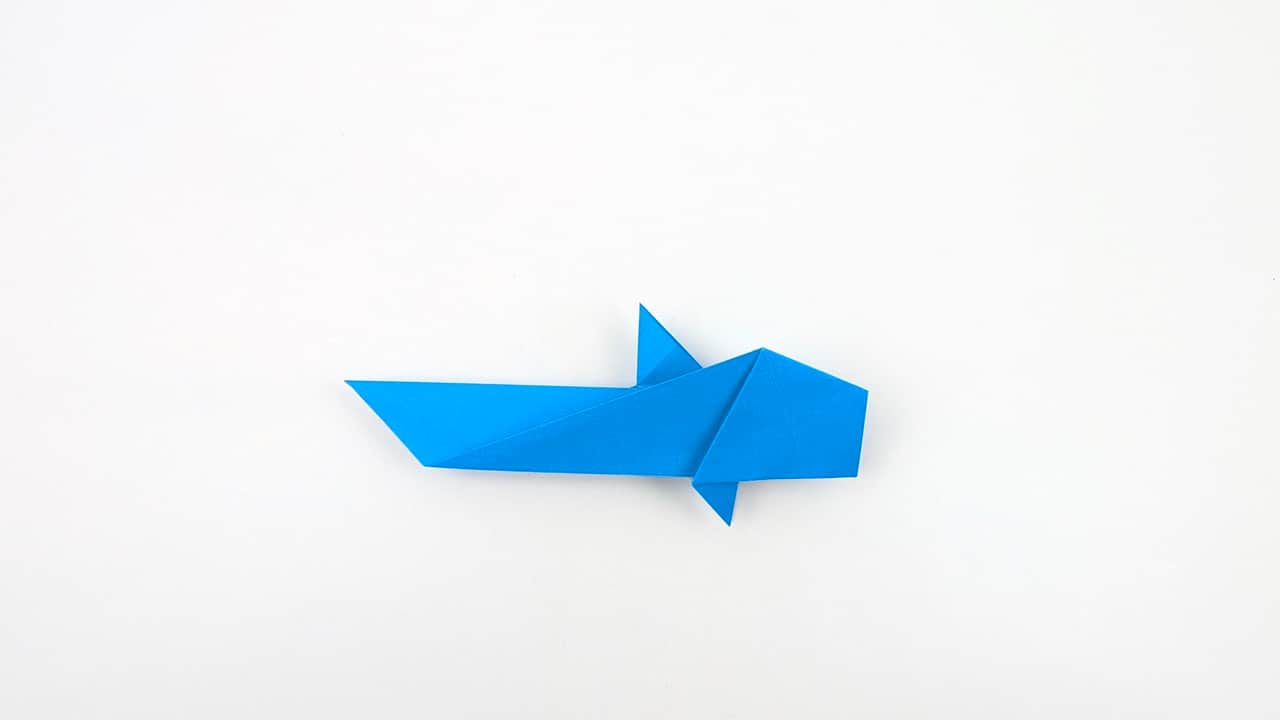
35Open the mouth area slightly by gently pulling the upper and lower jaw apart.
 36
36Fold small triangular points on each side of the lower jaw to suggest teeth.
 37
37The shark model laid flat horizontally — the dorsal fin rises from the back, and the body tapers from wide gills to a narrow tail.
 38
38Rotate to view the model upright from the front. The body forms a tall narrow rectangle with a pointed top and small pectoral fin stubs at the sides.
 39
39Fold the bottom-right corner of the body inward along the crease line to begin forming the right tail fin.
 40
40Fold the bottom-left corner inward in the same way. Both corners now form a downward-pointing triangle at the base — the tail fins taking shape.
 41
41The tail section shows two small side flaps (future lower fins) and the pointed triangle below. The top is rounded and the model is nearly ready to lay flat.
 42
42Hold the model and rotate it into the horizontal shark orientation. The dorsal fin, body, and tail begin to align into the shark silhouette.
 43
43Lay the shark flat in its final horizontal orientation. Dorsal fin points up, pectoral fins spread to the sides, and the tail fans out at the rear.
 44
44Open the body slightly from below to give the shark a rounder, three-dimensional profile. Both tail fins should spread outward symmetrically.
 45
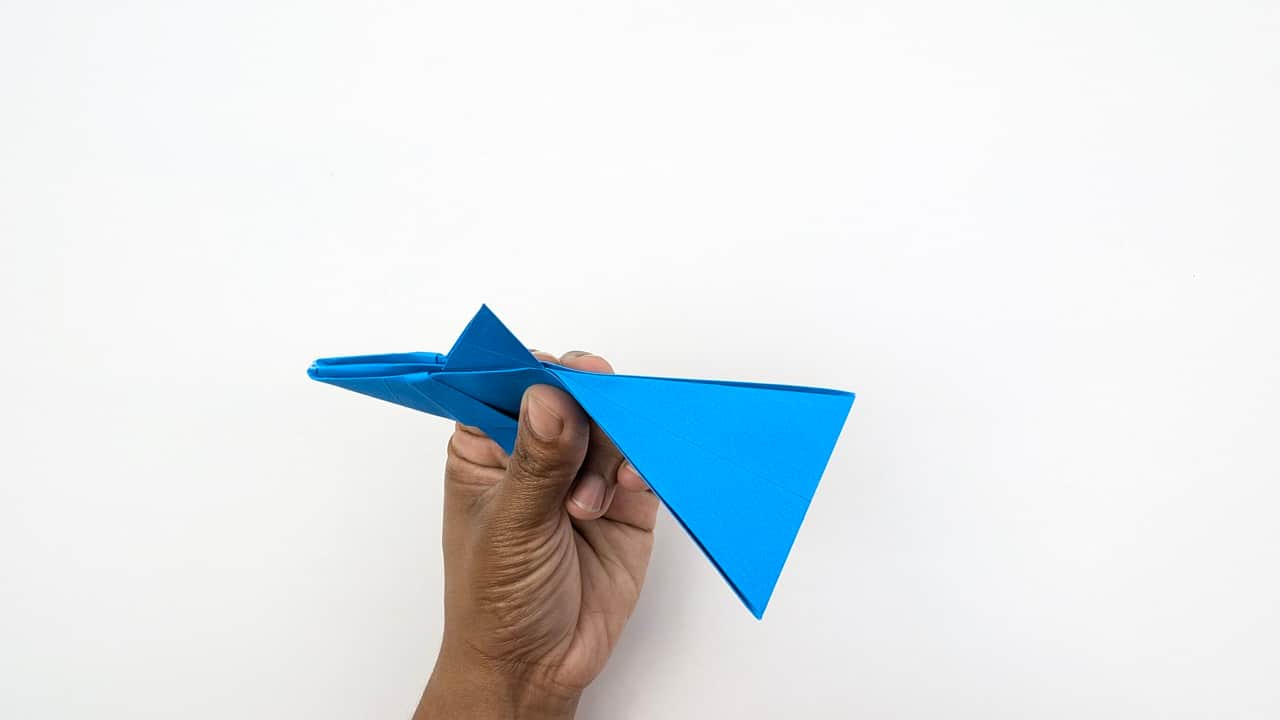
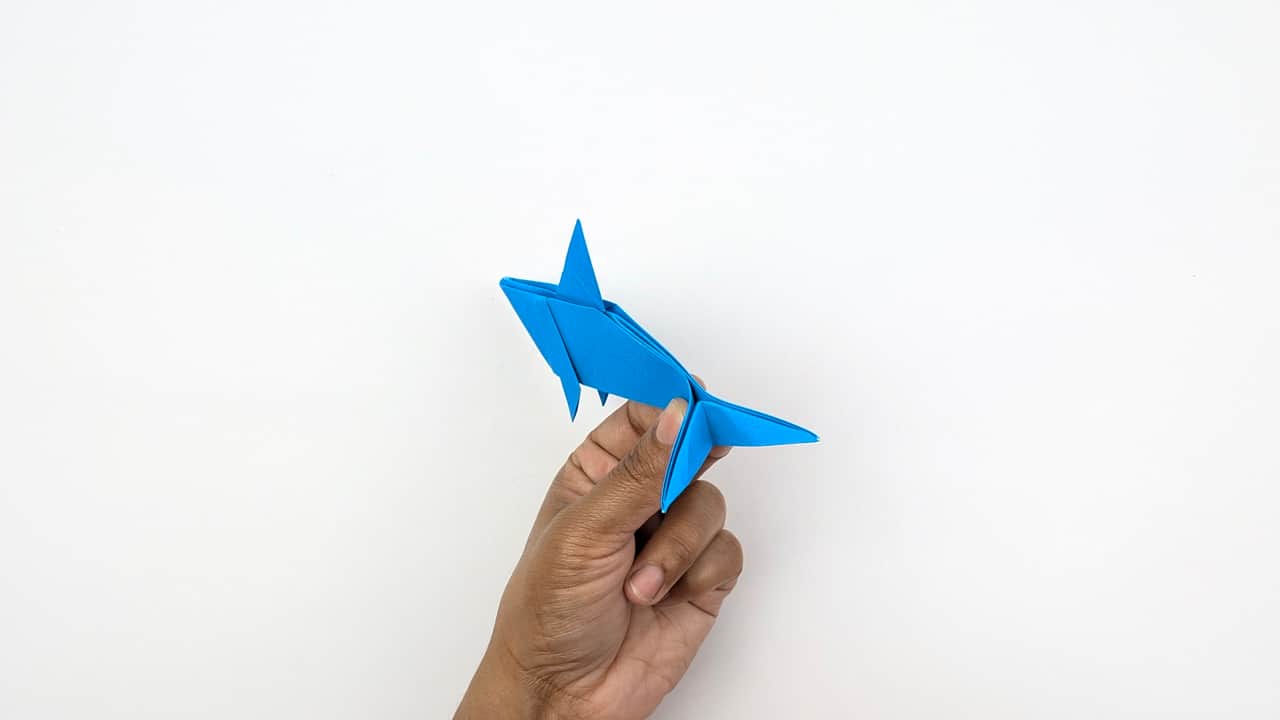
45Hold the shark from behind — the hand grip shows the 3D cone of the body. The tail fins and body form a solid triangular shape when viewed from this angle.
 46
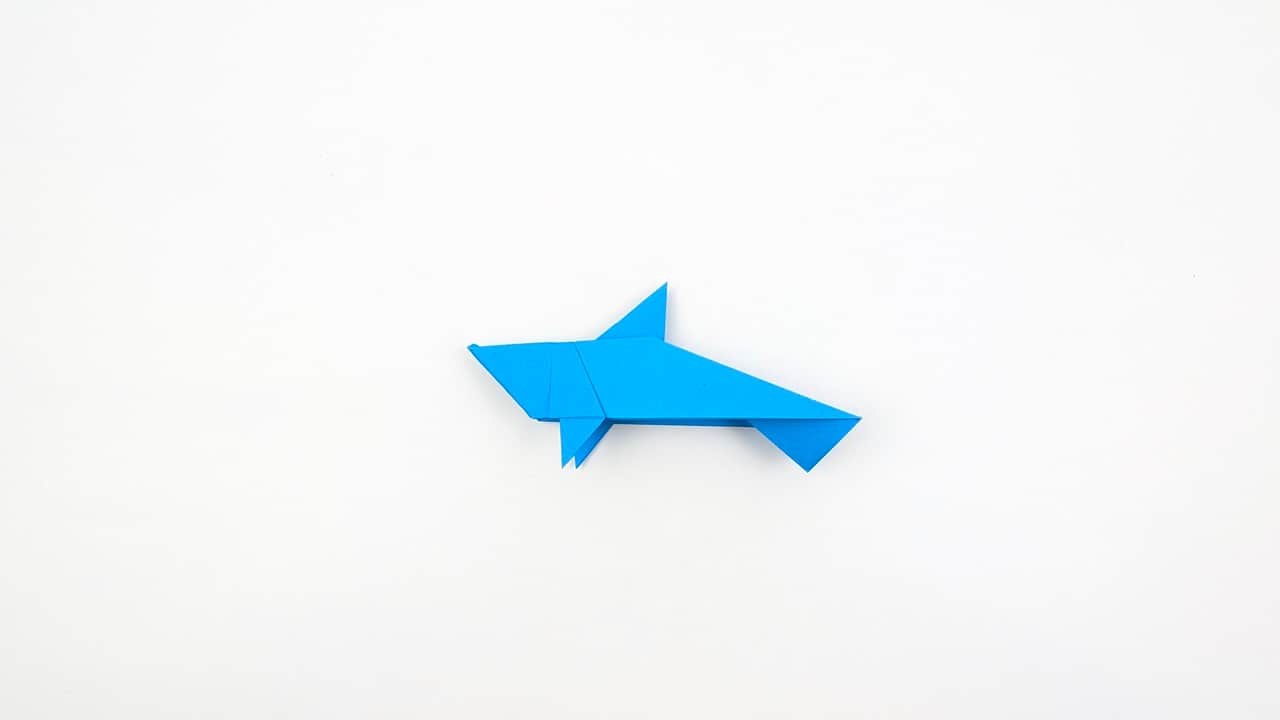
46Lay the shark flat and check the dorsal fin stands straight up. The pectoral fins spread evenly to each side.
 47
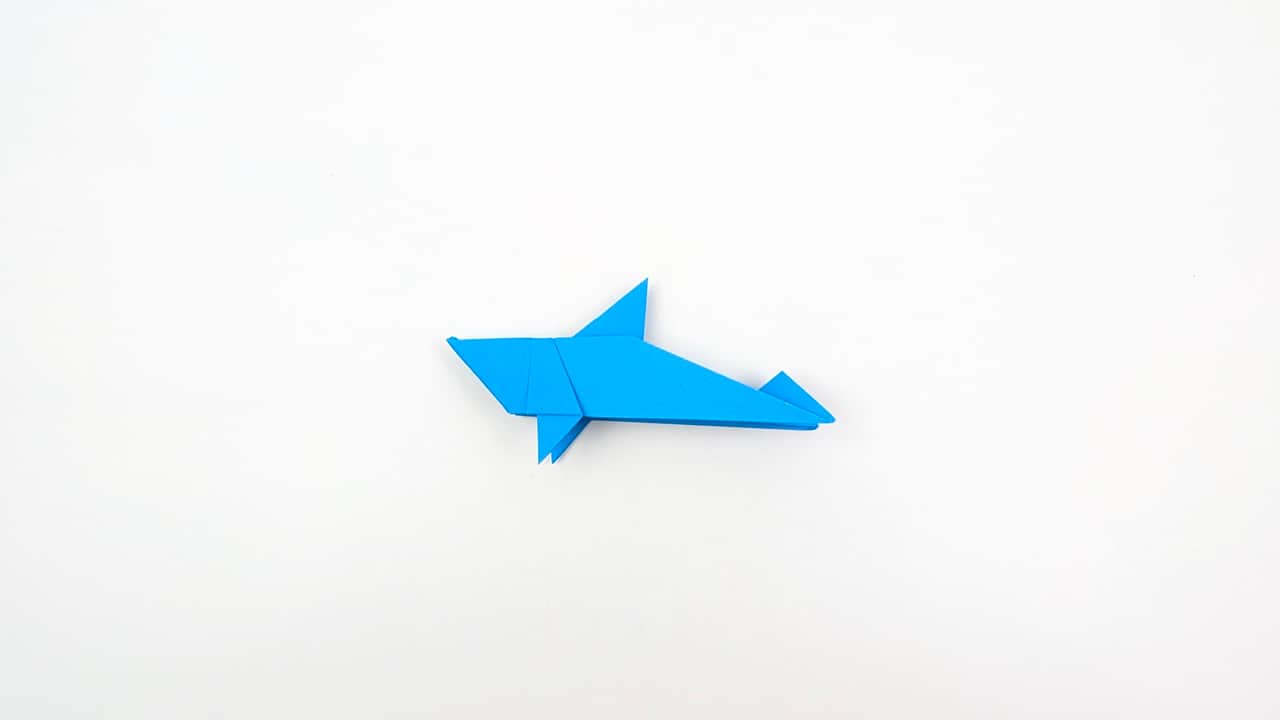
47Check the tail fins — both upper and lower fins should angle outward symmetrically. Adjust any that have shifted inward.
 48
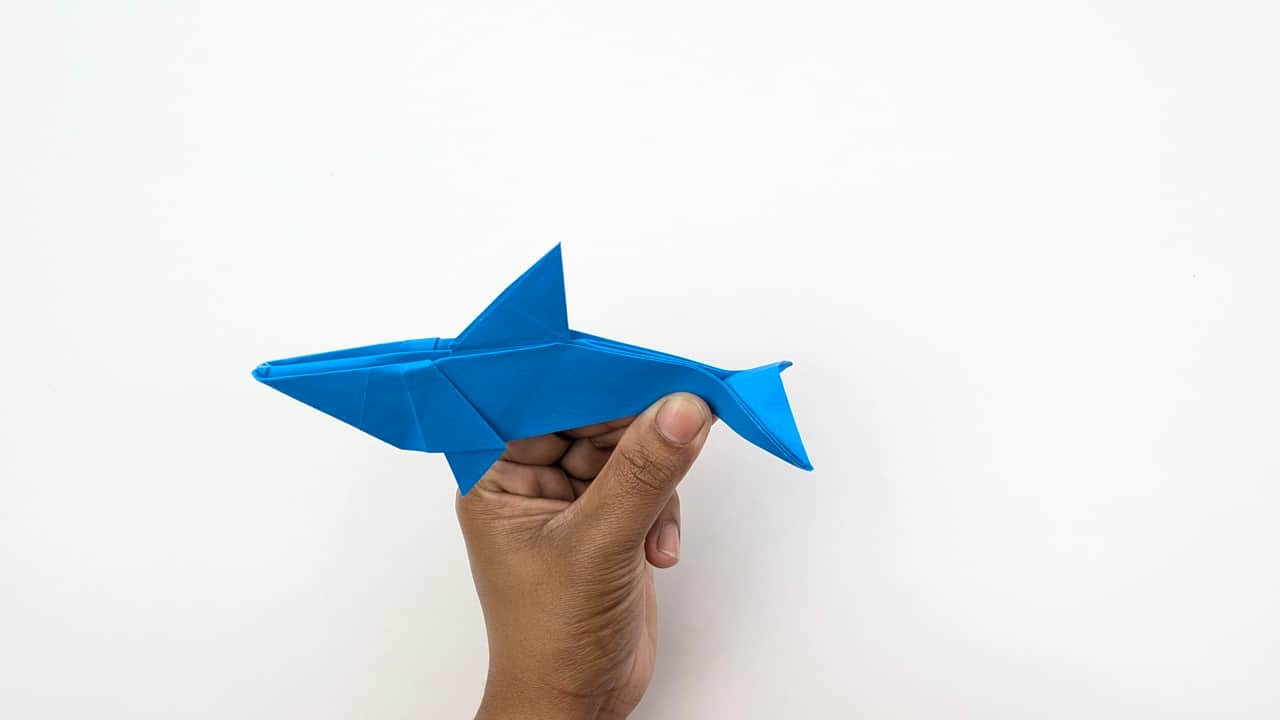
48Hold the complete shark in your hand from the side. The full silhouette — pointed nose, tall dorsal fin, and spread tail — is clearly visible.
 49
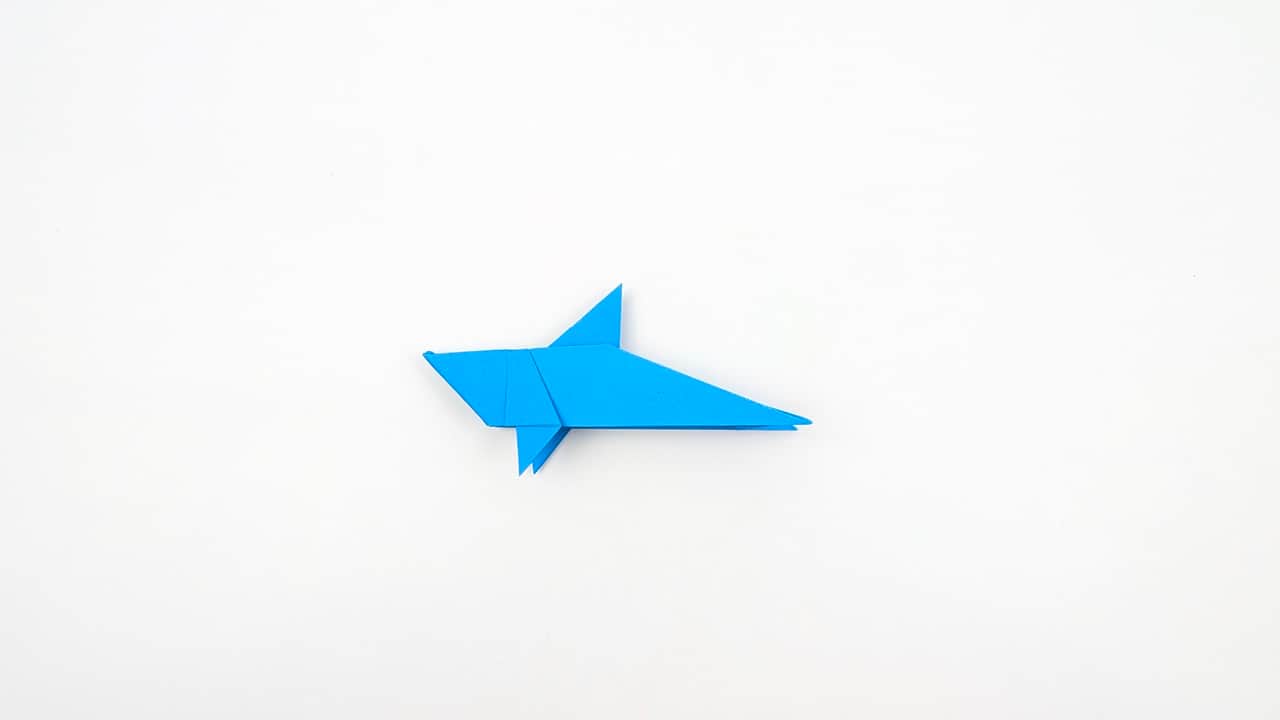
49Hold the shark from a slightly elevated angle looking down at the back. The dorsal fin stands tall and the pectoral fins angle outward naturally.
 50
50Lay the shark flat on the surface and view from above. The body tapers cleanly from the wide gill area to the narrow tail base.
 51
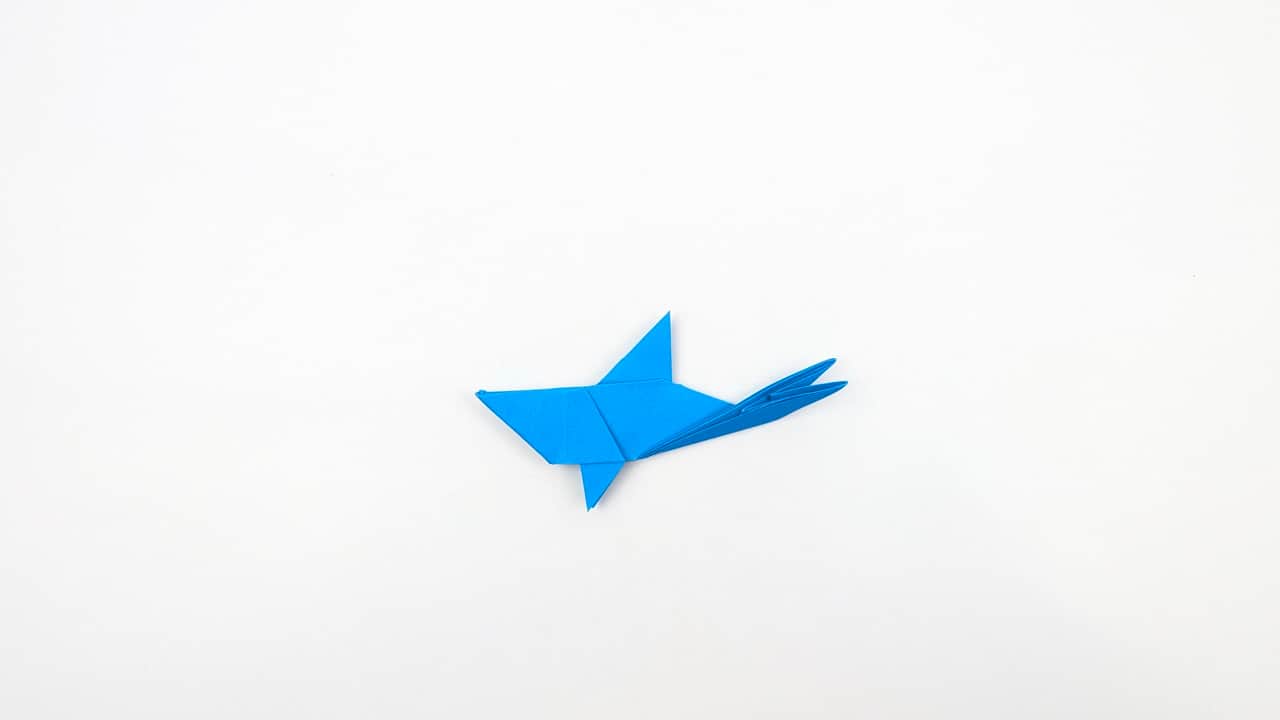
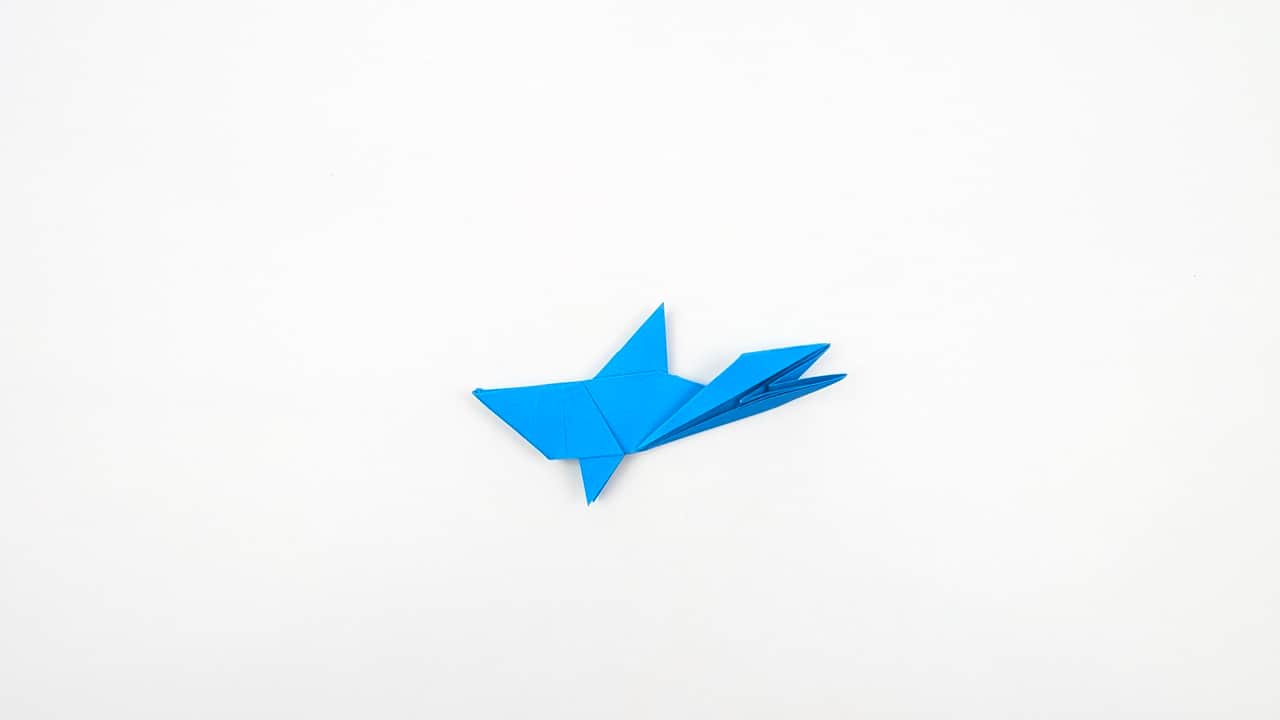
51View the shark from the side. Separate the tail fins if they have stuck together — they should fan out into two distinct fins.
 52
52Refine the tail fin spread — press each fin firmly so they hold their position apart from each other.
 53
53Lay the shark flat and confirm all fins are in their final positions. The dorsal fin, pectoral fins, and tail fins all point in the right directions.
 54
54Make any final refinements — pinch the nose sharper, adjust the dorsal fin angle, and confirm the pectoral fins are even on both sides.
 55
55Your origami shark is complete! Draw an eye and gill lines with a marker for a finishing touch. Display with the nose pointing forward for maximum impact.
Frequently Asked Questions
What paper should I use for the origami origami shark?
Standard 15 cm x 15 cm origami paper (kami) works best for the Origami Shark. For this complex model, use a 20 cm+ sheet to give yourself more room for detailed folds.
How long does it take to fold the origami origami shark?
This model takes approximately 30 minutes for someone with solid experience. Beginners may need more time — that is completely normal. Take your time and focus on clean creases.
Is the origami origami shark hard to make?
This model is rated hard. Prior experience with intermediate folds is recommended. Make sure you are comfortable with reverse folds and squash folds before attempting this model.
Can kids make the origami origami shark?
The Origami Shark is an advanced model best suited for experienced folders. Most children would find it too difficult, but teens with origami experience may enjoy the challenge.
What size paper works best for the Origami Shark?
For the Origami Shark, we recommend a 20-25 cm (8-10 inch) square. Larger paper gives you more room to work with and is especially helpful for complex models with many layers.
What other folds should I learn before the Origami Shark?
Before attempting the Origami Shark, make sure you can fold the Simple Fish, Blue Whale, Fire Dragon. These models share similar techniques and will prepare you for this design.
What to Fold Next
You Might Also Like
Helpful Guides
Article · 5 min
7 Easy Origami Animals for Beginners (All Under 10 Minutes)
Seven quick animal folds — fox, dog, cat, bunny, fish, bird, and butterfly — each taking under 10 minutes with a single square sheet. No experience needed.
Article · 12 min
The Science of Origami — How Paper Folding Shapes Engineering and Math
Origami isn't just an art — it's a mathematical and engineering discipline driving breakthroughs in space technology, medicine, robotics, and architecture.
Article · 4 min
Wet Folding — The Technique That Makes Origami Sculptural
Wet folding transforms crisp, geometric origami into soft, organic sculpture. Learn Yoshizawa's technique, the right paper, and when to use it.