Jumping Frog
The origami jumping frog is a classic action model — press down on its back and it actually leaps into the air! This satisfying fold uses a combination of valley and mountain folds to create spring tension. Kids absolutely love racing them across the table.
Video Tutorial
Step-by-Step Instructions
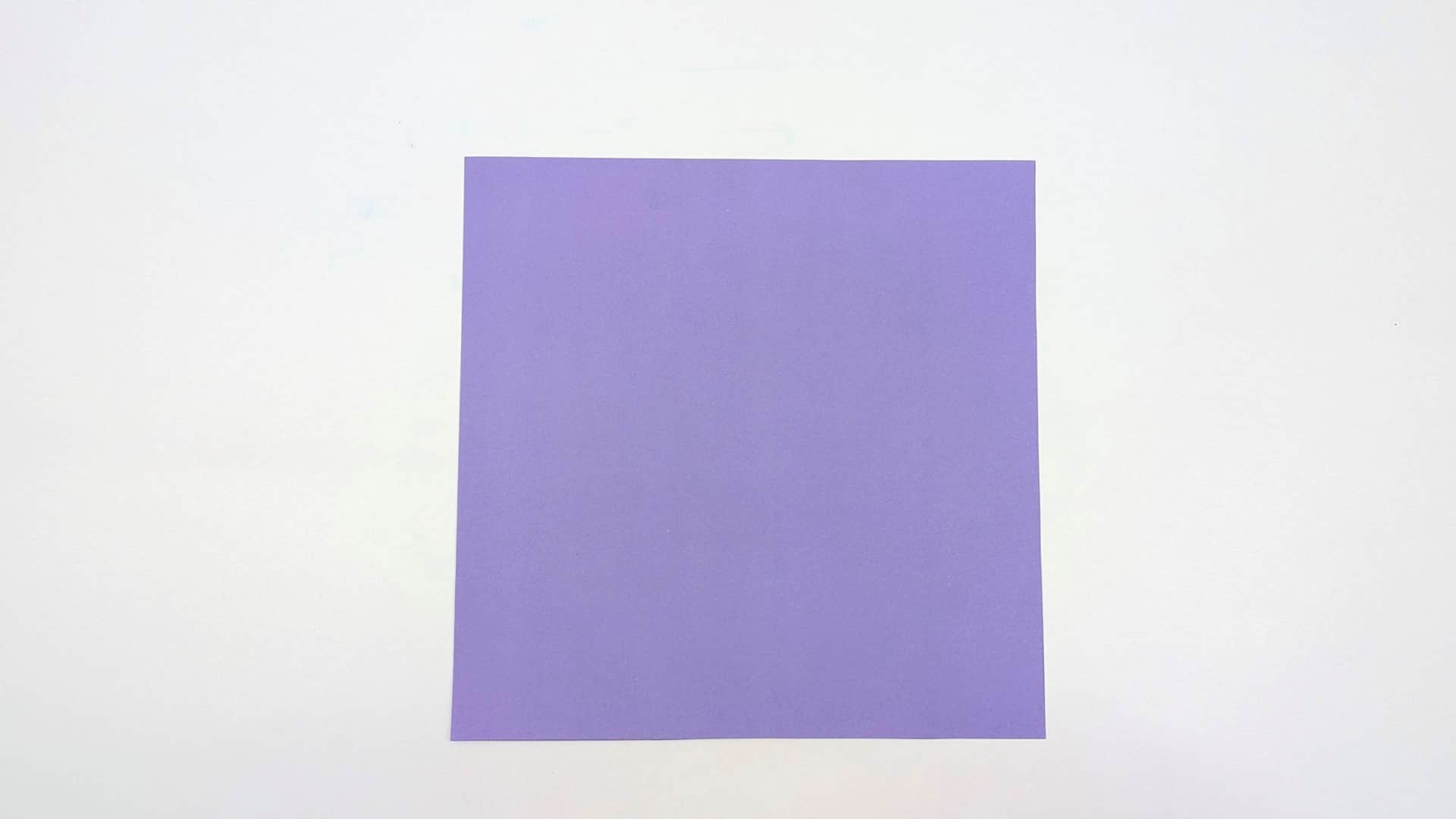 1
1Start with a square sheet of paper, colored side up, lying flat on a white surface.
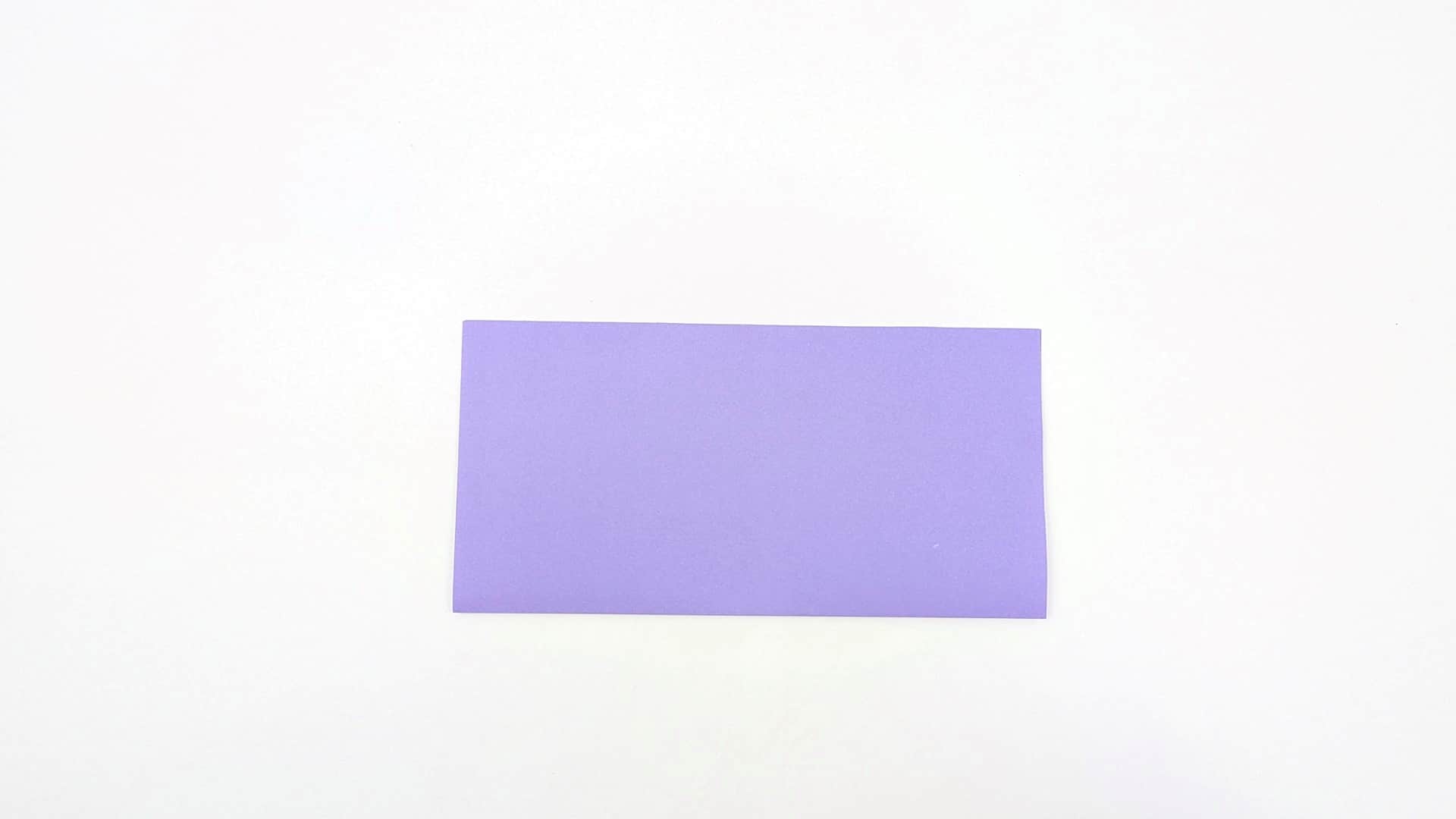 2
2Fold the paper in half horizontally — bring the top edge down to the bottom edge — to form a landscape rectangle. Crease firmly.
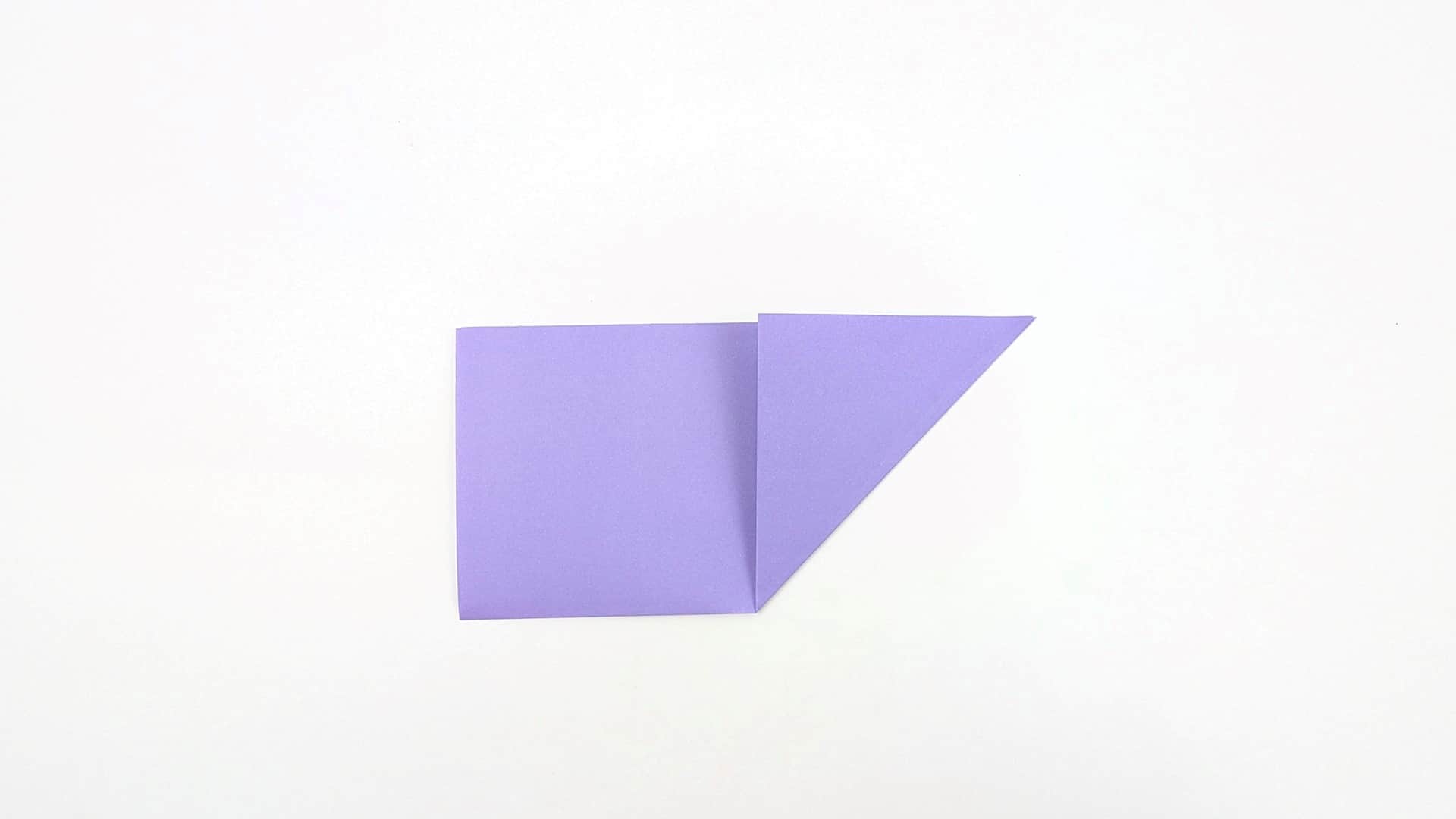 3
3Fold the top-right corner down diagonally to the bottom-left corner of the right half. The right side becomes a triangle while the left remains a square.
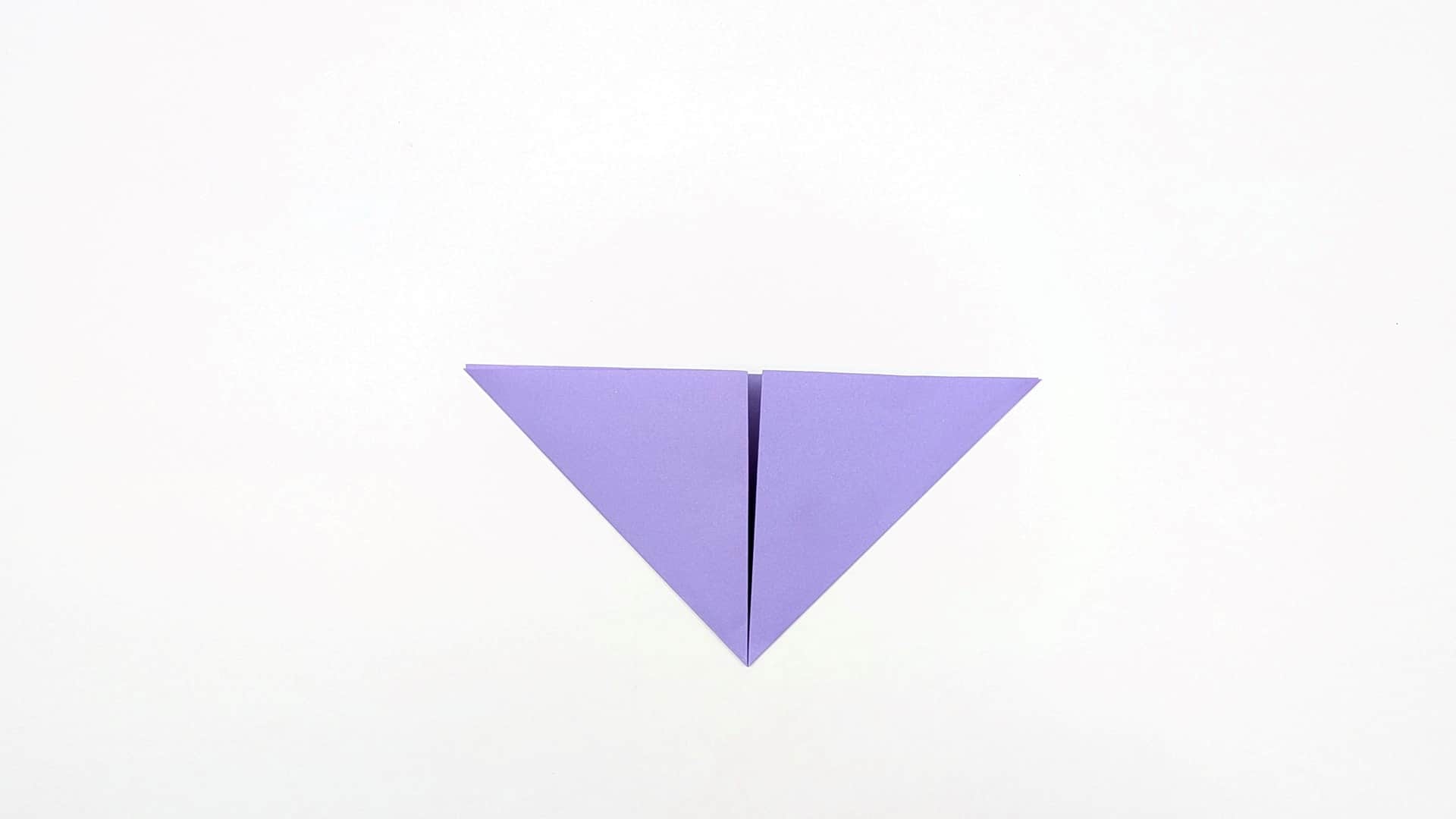 4
4Fold the remaining left half over to complete the triangle. You now have a large downward-pointing triangle with a vertical center fold line.
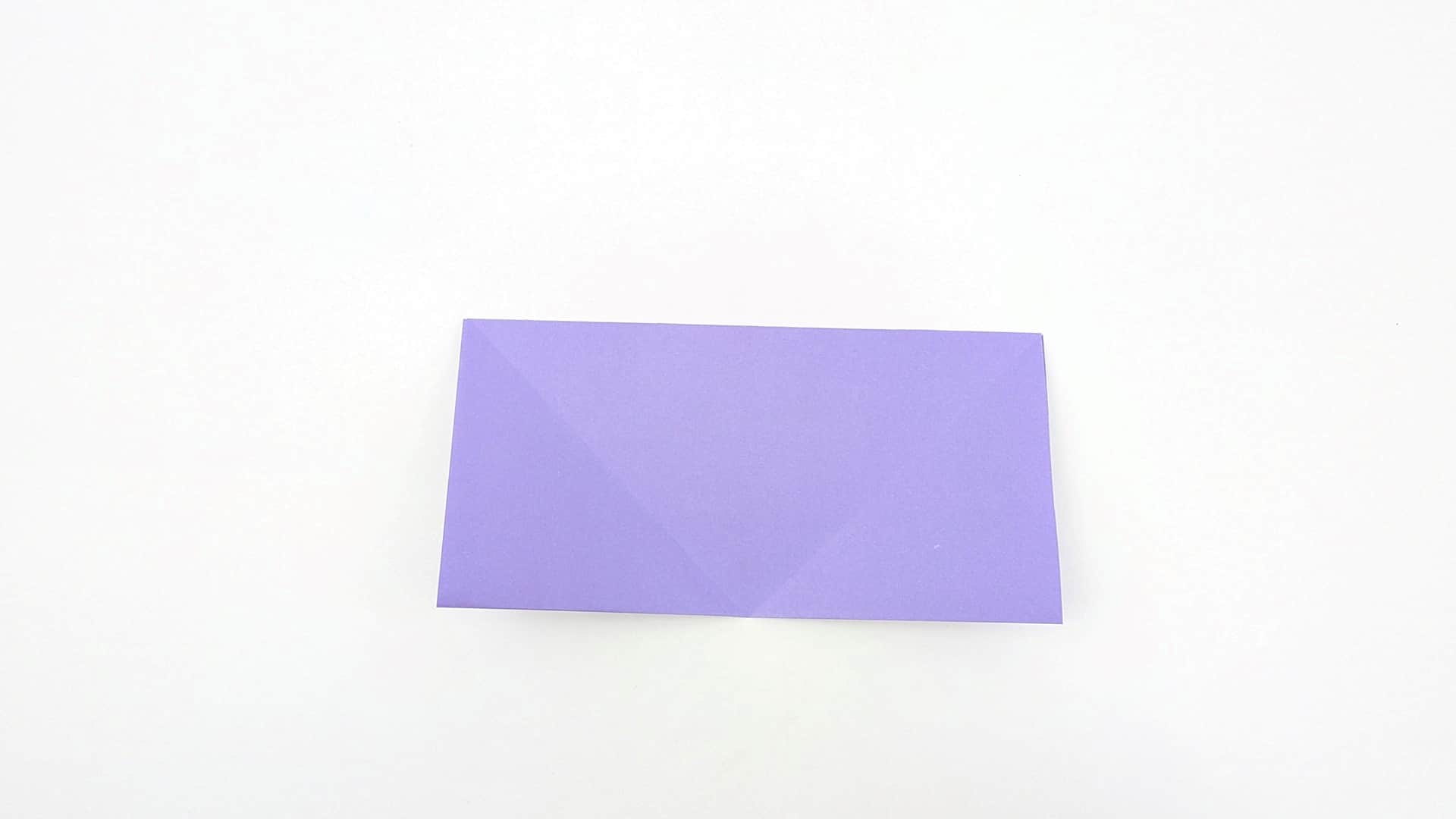 5
5Unfold back to the rectangle. The diagonal crease lines form an X or V pattern across the paper — these are your guide creases.
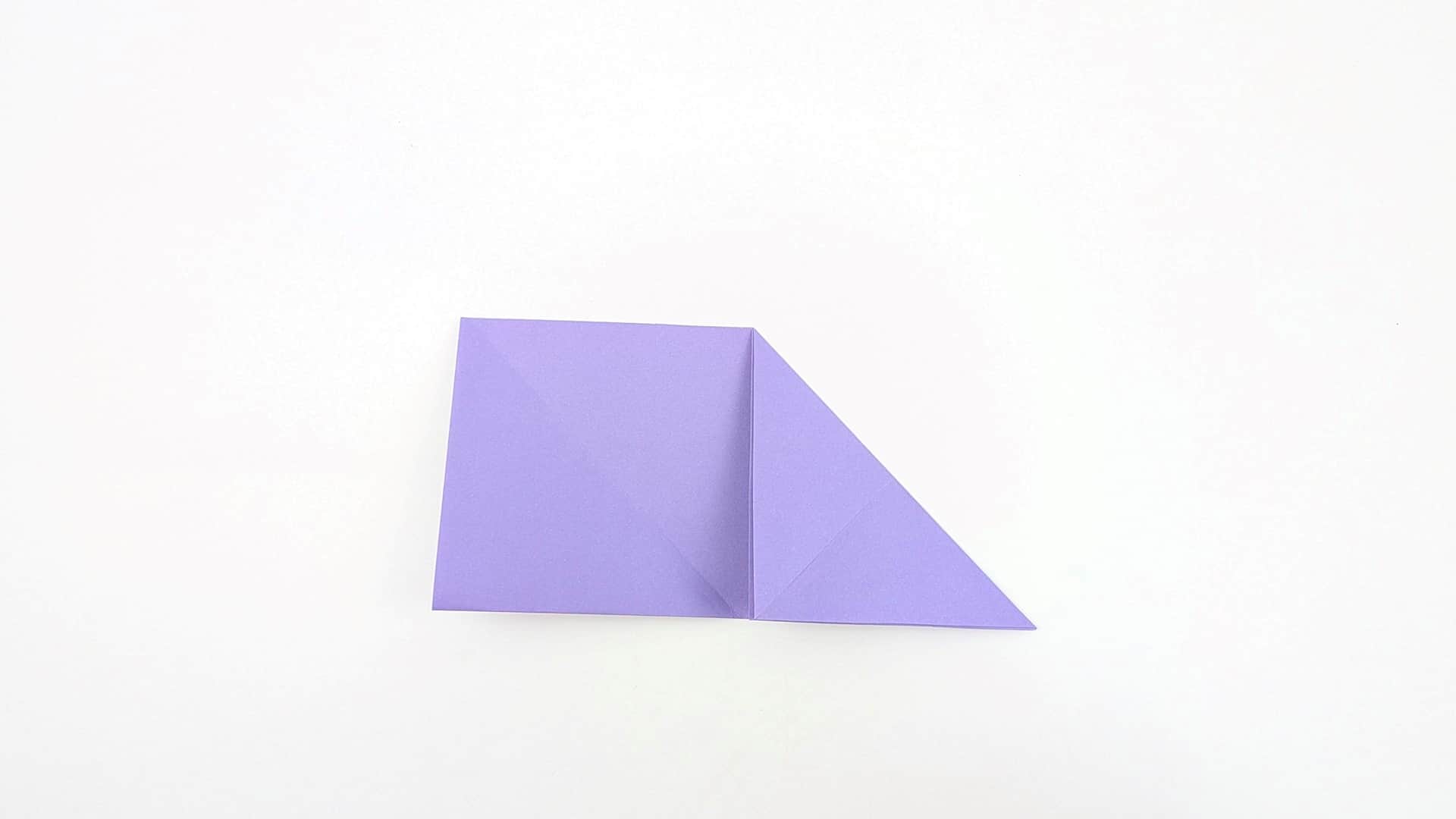 6
6Fold only the right side up along the diagonal crease. The left stays flat as a square while the right becomes a raised triangle.
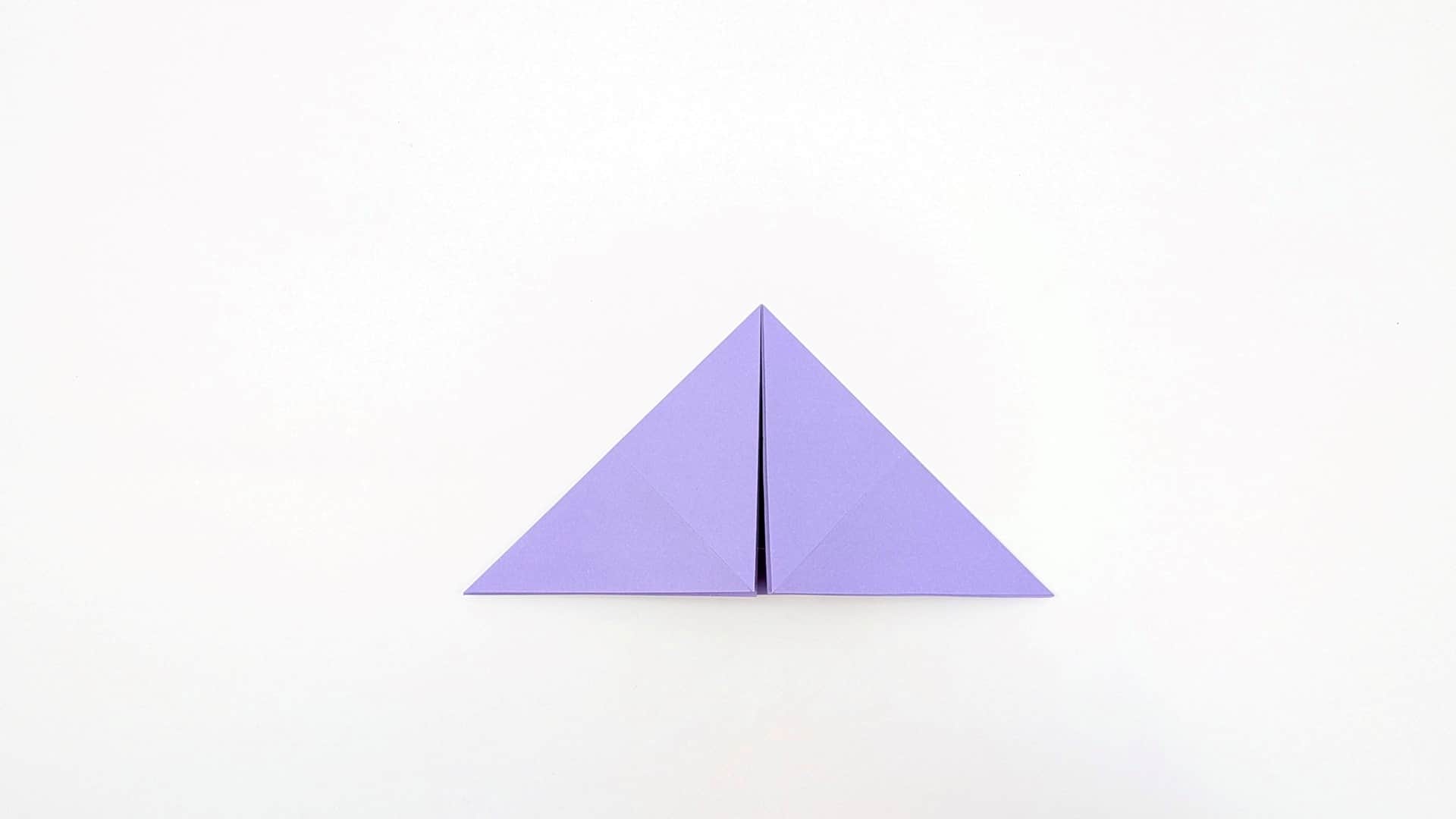 7
7Complete the fold so the whole paper forms a symmetric upward-pointing triangle. A vertical crease runs down the center.
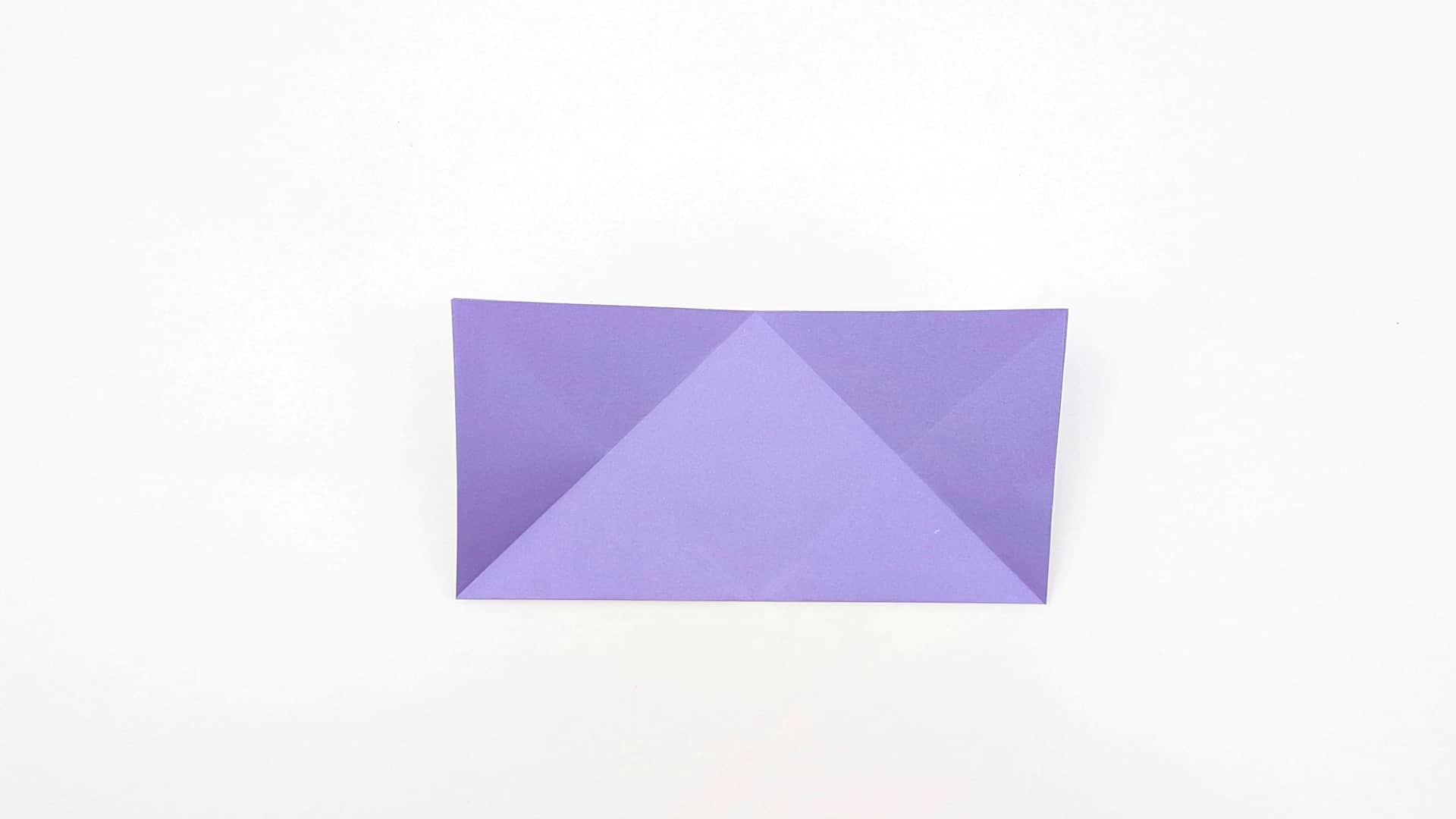 8
8Flip the paper over. It lies flat as a rectangle with all the diagonal and horizontal crease lines now visible on this side.
 9
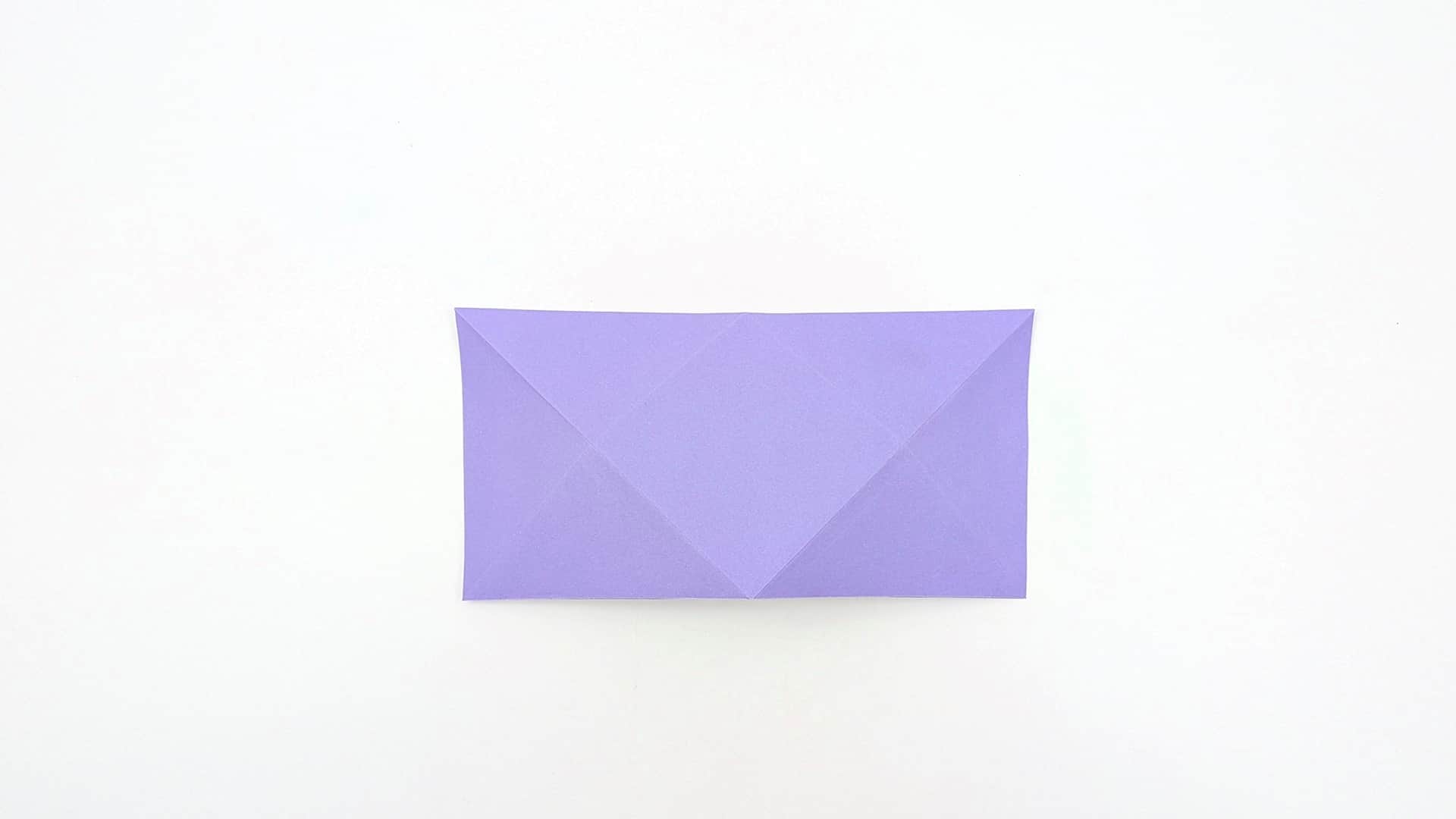
9Fold both short ends inward so their corners meet at the center, forming an envelope shape with pointed triangular flaps.
 10
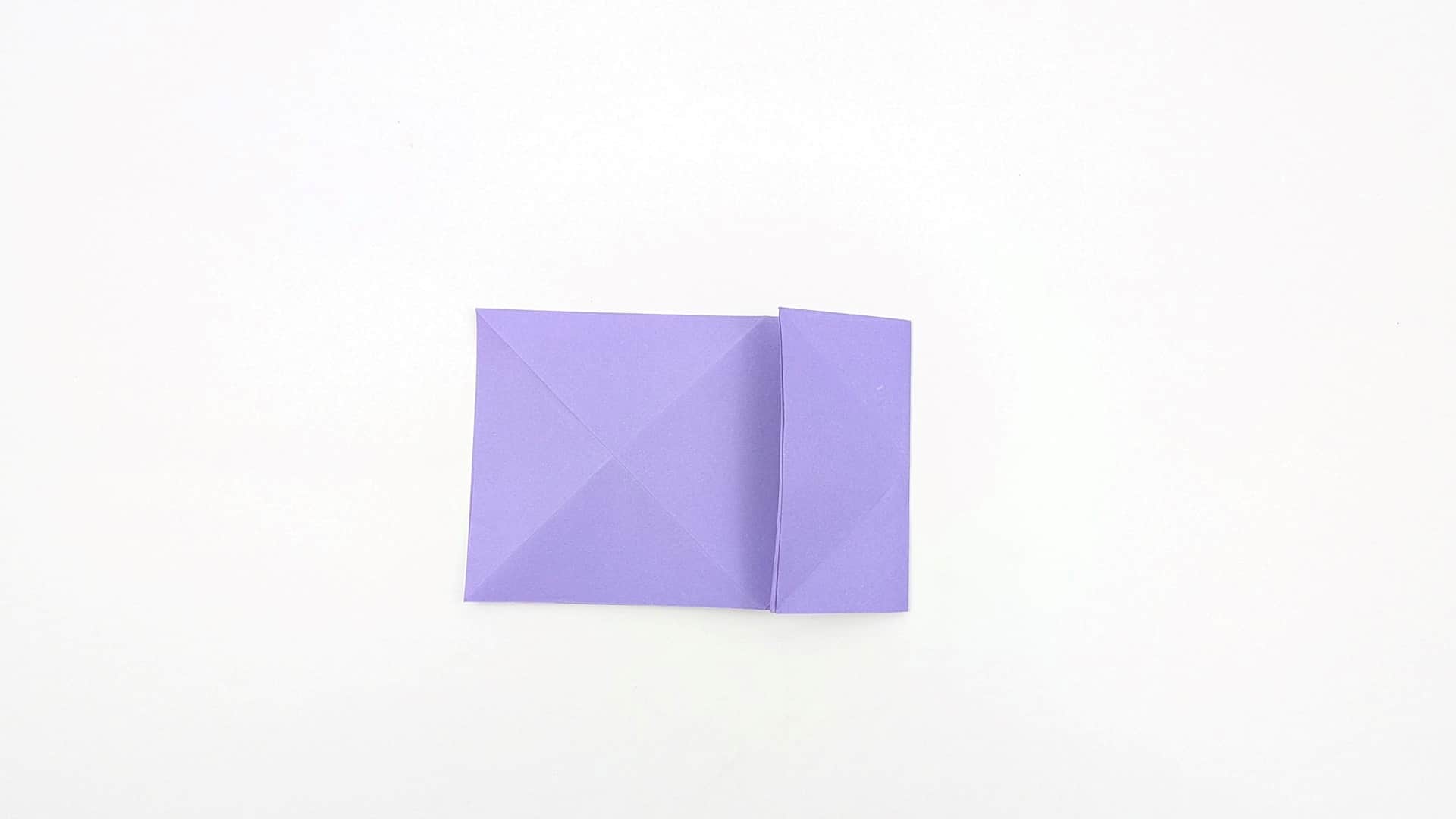
10Fold the right panel over to the left, like turning a page. A smaller rectangular section remains on the right side.
 11
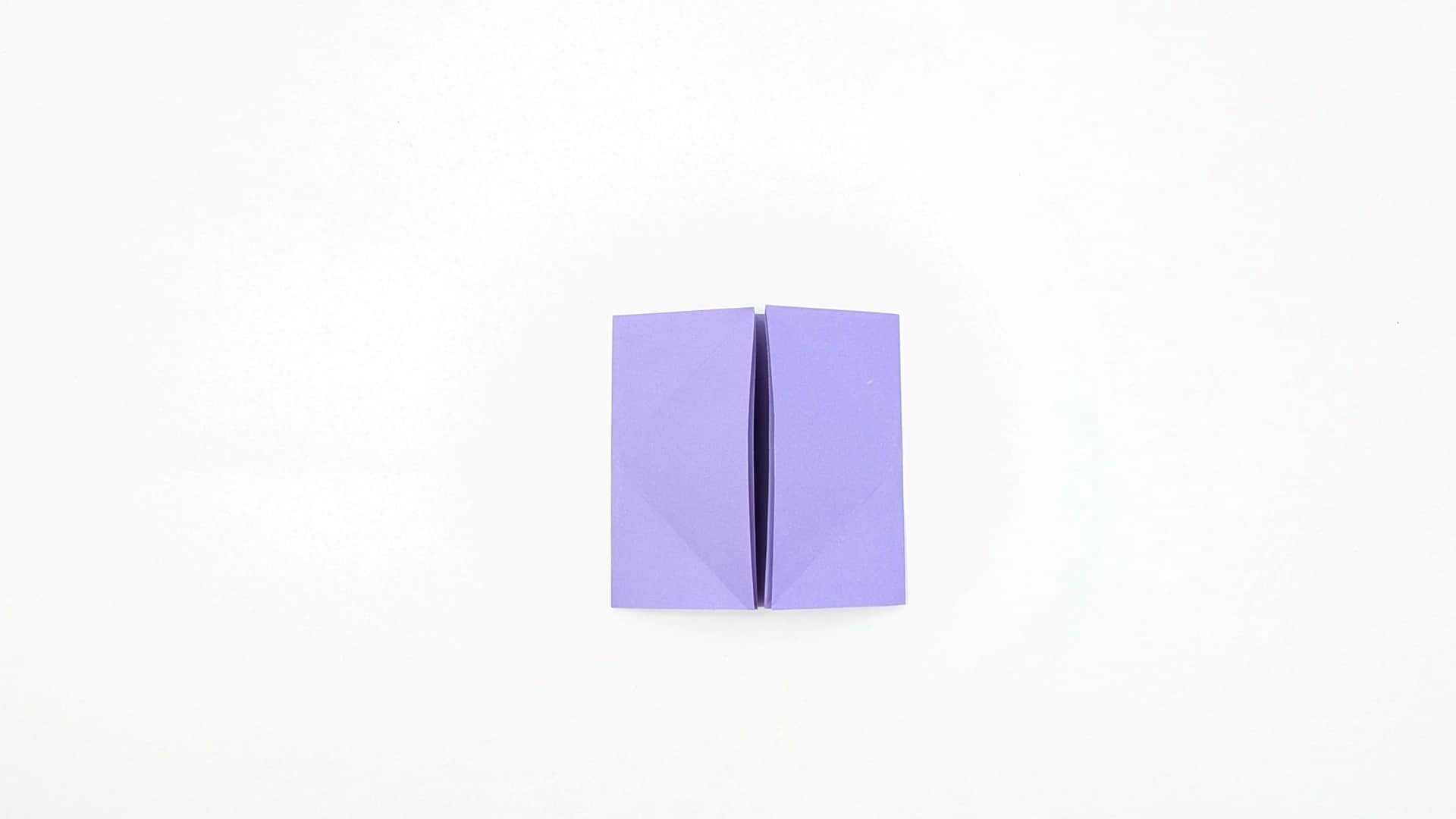
11Fold both outer panels inward to meet at the vertical center line. The paper stands slightly open like a tall narrow book.
 12
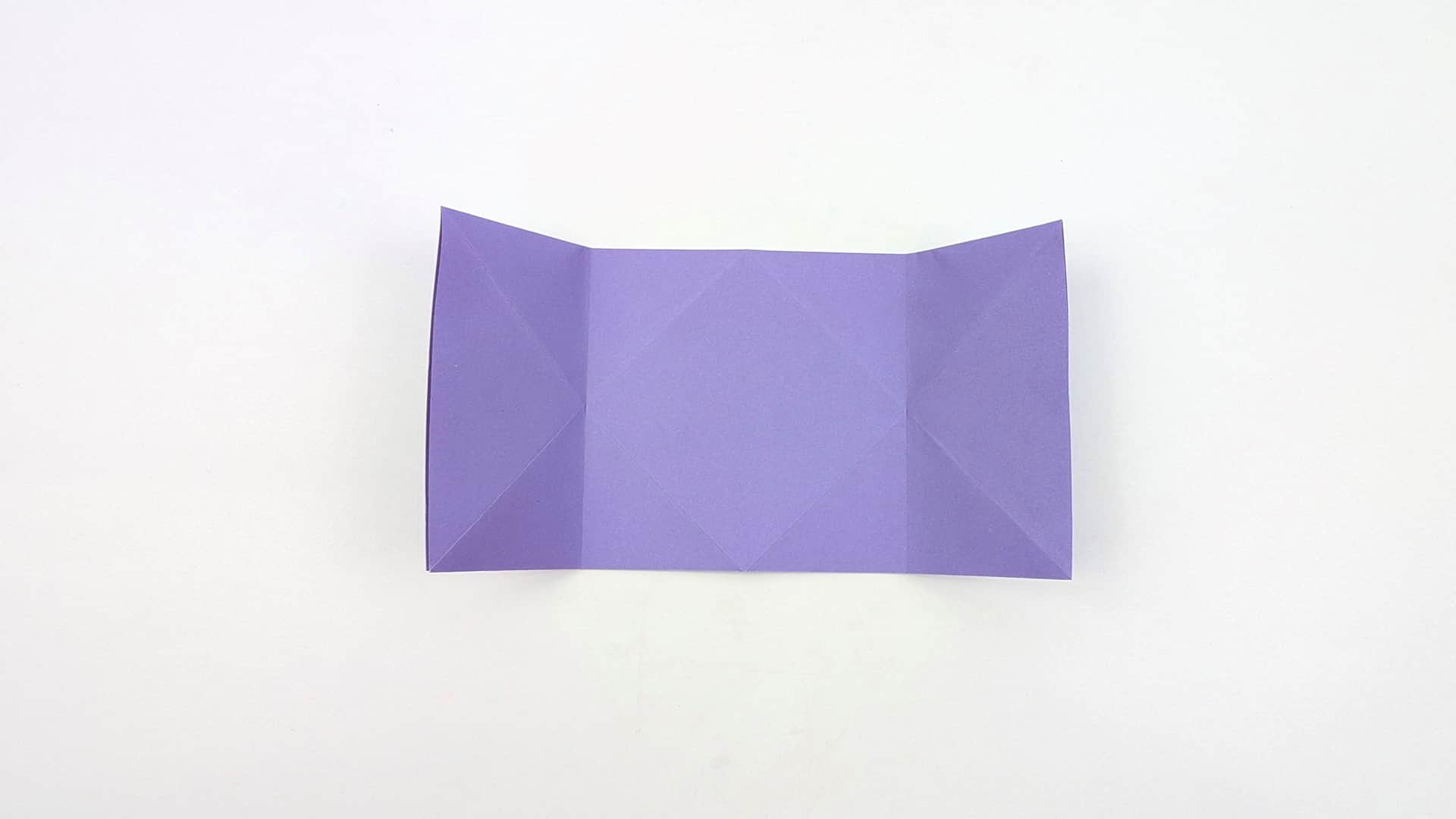
12Open everything out flat. You now see the full crease map — a wide landscape rectangle with three-panel divisions and all diagonal lines.
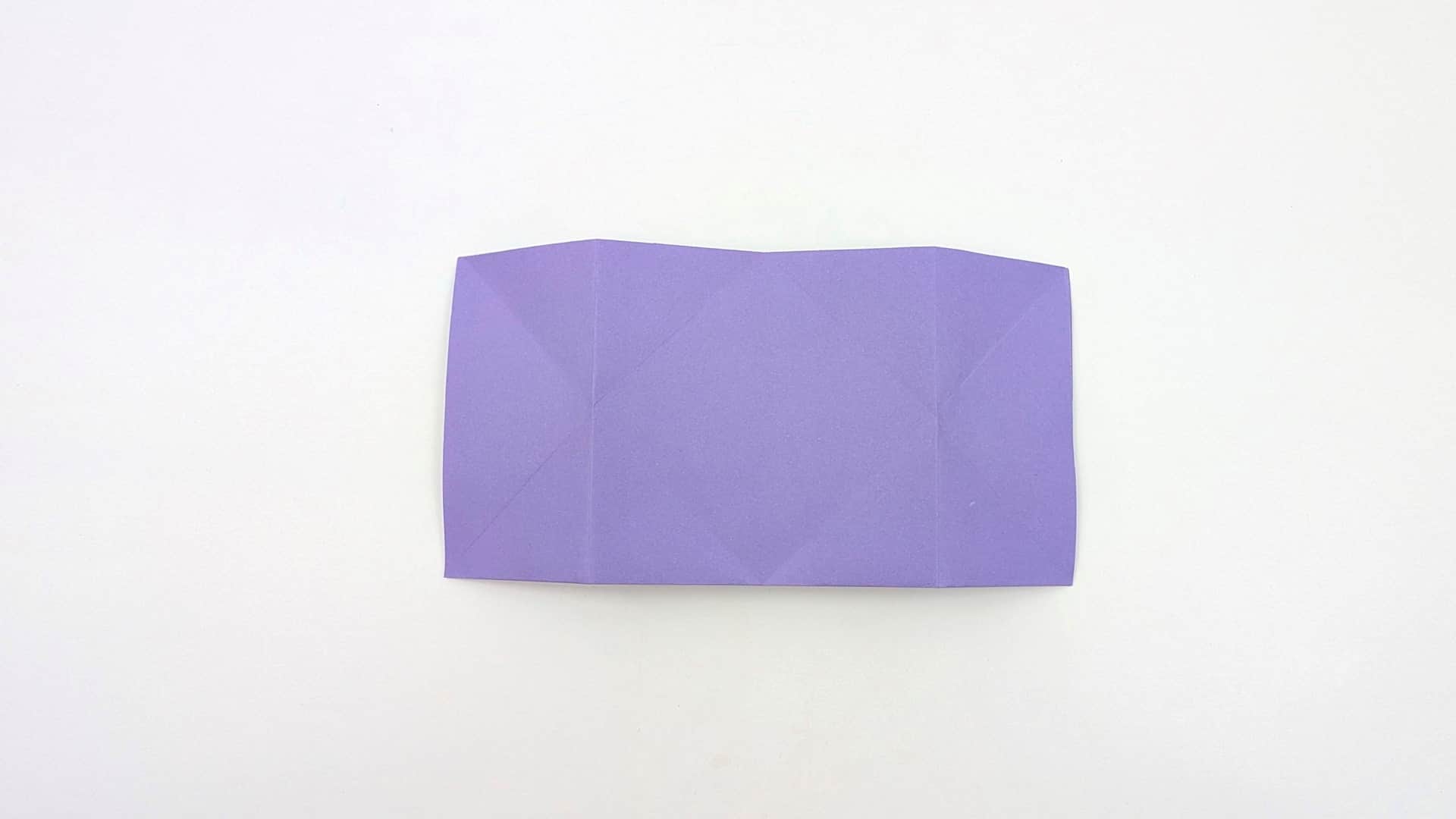 13
13Flatten the paper down so it is horizontal and compact. All creases from both sides are visible — this is your complete crease reference.
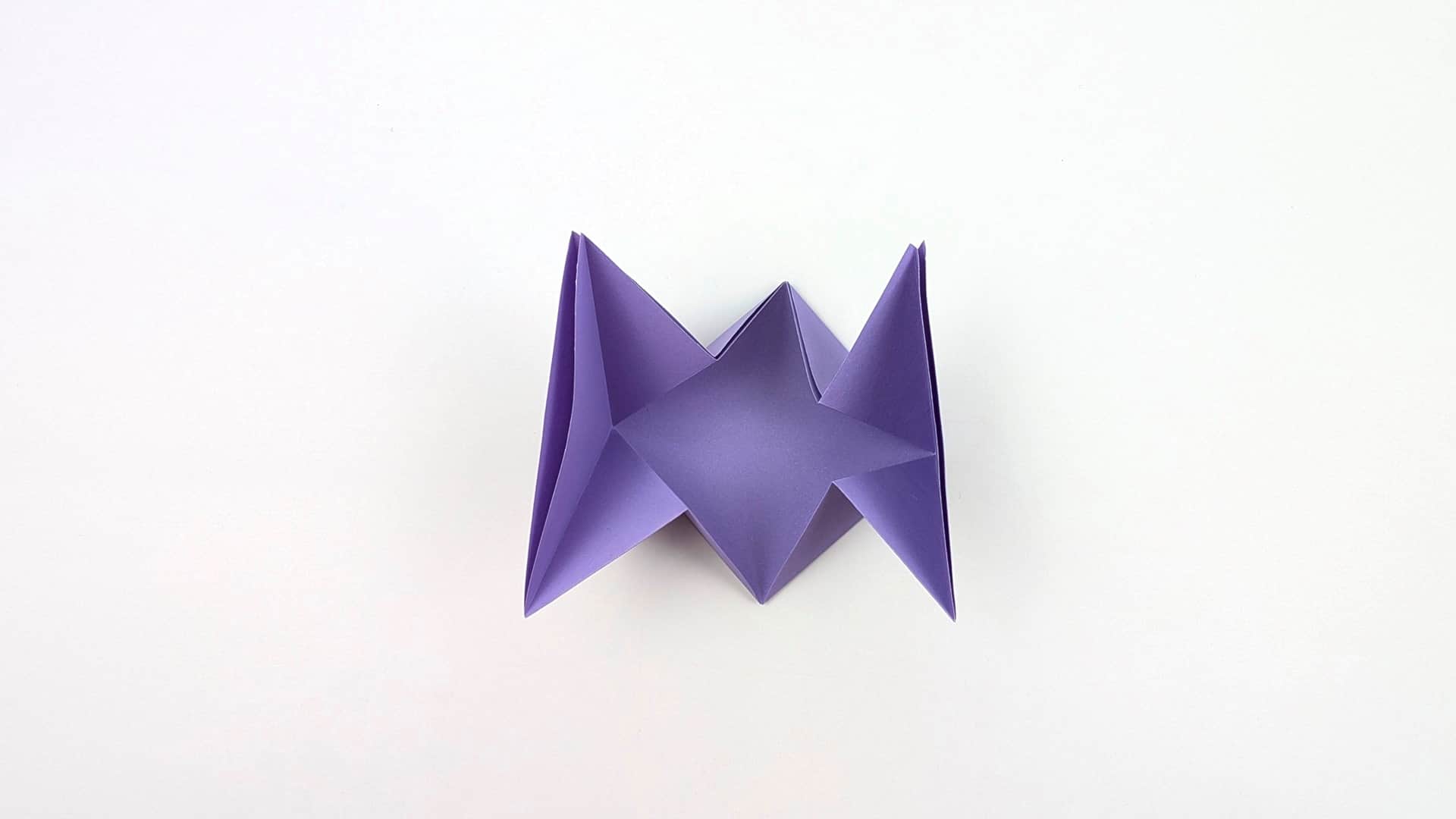 14
14Push in at both sides along the existing creases to collapse into a 3D shape. Four raised points appear — like a bat wing or accordion.
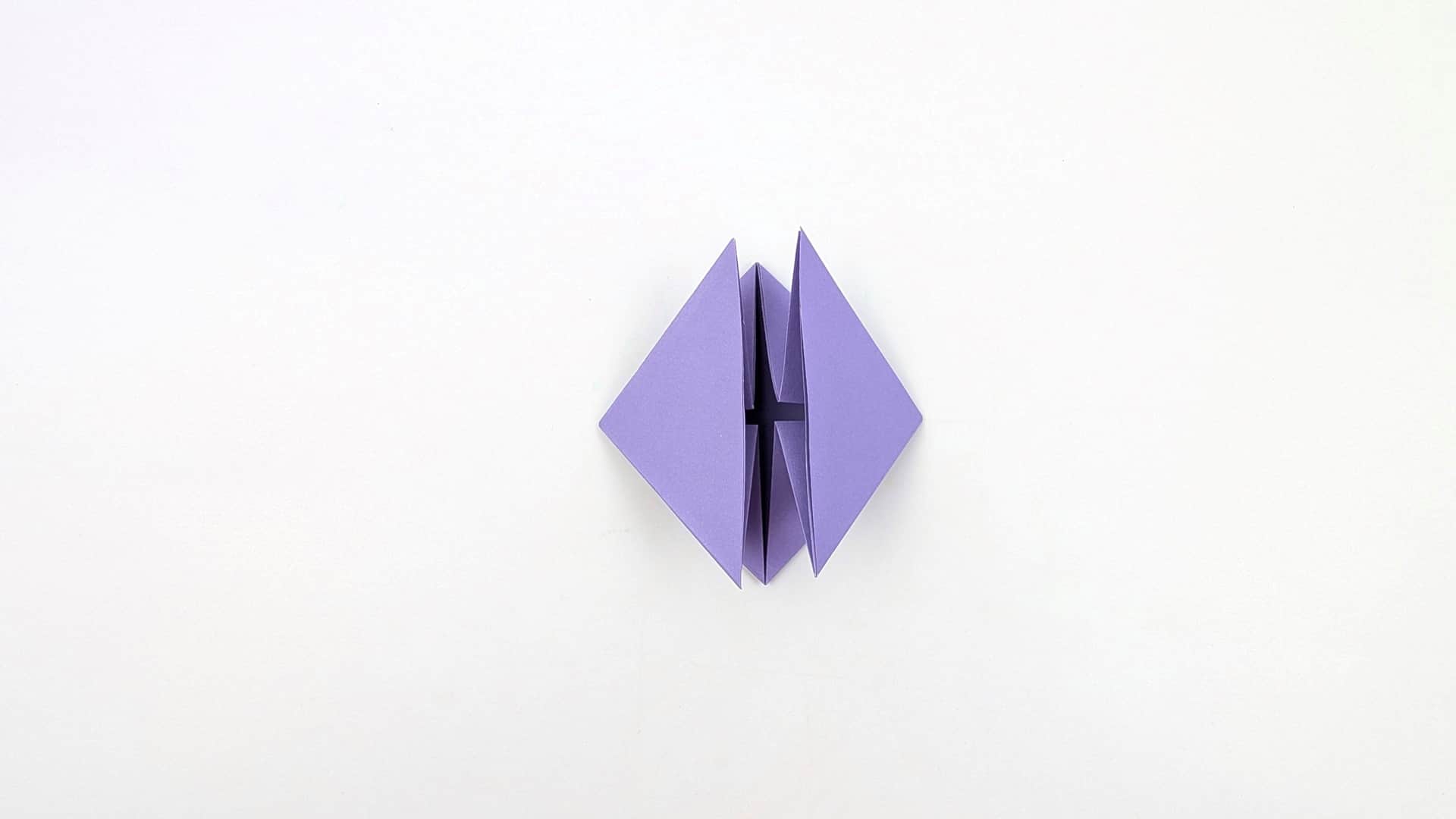 15
15Flatten the collapse. You now have two diamond shapes sitting side by side, joined at the center.
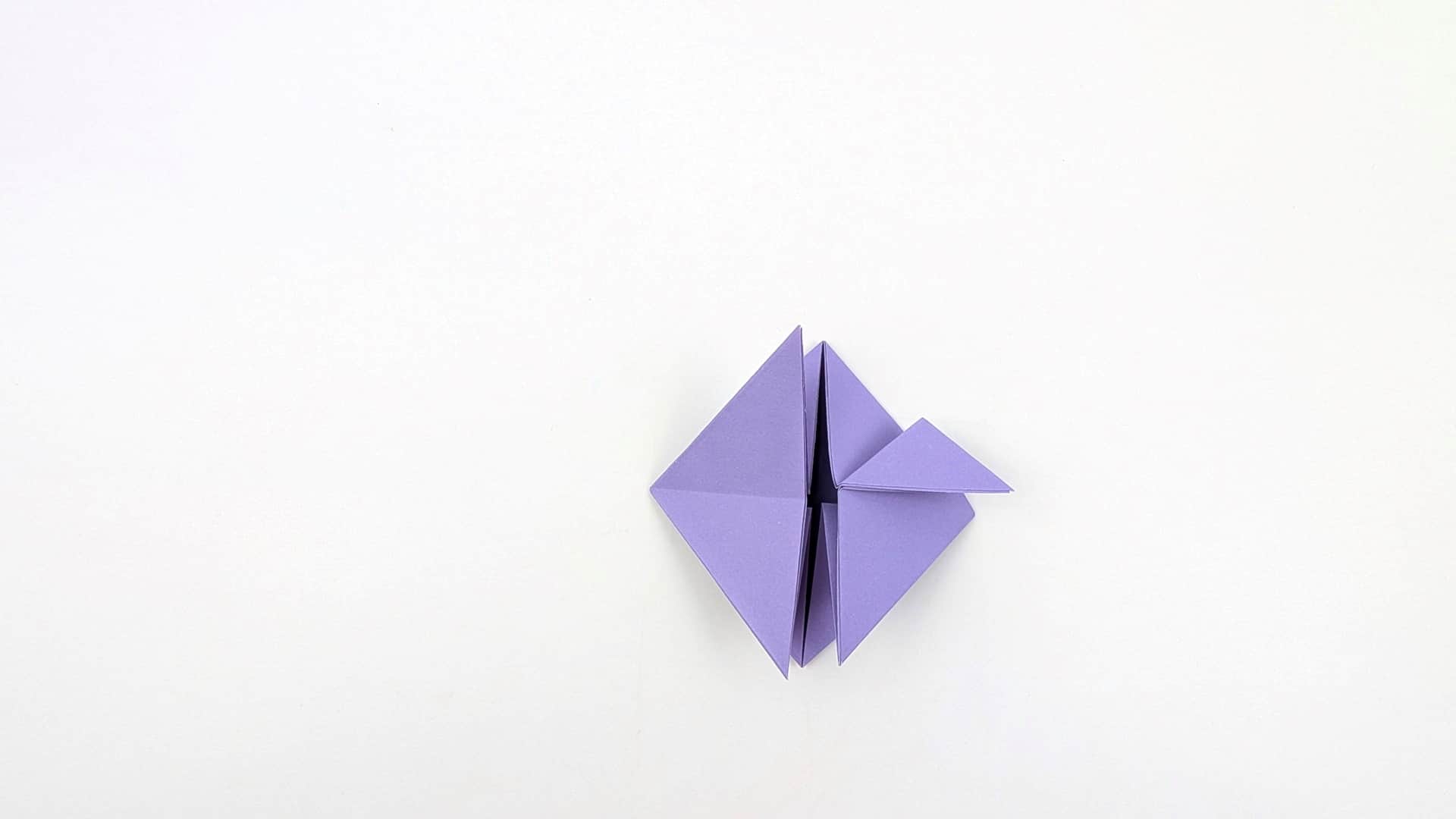 16
16Fold one triangular flap from the right diamond over to the left, creating an asymmetric layered shape.
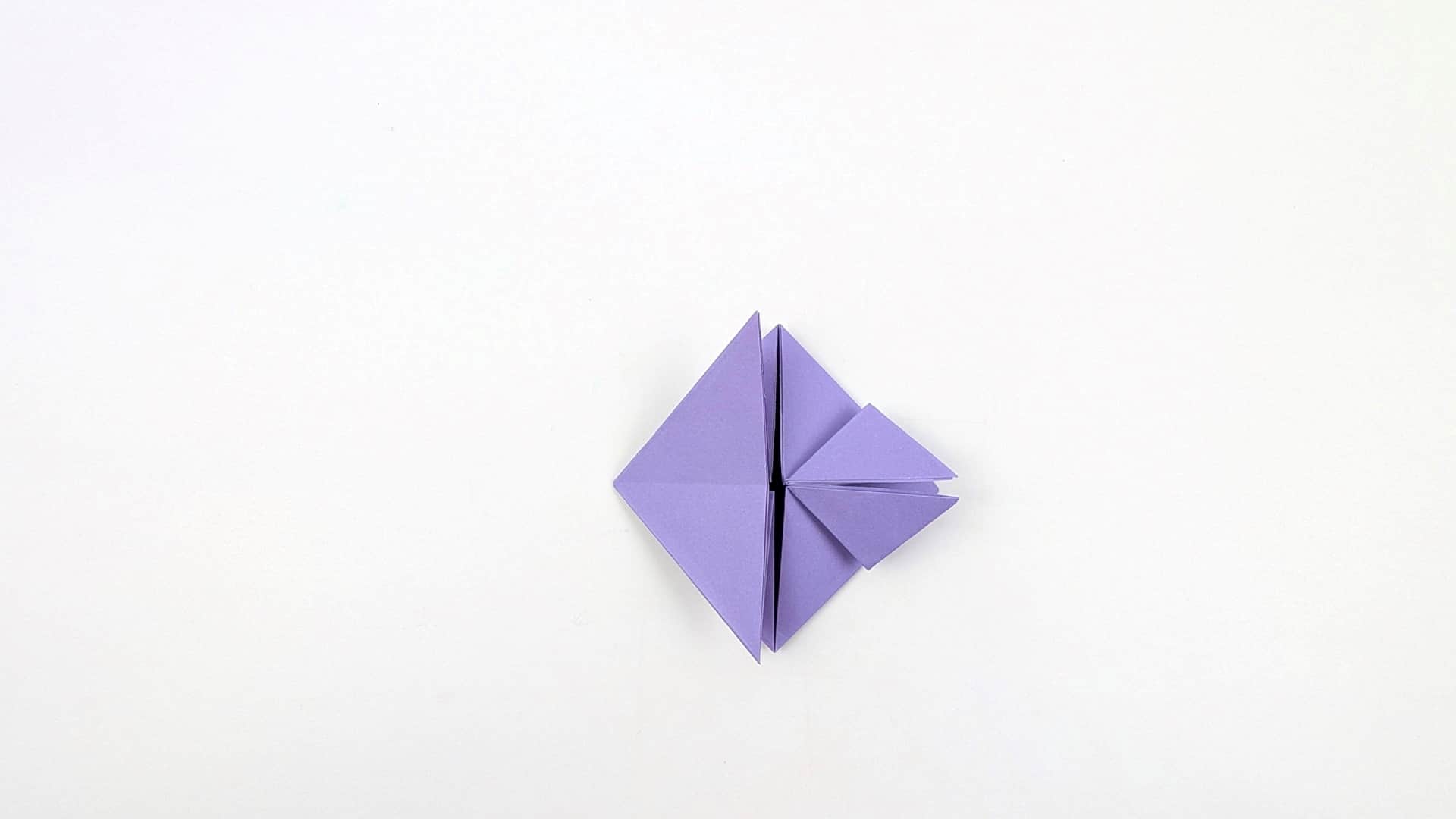 17
17Continue folding the right flap inward. Multiple layers compress toward the center, making the shape more compact.
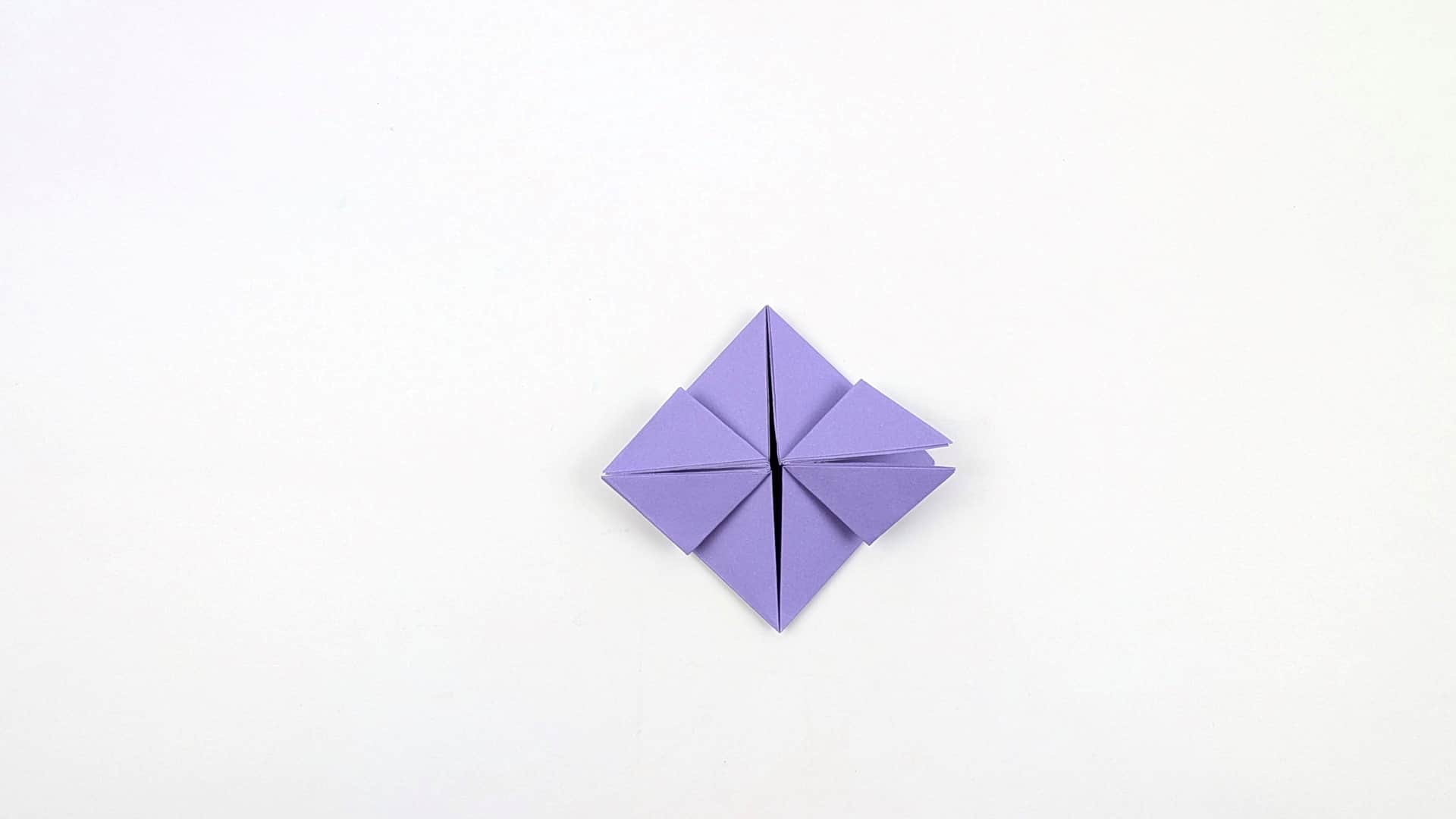 18
18All four triangular panels are now folded flat, creating a compact diamond with 8 triangular segments visible across the front.
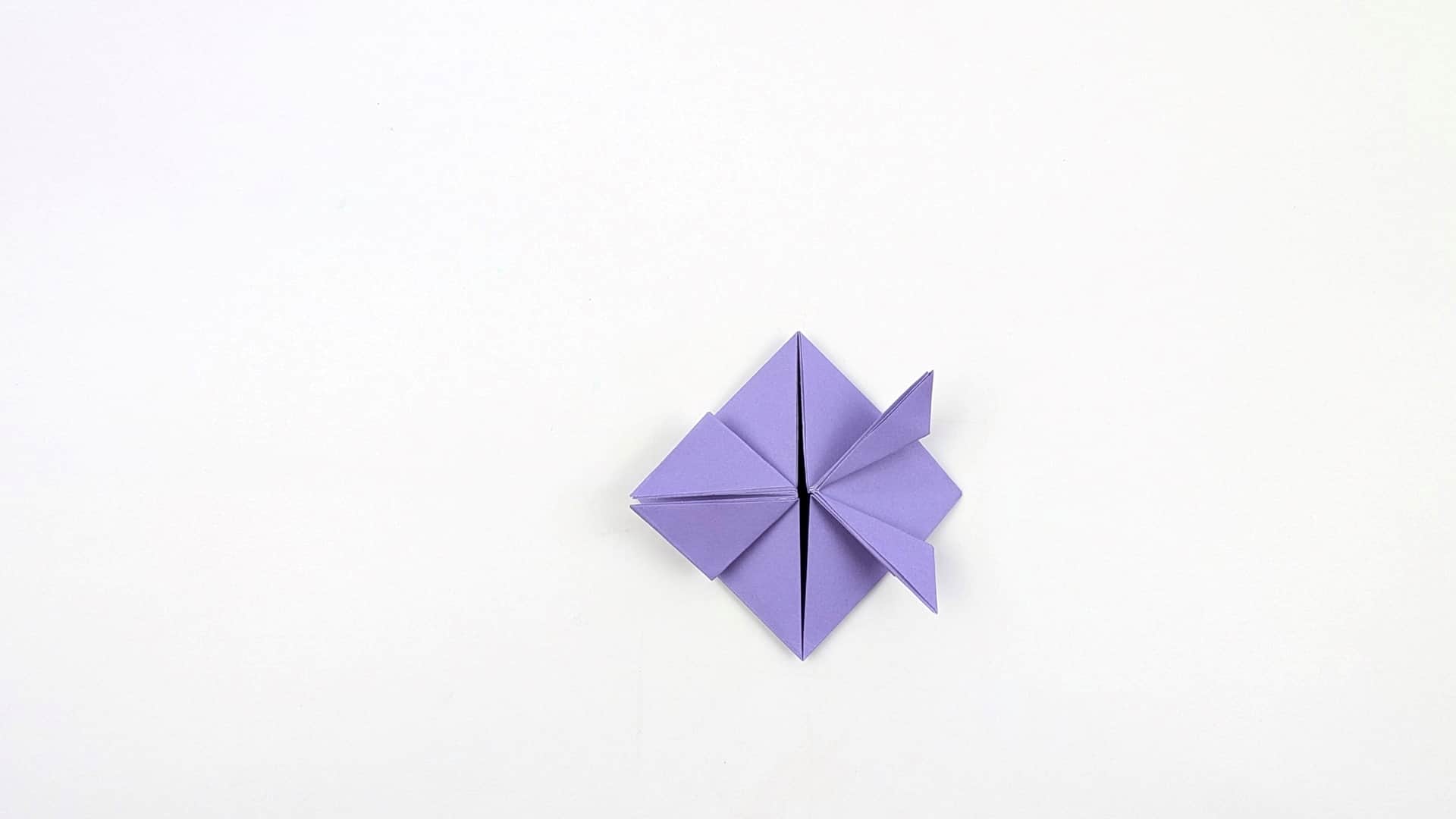 19
19Fold one corner point outward to create a small protruding triangle — this is the first leg stub.
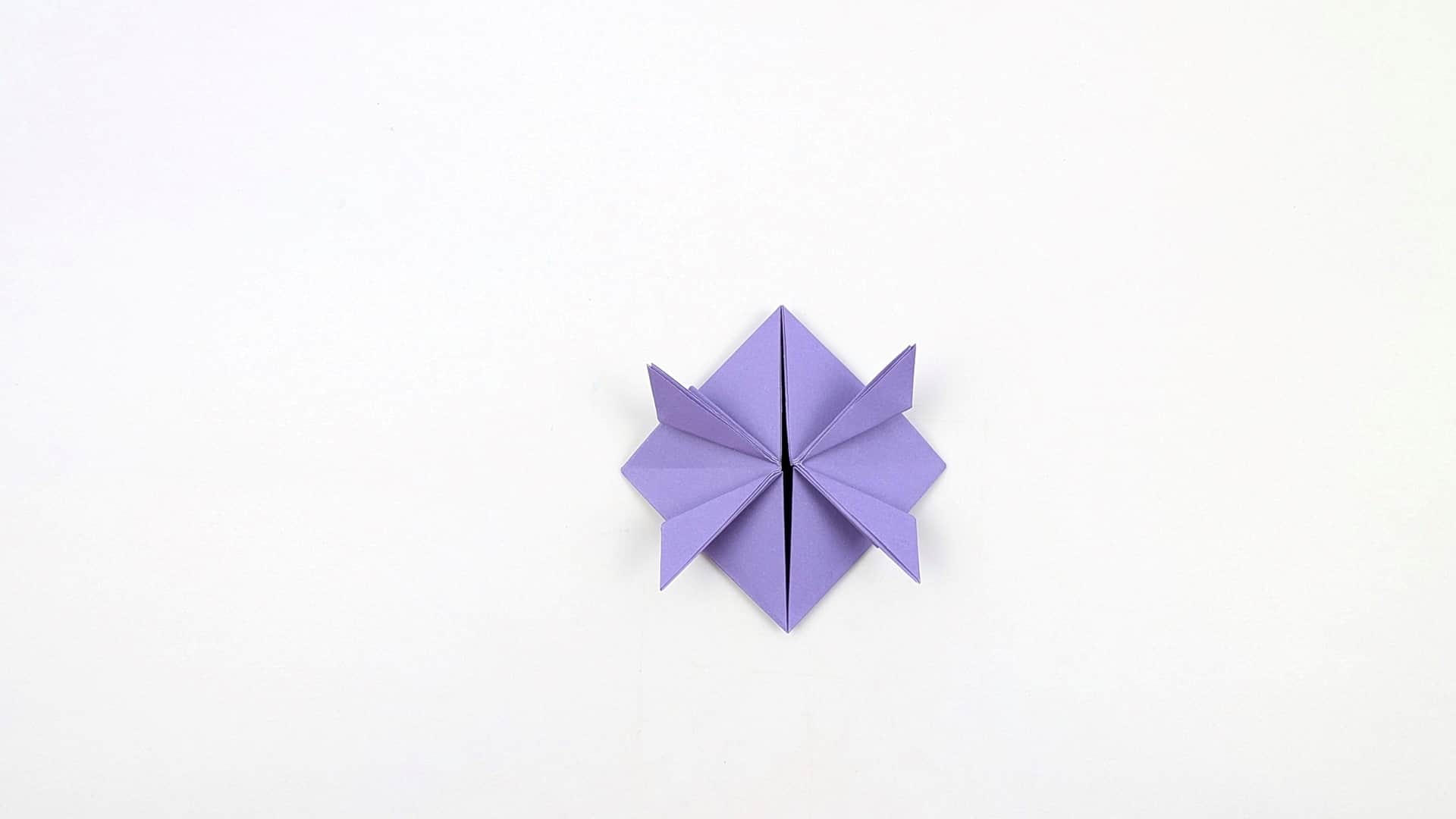 20
20Repeat for all four corners. You now have a star or flower shape with four small triangles pointing outward at the compass points.
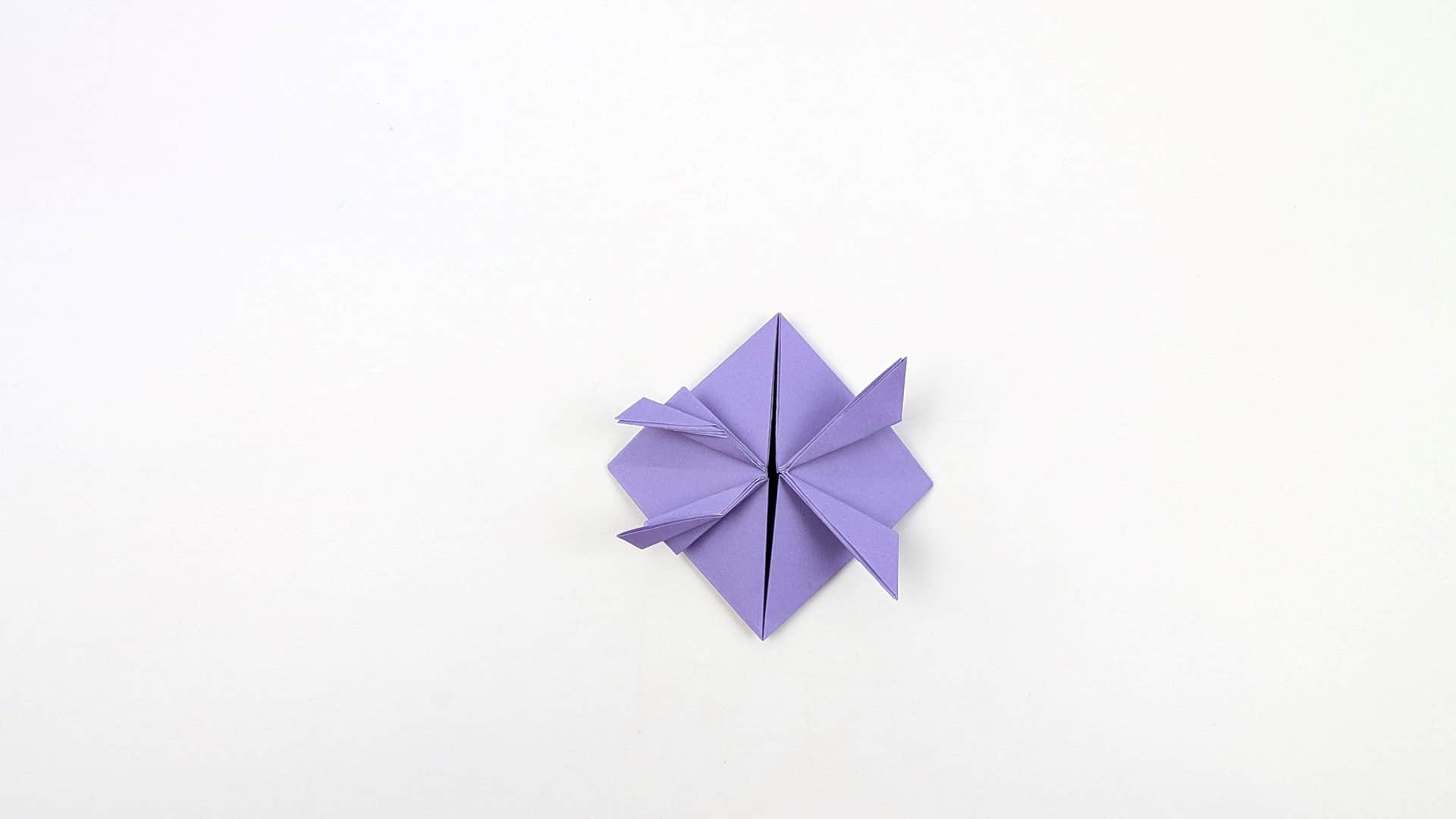 21
21Gently shape two of the corner points by bending them slightly — you are individually adjusting each of the four leg points.
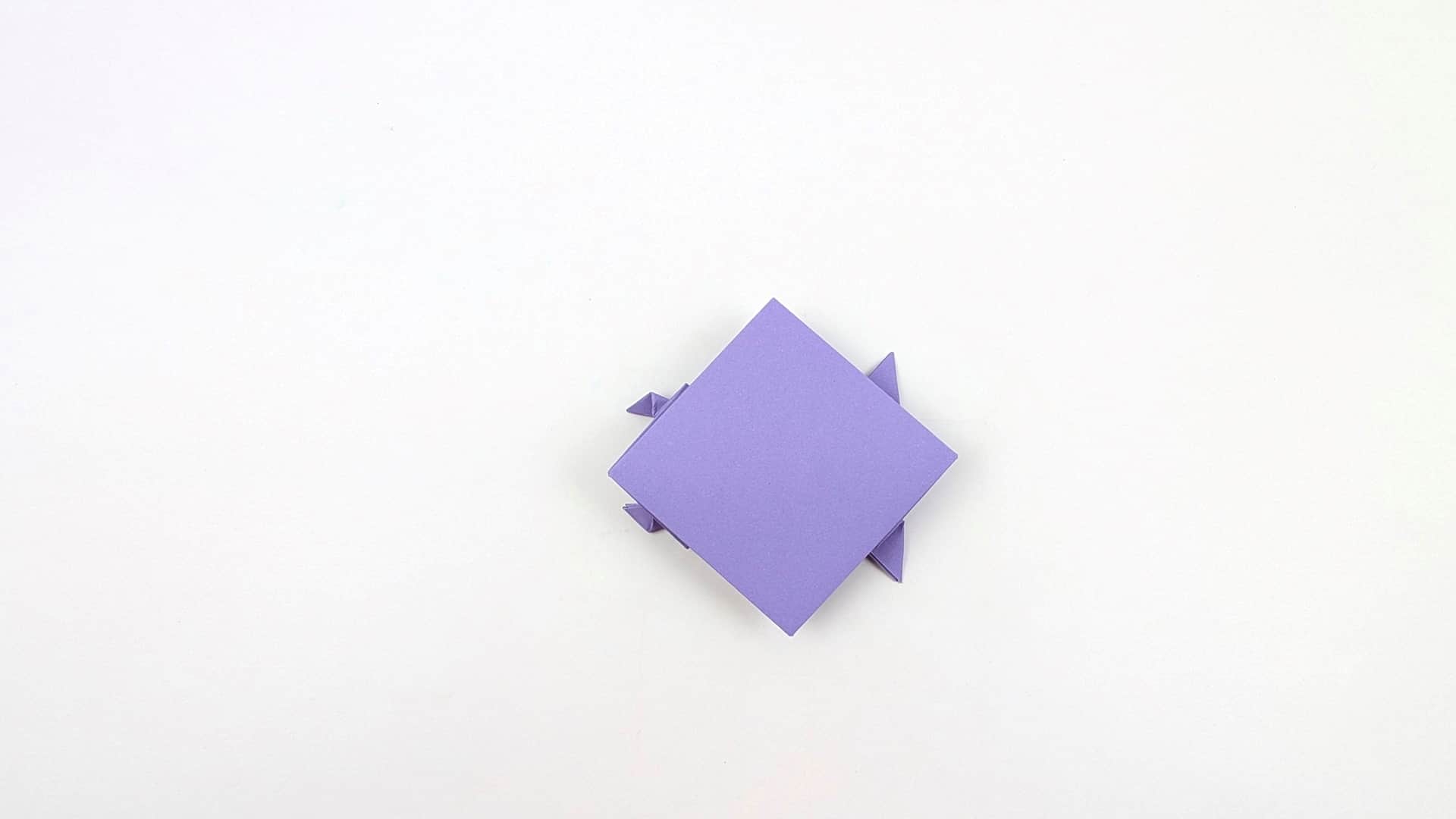 22
22Flip the model over. From this side it appears as a large flat square or rhombus with tiny corner protrusions at two corners.
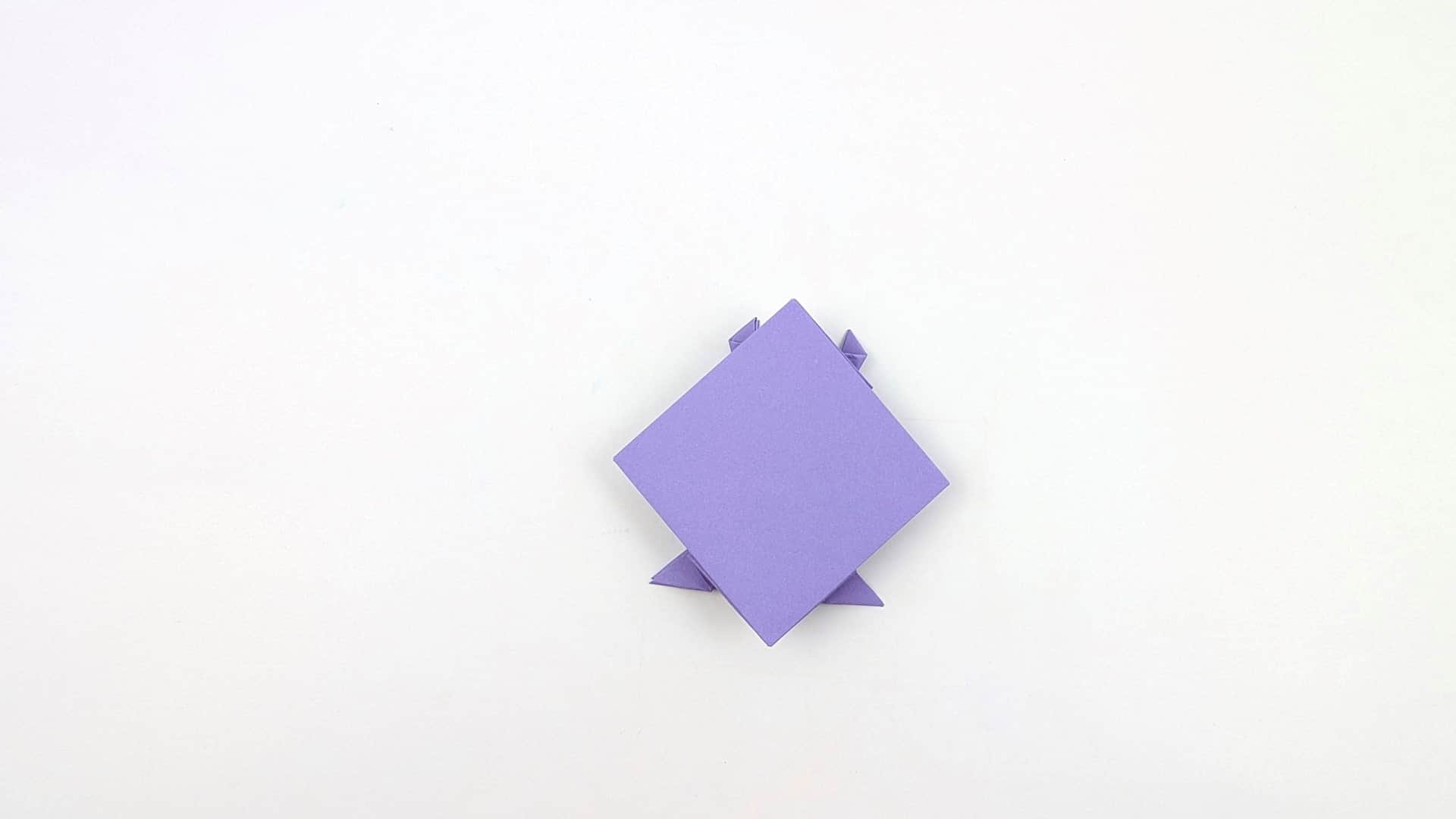 23
23All four corner nubs are now slightly more prominent. Four leg stubs are visible at every corner.
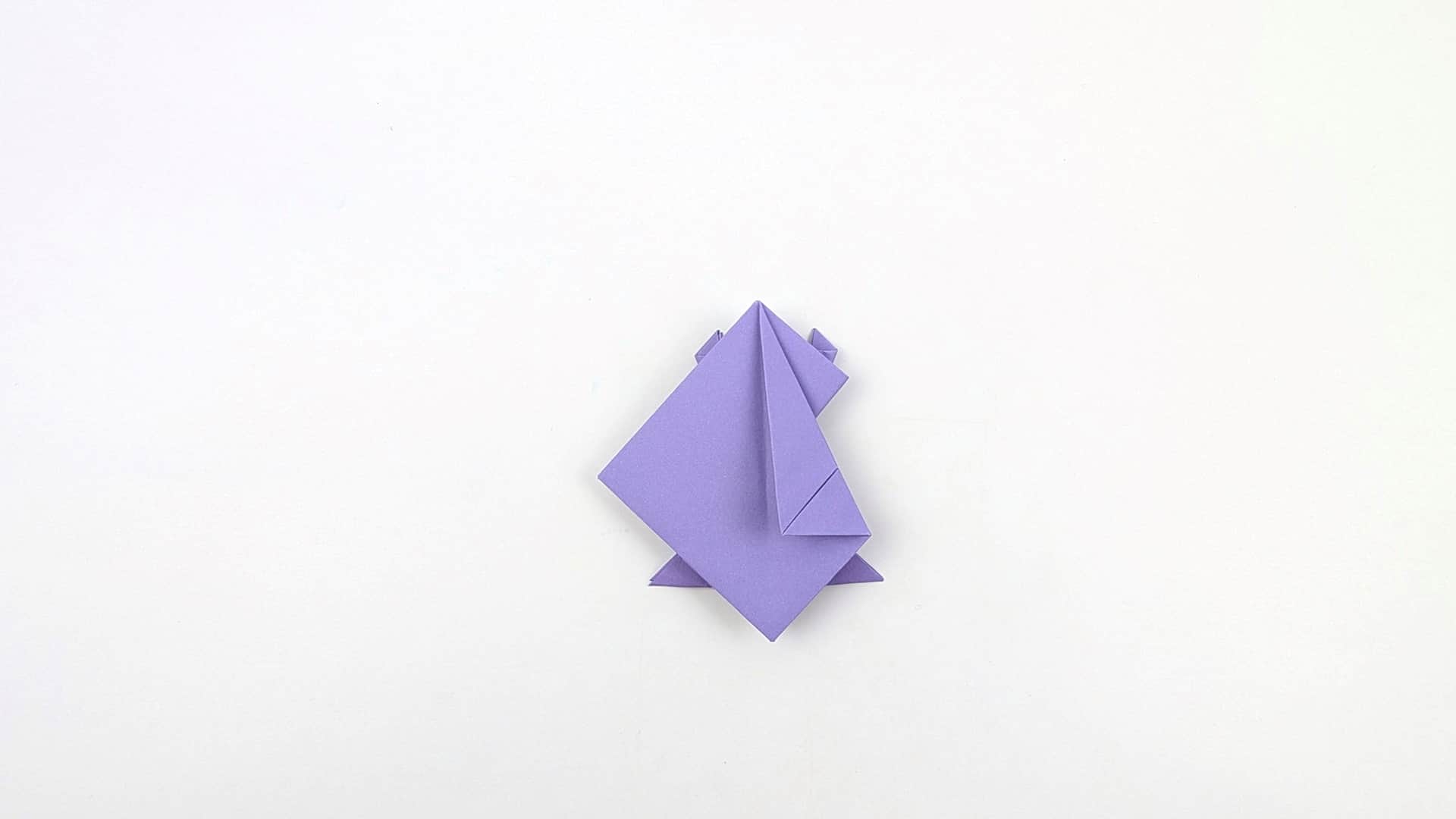 24
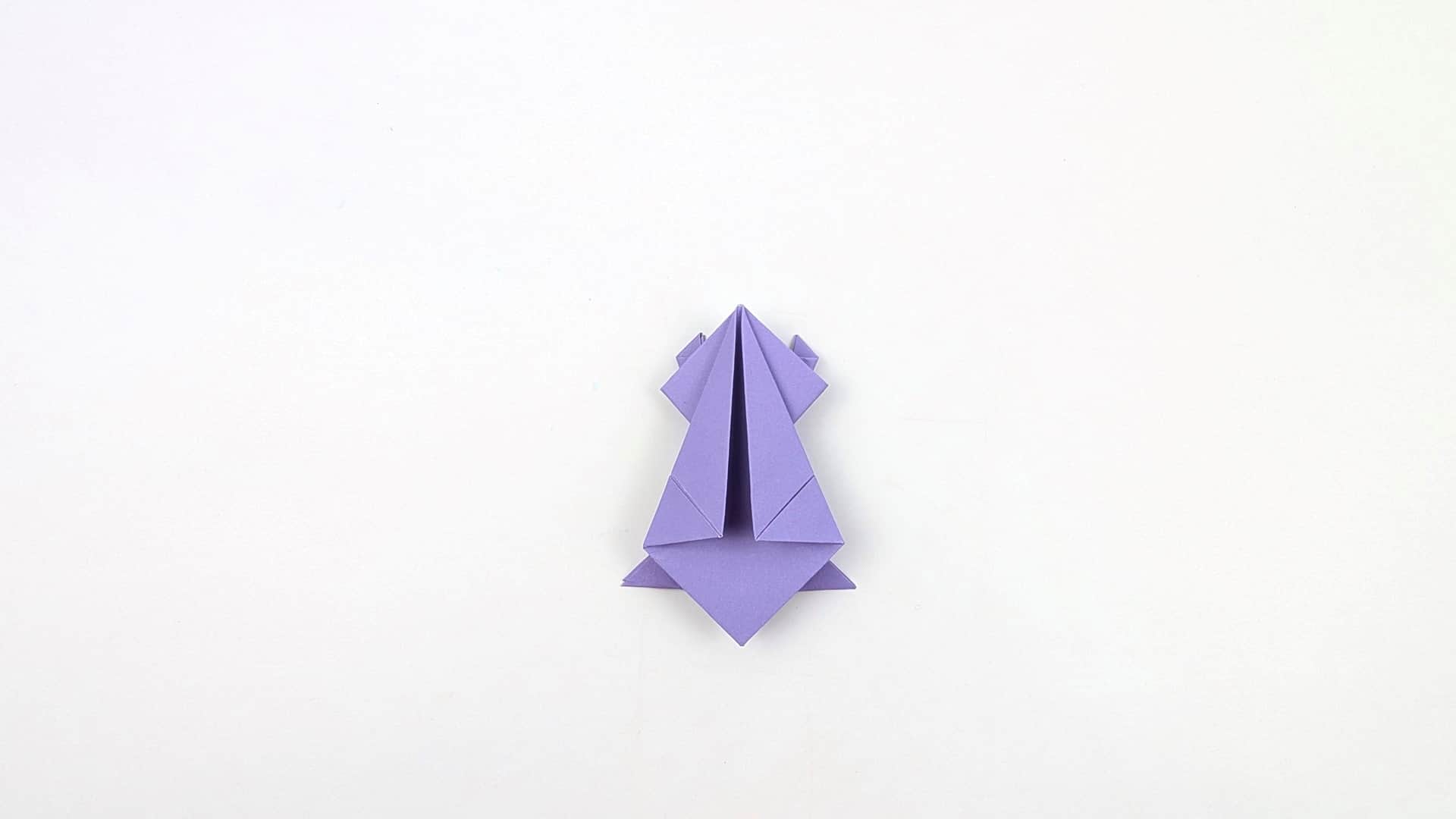
24Fold the top half of the model down over the bottom half. The frog's body and head shape begins to emerge, with front and back legs visible.
 25
25The frog shape is now clear: a pointed head at the top, two front legs spread wide to the sides, and two back legs pointing downward.
 26
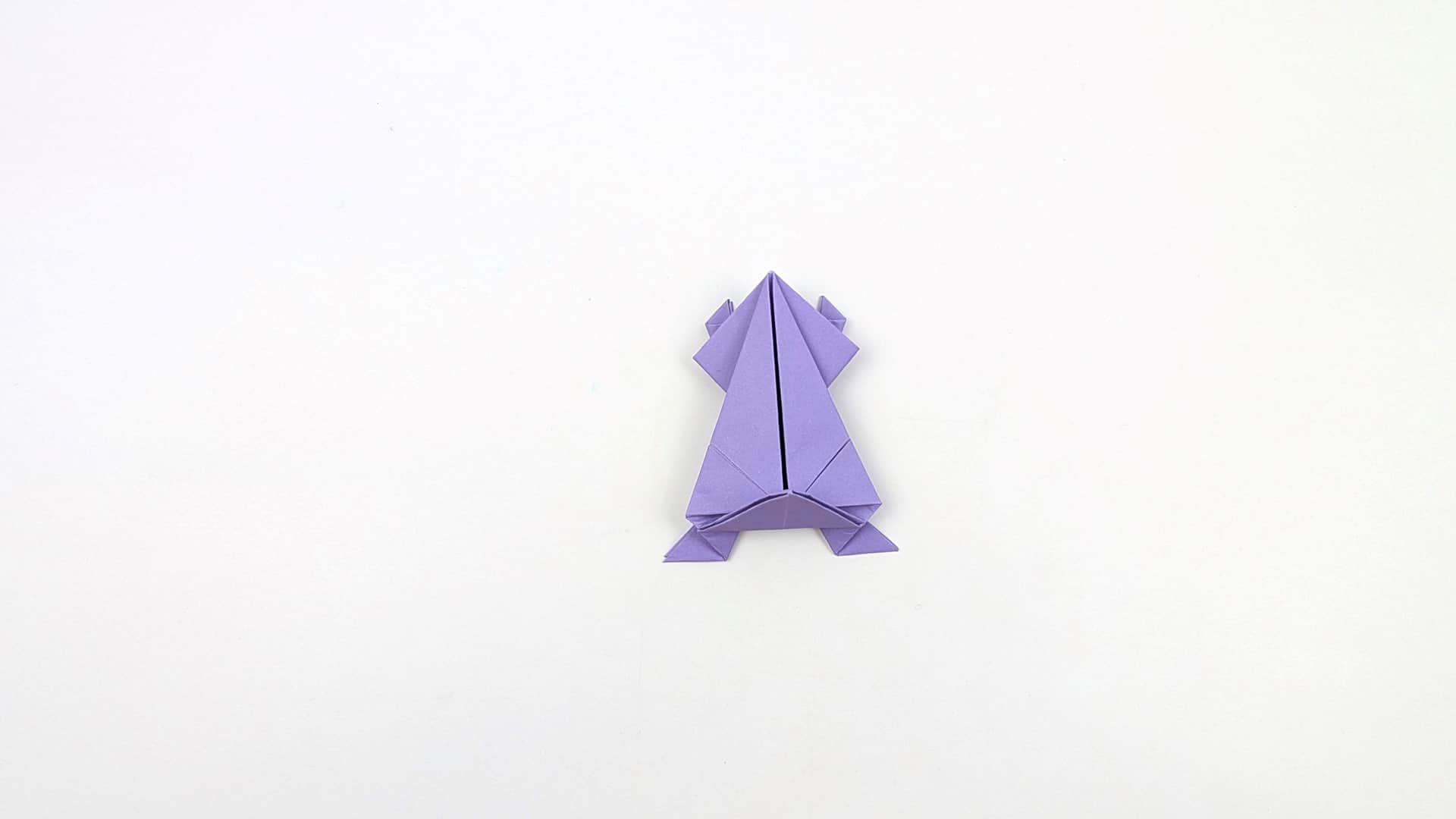
26Define the vertical crease down the back of the frog's body. Front legs are horizontal, back feet angle outward.
 27
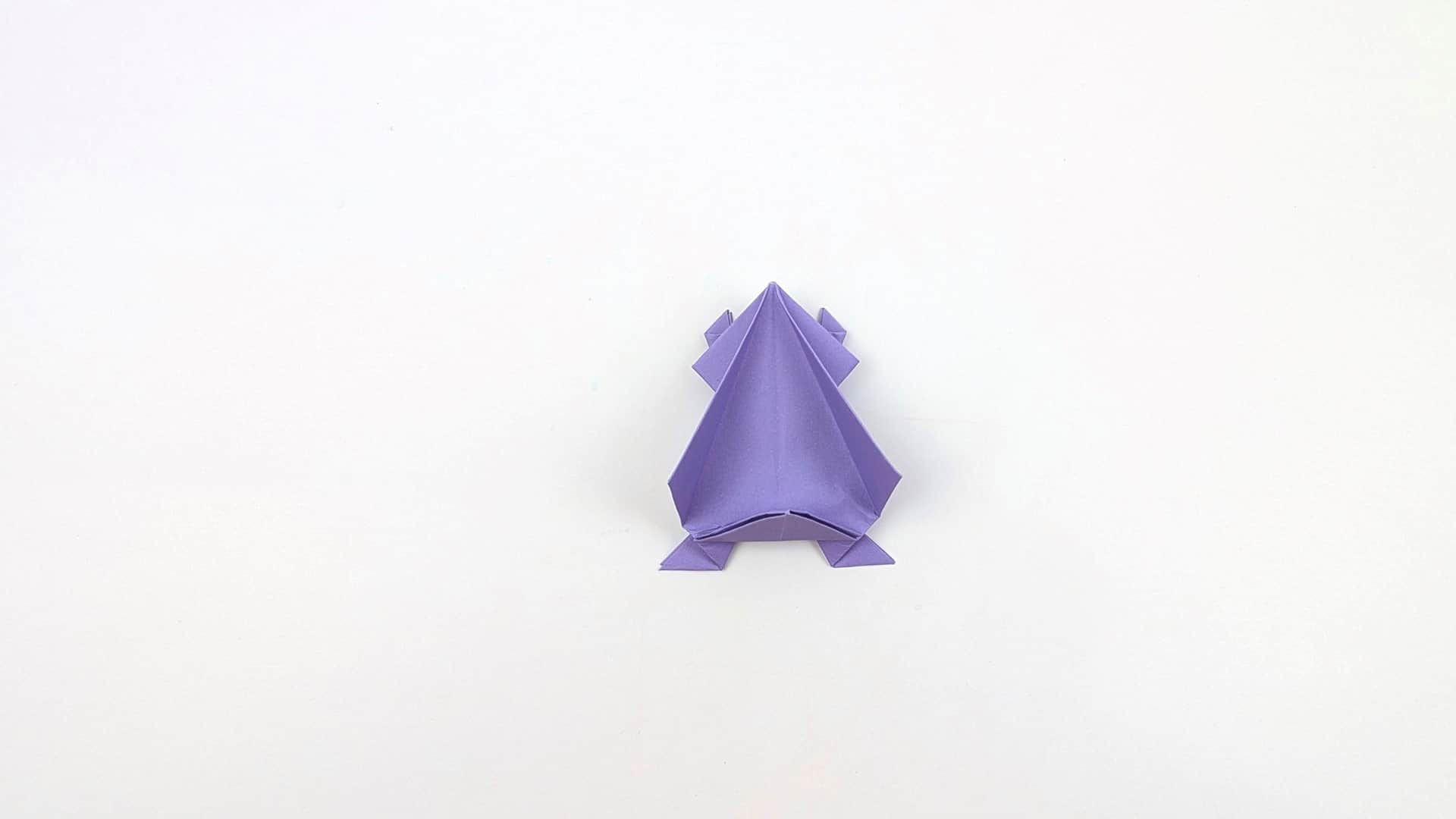
27Press the front of the body inward to round out the frog's belly. The head peak is smooth and the spring fold at the base is taking shape.
 28
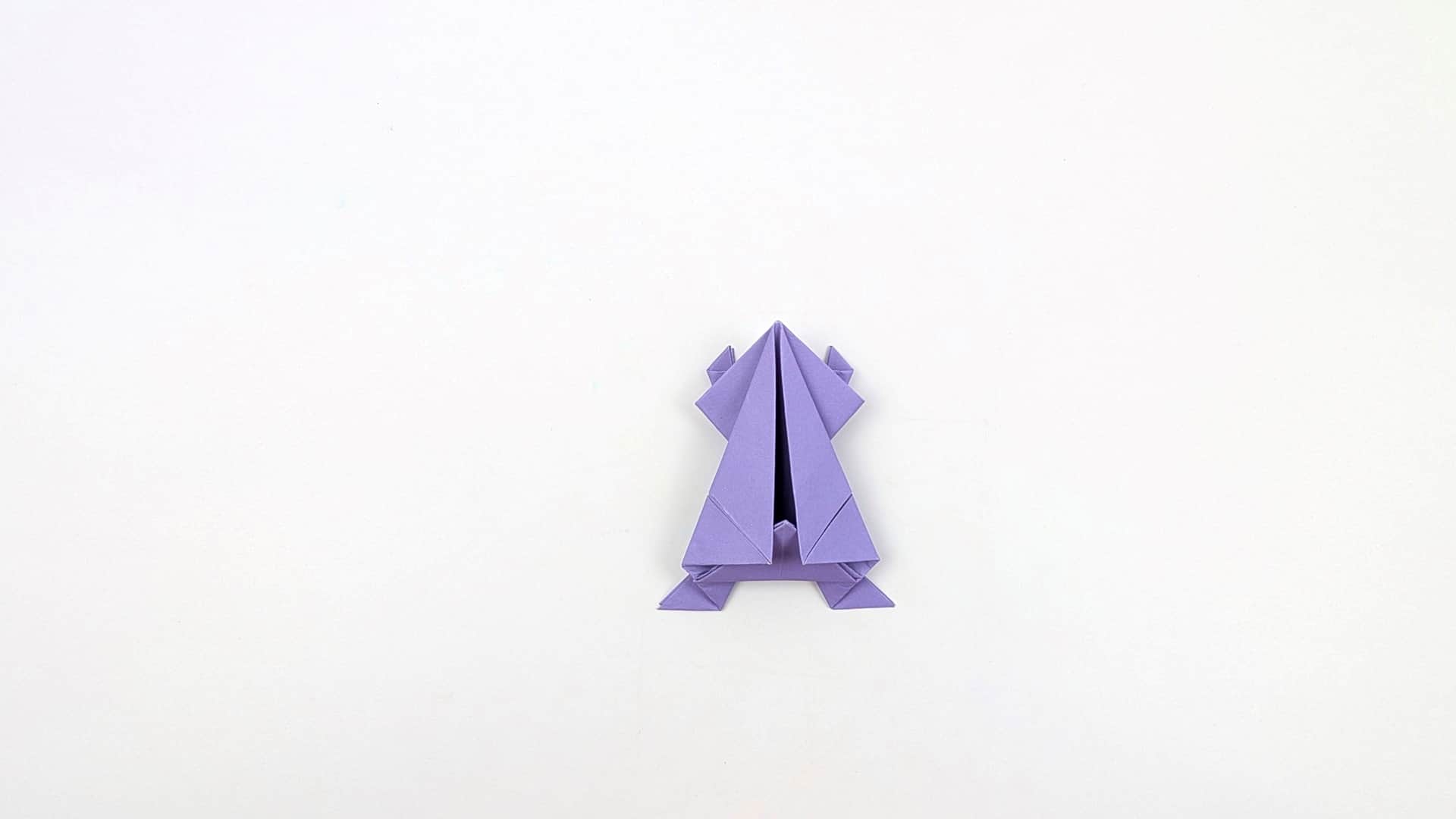
28Fold the internal center layers back to create the jump spring. A deep inverted-V crease forms inside the body.
 29
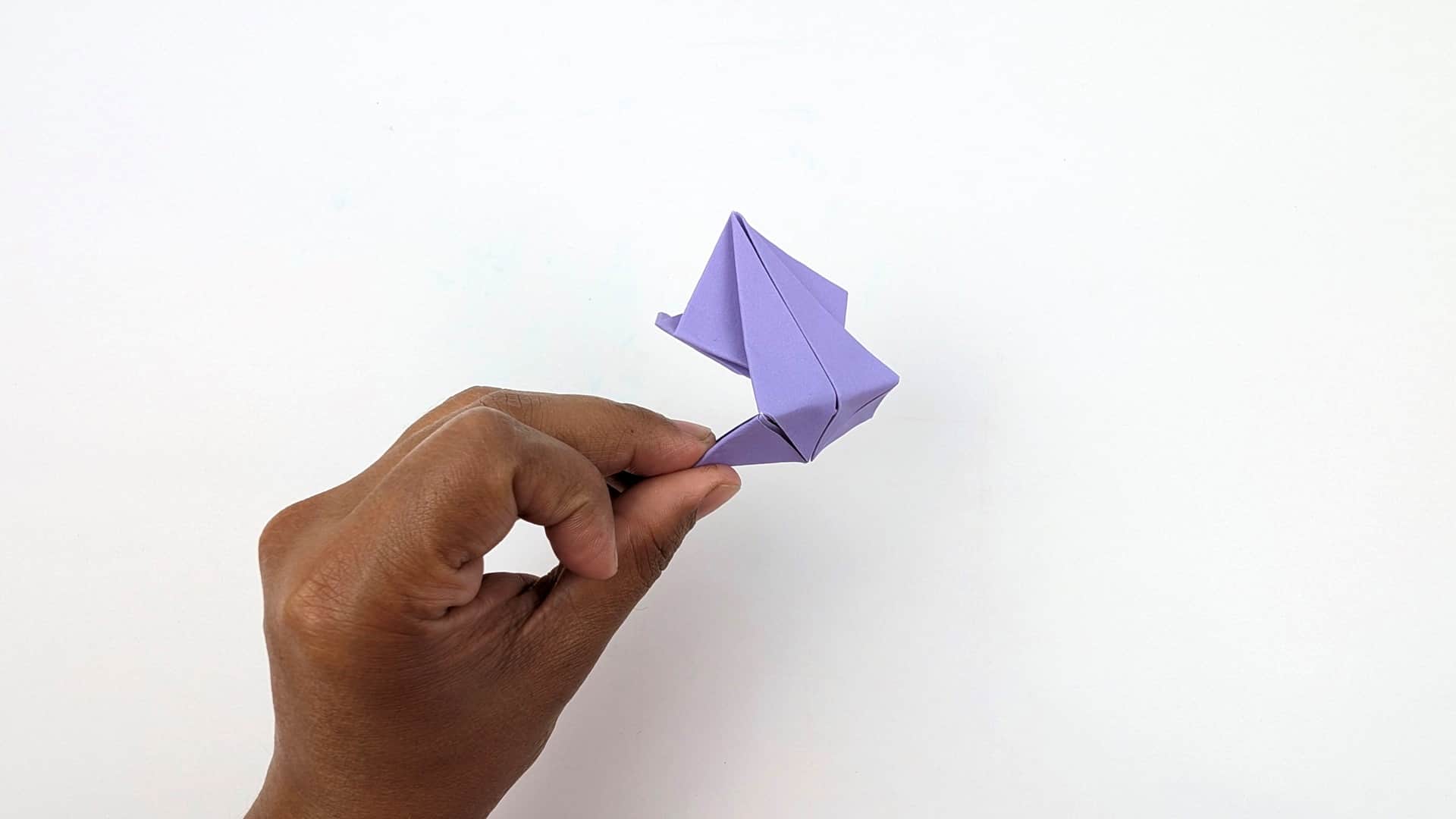
29Hold the frog between thumb and forefinger at the spring fold (the bottom end). This shows the front-side profile with the body and head.
 30
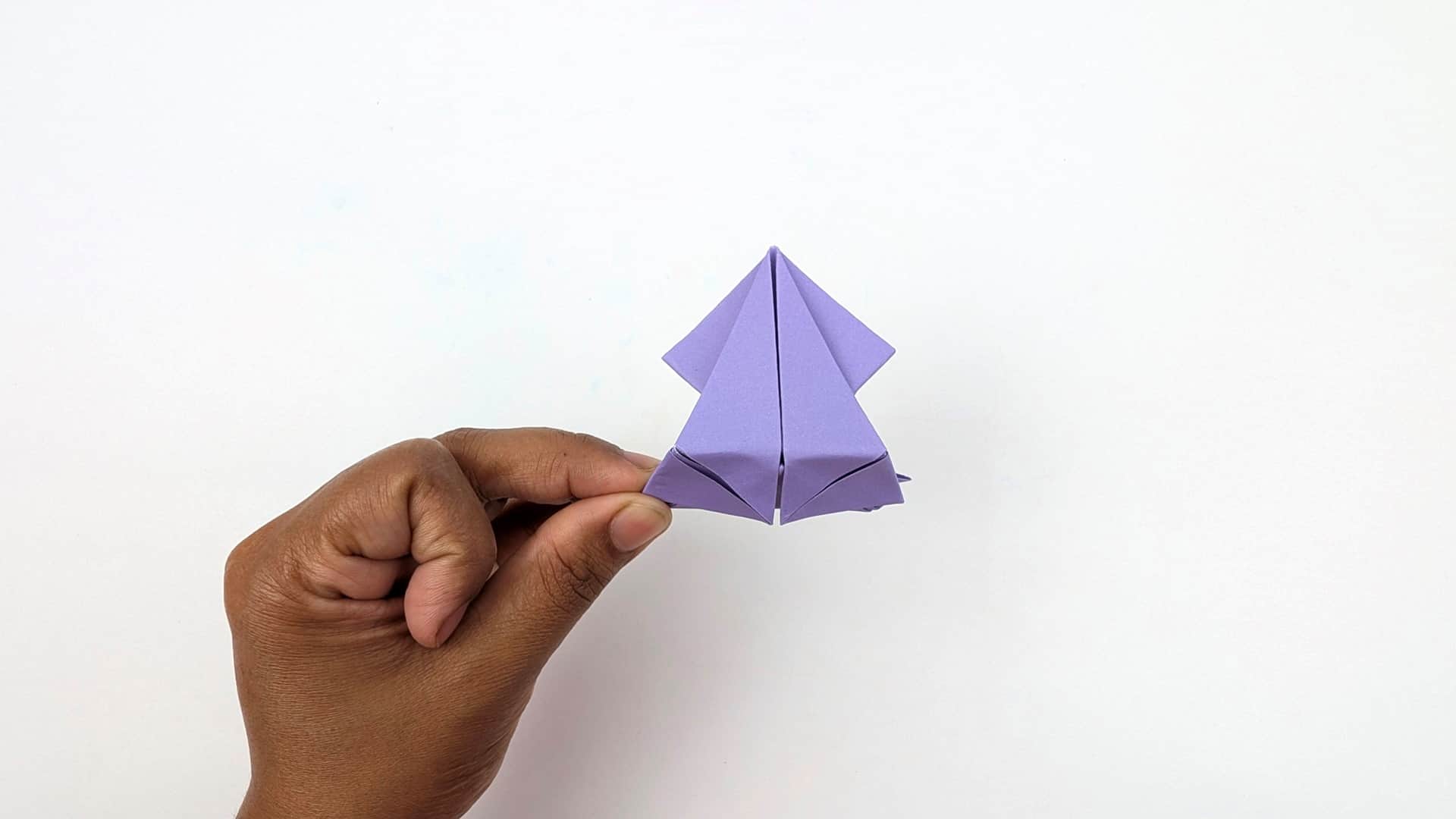
30Turn the frog to show the belly and front legs from below. The spring base is visible at the bottom.
 31
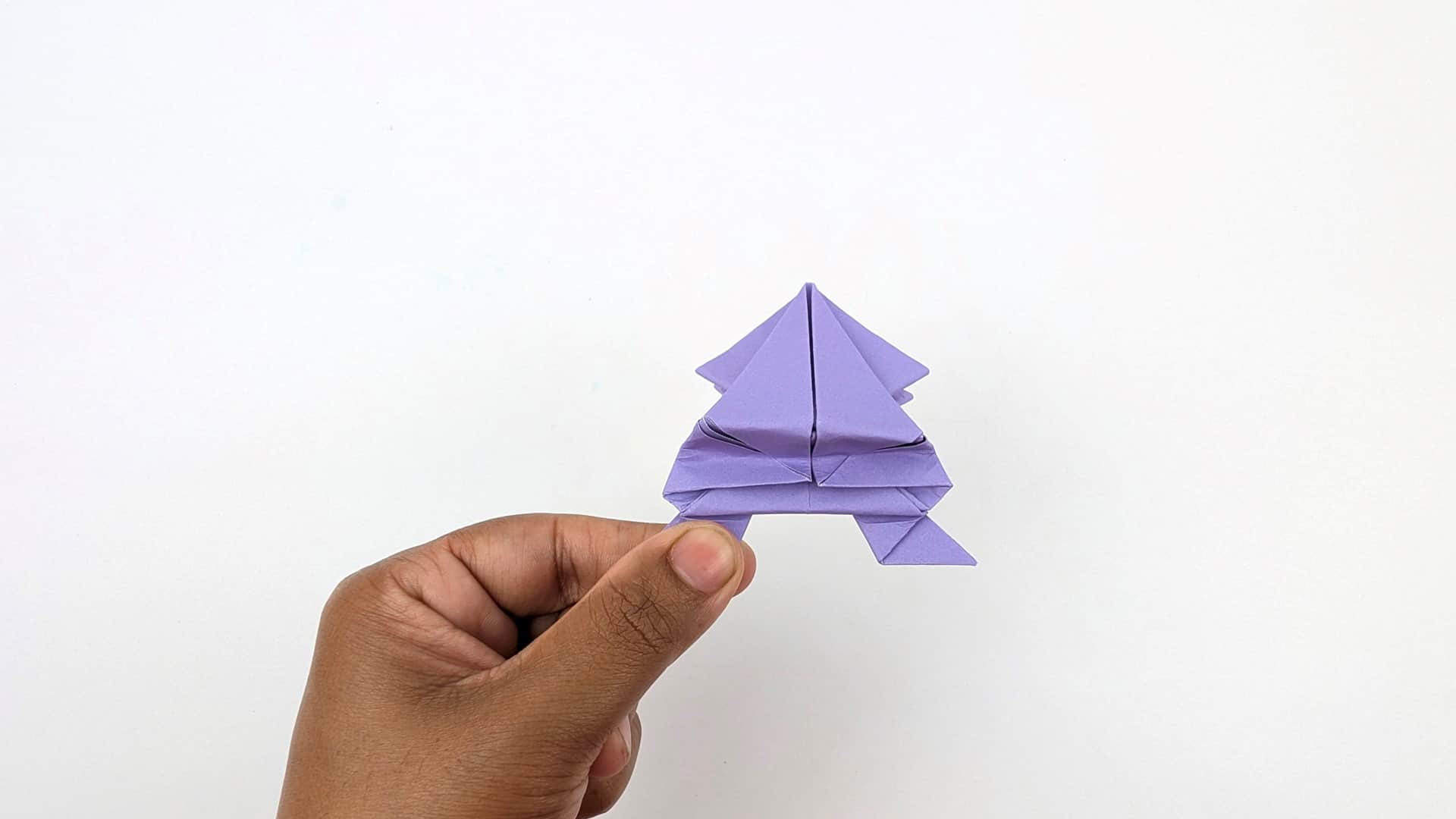
31Back view held in hand — the body arch is prominent, and the front legs stick out to the sides.
 32
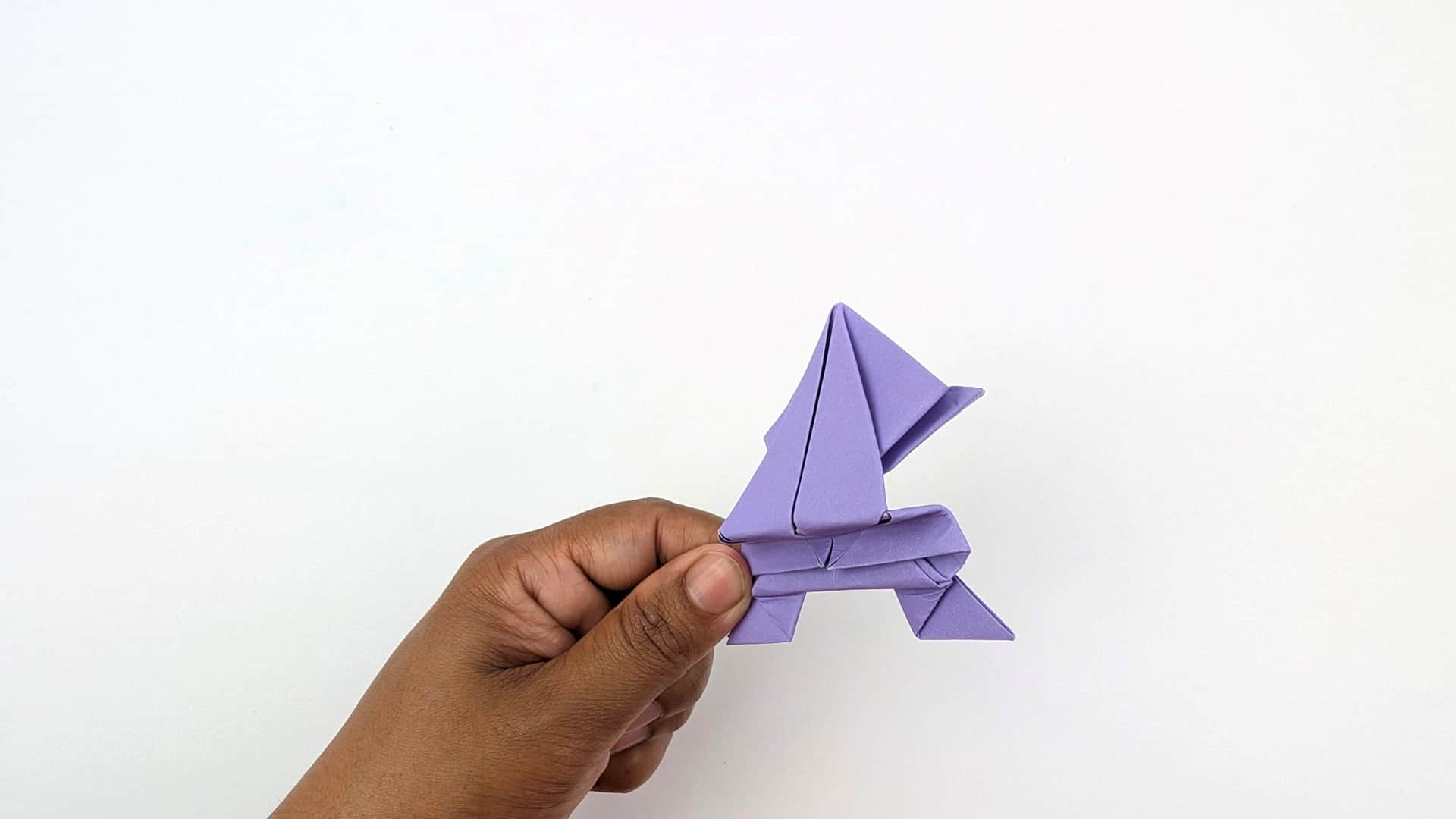
32Side profile held in hand — the full frog silhouette is visible: head, rounded body arch, and all four legs.
 33
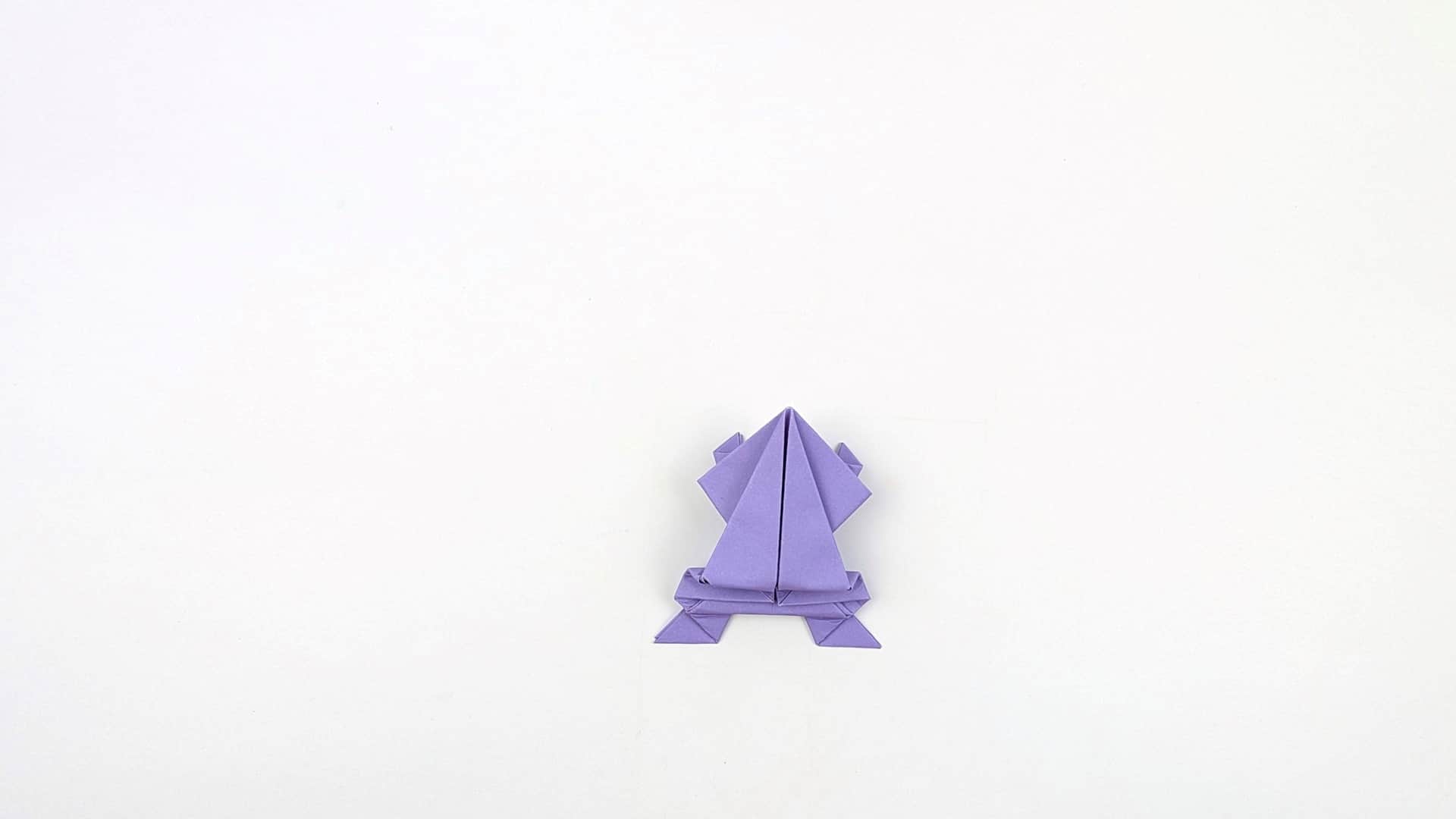
33Place the frog flat on the surface, face forward. Front arms spread wide, back feet flat — it is ready to jump.
 34
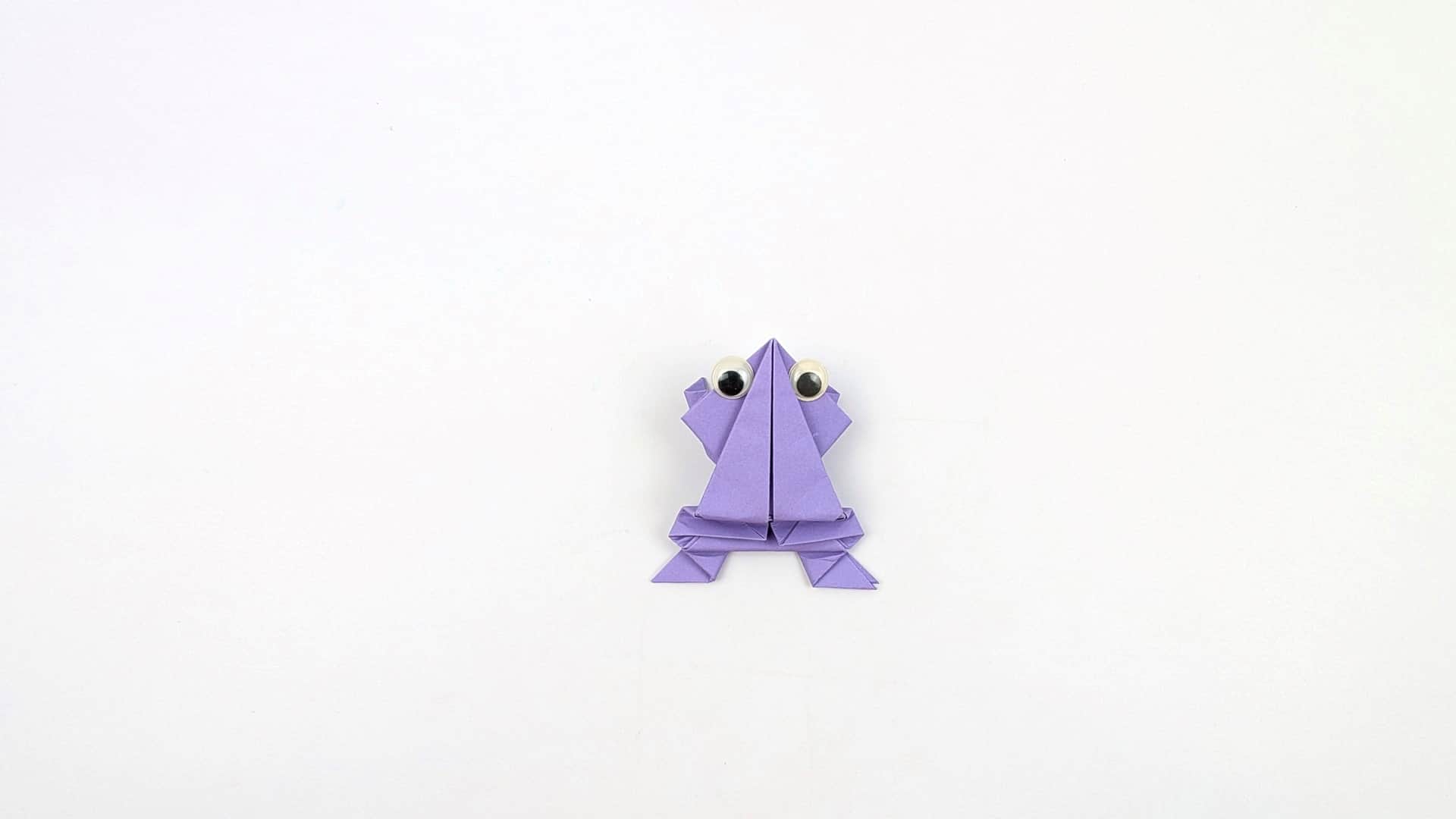
34Glue two googly eyes to the front of the head. Press down on the back and release — the frog leaps forward!
Frequently Asked Questions
What paper should I use for the origami jumping frog?
Standard 15 cm x 15 cm origami paper (kami) works best for the Jumping Frog. The thin paper holds creases well and is easy to fold precisely.
How long does it take to fold the origami jumping frog?
This model takes approximately 12 minutes for someone with some experience. Beginners may need more time — that is completely normal. Take your time and focus on clean creases.
Is the origami jumping frog hard to make?
This model is rated medium. Some origami experience is helpful but not required. If you can fold a simple heart, you can handle this.
Can kids make the origami jumping frog?
Children ages 8+ with some folding experience can try the Jumping Frog with adult guidance. Younger children may find it challenging.
What size paper works best for the Jumping Frog?
For the Jumping Frog, we recommend a standard 15 cm (6 inch) square. Larger paper gives you more room to work with and is especially helpful for your first attempt.
What other folds should I learn before the Jumping Frog?
Before attempting the Jumping Frog, make sure you can fold the Simple Fish, Simple Bird, Penguin. These models share similar techniques and will prepare you for this design.
You Might Also Like
Helpful Guides
Article · 5 min
7 Easy Origami Animals for Beginners (All Under 10 Minutes)
Seven quick animal folds — fox, dog, cat, bunny, fish, bird, and butterfly — each taking under 10 minutes with a single square sheet. No experience needed.
Article · 4 min
7 Origami Tips Every Beginner Should Know
Starting your origami journey? These essential tips will help you fold cleaner, sharper, and more confidently from day one.
Article · 13 min
Best Origami Paper for Beginners — The Complete Guide
The best origami paper for beginners is 15 cm kami — but knowing why, and when to use something different, makes all the difference. This guide covers every paper type, size, thickness, and what to buy first.